Germany updates: Majority of Germans reject Teslas
Published January 20, 2026last updated January 21, 2026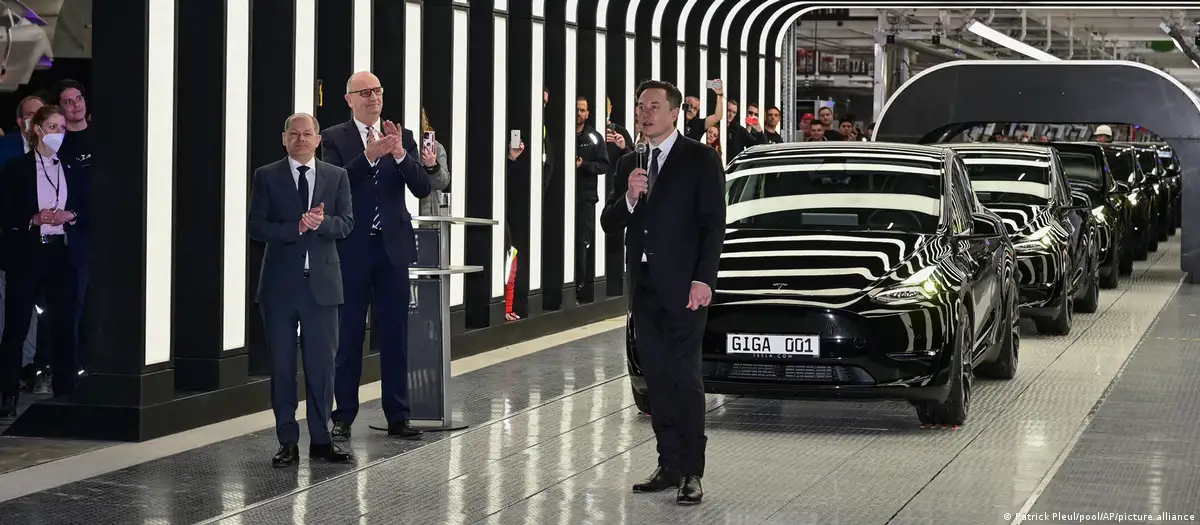
What you need to know
- 3 in 4 Germans would not buy a Tesla, new survey shows
- Chancellor Friedrich Merz will speak to soldiers who have been deployed abroad
- The reception comes as Germany tries to increase the size of the military forces
- A strike by road maintenance workers is causing disruptions on the German autobahn
- Germany revokes almost half of asylum guarantees for Afghans
These updates have been closed. Thank you for reading.
Below, you can review the stories that were being talked about in Germany on Tuesday, January 20.
Thousands of Kurds in Germany protests against Syrian clashes
Thousands of Kurds in Germany took to the streets on Tuesday night to protest renewed fighting between Kurdish forces in Syria and the country's military.
Demonstrations were held in a number of cities including Frankfurt, Dortmund, Düsseldorf and Aachen. Police meanwhile broke up demonstrations in Stuttgart and Hannover.
Click here to read DW's full coverage of Tuesday's pro-Kurdish demonstrations.
3 in 4 Germans would not buy a Tesla – survey
More than three-quarters of Germans reject the idea of buying an electric car from the US manufacturer Tesla, according to a recent survey by the German Economic Institute (IW).
Some 60% of respondents said buying a Tesla was "completely out of the question," while another 16% said they would "probably not" purchase a car from US tech billionaire Elon Musk's company, which saw sales fall by 13% worldwide in the first quarter of 2025, by 45% in Europe, and by 62% in Germany.
According to IW expert Matthias Diermeier, Musk himself has alienated his target group in the European market due to his support for US President Donald Trump and his public backing of the far-right Alternative for Germany (AfD) party during last year's German federal election.
"The decisive factor for buying an electric car remains the buyer's political views," said Diermeier.
According to the survey, the willingness to buy an electric car is highest among Green Party supporters, at around 64%.
Approximately 22% of this demographic said they already own an electric car or plug-in hybrid, but only about one-in-ten said that they could imagine buying a Tesla.
Even among AfD supporters, interest in buying a Tesla is less than 15% — although this may be due to a widespread rejection of electric vehicles rather than this group's opposition to Musk's politics. Not even one in five could imagine buying an electric car, and more than two-thirds categorically reject the idea.
"Electromobility, along with wind turbines and heat pumps, is another example of the partisan political currents surrounding climate policy in Germany," said Diermeier.
German army fills its ranks to highest level in 12 years
The size of the German military, the Bundeswehr, has grown its numbers to its highest level in over a decade, with 184,200 serving soldiers, Defense Minister Boris Pistorius told the DPA news agency on Tuesday, revealing the best recruitment figures in 15 years.
"We have the best recruitment results since the suspension of conscription," said Pistorius. "The active force is larger than it has been in 12 years."
Germany is seeking to boost troop numbers to 260,000 by the mid-2030s under new NATO targets agreed last year in the face of the increasing threat from Russia.
"Young people are increasingly willing to contribute to Germany's external security," said Pistorius, praising the attitude of the new recruits. "This makes me optimistic that many motivated and committed men and women will choose to join the Bundeswehr in 2026 – whether in civilian or military roles, whether as part of the new conscription service or for a longer period."
Following months of debate, Chancellor Friedrich Merz's government reintroduced a military service program late last year. The scheme is initially voluntary, but could be made compulsory if recruitment falls below the necessary targets.
German workers took 19.5 sick days in 2025, health insurance provider says
Workers in Germany took an average of 19.5 days off sick in 2025, according to the country's largest statutory health insurer, DAK. That's down marginally from 19.7 in 2024.
Nevertheless, the DAK said on Tuesday that "the sickness absence rate in Germany is still at a high level" compared to other European countries.
DAK chairman Andreas Storm called on the government to bring "employers, unions, medical professionals and insurers to the table" to discuss causes and solutions.
"An important component could be the introduction of partial sick leave for certain illnesses and diagnoses," he suggested, adding that this is "already a proven instrument in Scandinavian countries" and could be "an important tool for reducing absenteeism."
According to the Institute for Health and Social Research (IGES) in Berlin, respiratory problems, mental illnesses and musculoskeletal disorders together accounted for around half of all days lost to illness among the 2.4 million people insured by the DAK.
In 2025, compared to the previous year, there was a 6.9% increase in sick days due to mental health issues, reaching approximately 366 days per 100 insured individuals. Sick days due to respiratory problems and musculoskeletal disorders, on the other hand, remained largely unchanged at 378 and 347 days per 100 people, respectively.
"Sick leave due to mental health issues is often associated with long periods of absence," said DAK chairman Storm. "Companies face the challenge of having to compensate for a high number of sick days caused by these illnesses. From an economic perspective, prevention is paramount."
Football: Borussia Dortmund and Bayer Leverkusen in Champions League action
Bundesliga sides Borussia Dortmund and Bayer Leverkusen are both on the road in the Champions League on Tuesday night as they look to secure a place in the knockout stage of Europe's premier competition — or in the playoffs at the very least.
Following a disappointing 2-2 draw at home to Norwegian side Bodo/Glimt before Christmas, Dortmund will likely need to win both of their remaining games to finish in the top eight of the "league stage" and qualify automatically for the knockout rounds.
On paper, that looks like a tough job away at Premier League side Tottenham Hotspur on Tuesday and then at home to Italian giants Inter Milan. But the trip to London may have come at just the right time, with Spurs yet to win any of their five games so far this month. BVB are in much better form and will be hoping to capitalize.
For Leverkusen, following back-to-back defeats in the Bundesliga, chances of direct qualification are much slimmer, but a win away at Greek champions Olympiakos would at least guarantee a spot in the play-off round.
German champions Bayern Munich are in action on Wednesday night against Belgian champions Union Saint-Gilloise. Eintracht Frankfurt, who sacked head coach Dino Toppmöller on Sunday, will travel to Azerbaijan to take on Qarabag.
Paint attack on Turkish embassy in Berlin
The fence in front of the Turkish embassy in Berlin was splattered with red paint overnight, according to German police, while messages were painted in white on the pavement outside.
Around 40 people are suspected to have been involved in the incident, which also saw several smoke bombs set off.
When police arrived at the scene, the suspects reportedly fled into the nearby Tiergarten, the green park area in central Berlin, where two men aged 19 and 20 were arrested.
Some of the red paint reportedly also landed on the fence of the neighboring South African embassy.
Investigators suspect that Kurdish activists might be responsible.
German exports to US plunge in 2025 due to Trump tariffs
German exports to the United States took a plunge in 2025 as a result of US President Donald Trump's aggressive tariff policies, official data showed on Tuesday.
Germany's Federal Statistical Office said the country exported €135.8 billion worth of goods to the US over the first 11 months of last year, down 9.4% on the same period in 2024.
In contrast, German imports from the US rose 2.2% to €86.9 billion, meaning Germany's trade surplus with the country shrank to €48.9 billion over the period – the lowest figure since 2021, during the coronavirus pandemic.
The US is Germany's most important export market, but the manufacturing-heavy and export-led economy has suffered badly from Trump's dramatic trade policy shifts, with German exports shrinking for a third consecutive year in 2025.
The beleaguered German automotive sector was particularly hard hit, with the value of exported cars and vehicle parts sinking by 17.5% to €26.9 billion. Machine exports were also down 9% to €24 billion, while pharmaceuticals rose slightly by 0.7% to €26.2 billion.
And further instability is looming after Trump on Saturday threatened 10% tariffs on European countries, including Germany, for their opposition to his bid to take over Danish-administered Greenland.
Germany revokes almost half of asylum guarantees for Afghans
The German government has revoked almost half of the asylum guarantees made to Afghans who assisted German forces in Afghanistan prior to the return to power of the Taliban in 2021 and who have since fled to neighboring Pakistan.
According to government figures released on Tuesday in a response to a parliamentary question from the opposition Left Party, 37,652 Afghans were brought to Germany under various asylum programs between May 2021 and the end of 2025, including 788 since the current conservative-led coalition government took office in May last year, with another 410 applications still in progress.
However, for 2,308 Afghans still living in Pakistan and awaiting departure, almost half have had asylum guarantees from the previous government revoked in a move criticized by Left Party lawmaker Clara Bünger as "irresponsible, shoddy and humanly intolerable."
Following the Taliban takeover in August 2021, the German government had promised asylum to people who had worked in the country for the German Armed Forces or other institutions. Promises were also made for people classified as particularly vulnerable for other reasons – such as women's rights or human rights activists.
However, since the change of government in Berlin, the new German government has severely restricted these admissions. Since many of those affected had already fled from Afghanistan to Pakistan, they are now stranded there.
"The government cannot simply claim that it bears no responsibility and abandon the people to the Taliban's arbitrary regime of inhumanity and misogyny," said Bünger.
According to German Interior Minister Alexander Dobrindt (CSU), asylum guarantees have been revoked due to security concerns raised during the application process – an argument which Bünger rejected, pointing out that such concerns had only been raised in 3% of over 5,400 interviews since June 2023.
"The reference to necessary security checks is purely a diversionary tactic," she claimed.
Handball: Germany beat Spain to progress from group stage
Germany's national handball team narrowly avoided a group-stage exit from the handball European Championship in Herning, Denmark, on Monday night thanks to a well-deserved 34-32 win over Spain.
After an unexpected defeat to Serbia on Saturday, Germany had been facing a premature exit from the tournament — just 11 months before hosting the 2027 World Championships.
But Juri Knorr put Germany ahead for the first time in the fifth minute, establishing a lead they never surrendered — thanks also to a series of impressive saves from goalkeepers Andreas Wolff and David Späth.
"The German team delivered a substantially more concentrated performance than in recent game, both in defense and attack," commented Kicker sports magazine. "Germany hardly committed any of the foul throws or technical errors with which they had made life so difficult at the start of the tournament."
In the end, the victory over the previously unbeaten Spaniards saw Germany finish top of Group A — but more tough challenges await in the coming rounds, including defending champions France and this year's favorites, Denmark.
German drivers face autobahn strikes
German drivers were warned to expect disruption to their journeys on Tuesday as highway maintenance workers and tunnel operators went on strike amid an ongoing wage dispute.
In the populous western state of North Rhine-Westphalia (NRW) alone, workers at all 28 tunnel operation centers walked out, leading to the closure of at least 11 long tunnels around the region and nationwide.
According to the Verdi trade union, strikes are planned at a total of 18 locations nationwide, including Nuremberg, Rostock, Stuttgart, Hanover, Montabaur, Hamm, Gelsenkirchen, Cologne, Kiel, Hamburg, and Berlin.
In Hamburg, Germany's second largest city, the vital Elbe Tunnel under the River Elbe will be reduced to two lanes in each direction until Tuesday evening.
The call to strike went out to approximately 14,000 employees of the Autobahn GmbH and several thousand employees of the state road construction authorities.
Unions are dissatisfied with the progress of wage negotiations, with Verdi demanding a 7% monthly salary increase of at least €300 ($350) to support the lower wage brackets.
Chancellor Merz to address German soldiers and police
German Chancellor Friedrich Merz is set to honor the service of German soldiers and police officers on Tuesday morning, particularly those serving abroad or away from their families.
Merz will host relatives of serving soldiers and police in Berlin before conducting live video chats with the servicemen and women overseas themselves.
A government spokesperson explained that the chancellor wants to "express his special appreciation for the women and men of the Bundeswehr [German armed forces] and the police serving abroad, and for their families." In doing so, it said Merz is continuing "a long-standing tradition in the Chancellery."
Welcome to our coverage
Guten Morgen! Welcome to DW's coverage of what Germany is talking about on Tuesday, January 20.
It's likely not been a particularly "good morning" for many German drivers who faced disruption on the roads due to large-scale strike action amid an ongoing wage dispute.
But some German soldiers and police officers have something to look forward to as they meet Chancellor Friedrich Merz (some via video call from abroad) later.
And it's a busy week in sport: Germany's national handball team narrowly avoided a group-stage exit from the European Championship in Denmark following a dramatic 34-32 win over Spain on Monday night while, in football, Borussia Dortmund, Bayer Leverkusen, Eintracht Frankfurt and Bayern Munich are all in action in the Champions League on Tuesday and Wednesday.