Iran war: Oil prices jump, stocks fall after Trump speech
Published April 2, 2026last updated April 2, 2026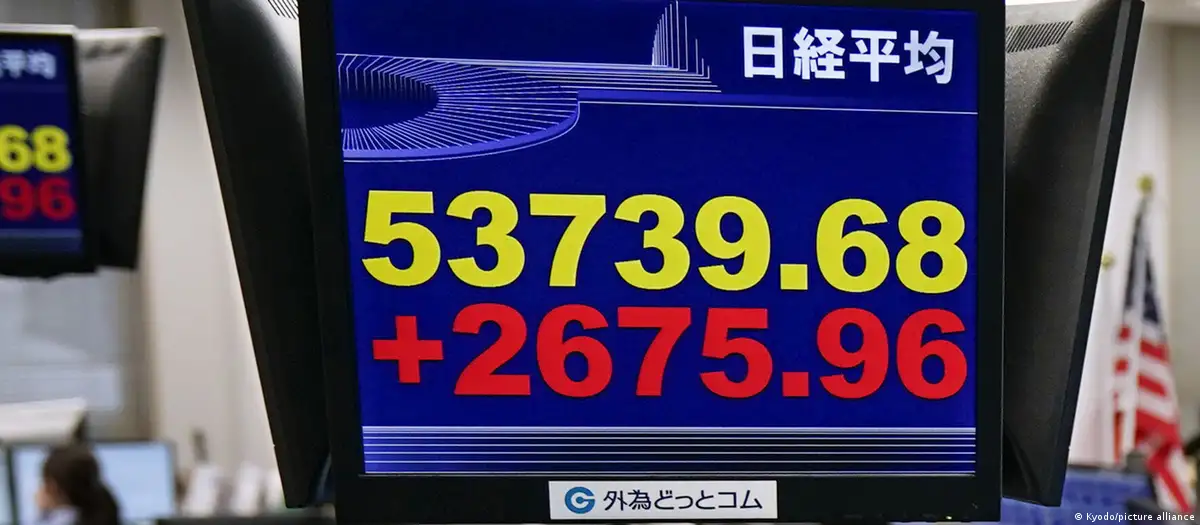
What you need to know
- Donald Trump says the US will hit Iran 'extremely hard over the next two to three weeks'
- He says America's core objectives in Iran war are 'nearing completion'
- Trump made the remarks during his first prime-time address to the nation since the start of the war
- Oil prices surge and stocks in Asia plummet after Trump's speech
- Iran warns of 'crushing attacks' on the US and Israel in response to Trump's threats
- The UK is hosting a virtual meeting with over 30 countries to discuss ways to reopen the Strait of Hormuz
Here are the latest developments surrounding the US-Israel war with Iran on Thursday, April 2:
Austria says it refused US use of its airspace
The Austrian military said it denied the US military access to its airspace for bombing missions in Iran.
"There have indeed been requests and they were refused from the outset," Colonel Michael Bauer said, adding that every time a similar request "involves a country at war, it is refused."
Austria joins other EU nations that have opposed participating, even passively, in the US and Israeli strikes. Italy recently said that the US forces could not use Sigonella Air Base in Sicily for its war, banning any of Washington's military aircraft from landing.
France has closed its airspace to any aircraft suspected of flying military equipment to Israel, and Spain has taken similar measures.
Germany joins UK-led talks on Hormuz shipping
Germany is taking part in UK-led talks on securing the Strait of Hormuz after the US signaled others should handle the issue.
British Foreign Secretary Yvette Cooper said she would chair a virtual meeting on Thursday with about 35 countries.
Germany is joining partners including France, Italy, Canada and the United Arab Emirates to explore ways to restore freedom of navigation through the vital waterway. The United States is not expected to attend.
The talks come after Donald Trump said the strait could reopen "naturally" and that countries relying on it should take responsibility for keeping it open.
ermany has a strong interest in the route as a key global energy corridor, with disruptions posing risks to supply stability and prices.
Macron: Trump 'contradicting' himself daily on Iran war
US President Donald Trump cannot keep "contradicting" himself every day on Iran, his French counterpart Emmanuel Macron said during an official trip to South Korea.
The French president added that Trump's suggestion to reopen the Strait of Hormuz by force was "unrealistic."
"Some people defend the idea of freeing the Strait of Hormuz by force via a military operation, a position sometimes expressed by the United States, although it has varied," Macron told journalists.
"This was never the option we have supported because it is unrealistic," he added. "It would take forever, and would expose all those who go through the strait to risks from the guardians of the revolution but also ballistic missiles," he added.
Macron also cast doubt on Trump's purported goal of permanently curbing Tehran's nuclear program.
"A targeted military action, even for a few weeks, will not allow us to resolve the nuclear issue in the long term," he said, adding that "if there is no framework for diplomatic and technical negotiations, the situation can deteriorate again in a few months or a few years."
The French leader was also asked about comments Trump had recently made, accusing Macron's wife Brigitte of domestic violence. The comments appeared to reference a 2025 video that showed Brigitte's hands, her body obscured by a door, shoving her husband's face.
Due to the position of the door, it is impossible to tell what preceded this moment, but Macron has insisted he and his wife were "playing around" and the moment was taken out of context.
Trump's claims that Macron was "still recovering from a right to the jaw," were neither "elegant nor up to standard," he said.
Kremlin: Moscow ready to act as mediator
Russian President Vladimir Putin's spokesman Dmitry Peskov told reporters that the Kremlin remains in contact with regional leaders and ready to act as a go-between if necessary.
"The president is continuing these contacts, and if our services are somehow required, we are, of course, ready to make our contribution to ensuring that the military situation transitions to a peaceful course as soon as possible," Peskov said.
His statement came as Putin was hosting Egyptian Foreign Minister Badr Abdelatty to discuss the conflict as well as issues across the wider Middle East.
Iraq: oil exports to be routed through Syria
Iraq has begun exporting oil through neighboring Syria as it looks to reboot an economy which has been dealt a devastating blow by the current conflict in the Middle East.
On Wednesday, the Iraqi oil ministry said it was "cooperating with Syria to ensure oil reaches export outlets" and that "export operations would gradually increase to boost Iraq's economy."
Iraq's state-owned oil marketer SOMO announced that it had signed a contract to export 50,000 barrels per day of Basra medium crude through Syria to the Mediterranean and to customers in Europe, with director general Ali Nazar saying there were plans to increase volumes.
Iraq, which shares a long eastern border with Iran, relies upon oil exports for 90% of its revenues. The vast majority of Iraqi oil is exported via the southern port of Basra and the Strait of Hormuz — which Iran has effectively cut off in response to US-Israeli attacks.
Since the war started, oil production in southern Iraq has fallen by more than 70%, with output across the wider Basra province dropping from 3.1 million barrels per day to roughly 900,000, Bassem Abdul Karim, the head of the state-run Basra Oil Company, told the Associated Press (AP) this week.
With oil fields, energy infrastructure and US military bases inside Iraq all being targeted by both Iran and Tehran-backed Iraqi militias, many foreign workers have also fled the perilous situation.
According to Abdul Karim, Iran has offered assurances that Iraqi crude can safely transit the Strait of Hormuz. However, since Iraq lacks its own tanker fleet and depends on chartered vessels sailing under foreign flags, shipments ultimately hinge on whether tanker owners are willing to accept the risks of making the journey — and most are not.
As for the northwestern land export routes via Syria and Jordan, Abdul Karim said pipeline capacity is limited while trucking by road is costly and inefficient.
But with experts warning that the Iraqi government only has enough cash reserves to see it through until mid-May without a resumption in oil sales, it's currently the only option open to Baghdad.
Fact check: Donald Trump speaks on Iran, oil and economy
In a national address, US President Donald Trump spoke about the war in Iran and claimed that "all of their original leaders" are dead and that the US is "totally independent" of Middle Eastern oil. Is this true?
WATCH — US President Trump: Core objectives in Iran almost completed
In his first Presidential address since the start of the conflict, Donald Trump said the US is close to achieving its war goals in Iran. DW's Washington Bureau Chief Ines Pohl about what that exactly means.
China: 'Illegal military operation' to blame for Strait of Hormuz blockade
China's Foreign Ministry has issued a statement that the reason why the Strait of Hormuz is closed, prompting a global spike in oil prices, is the "illegal military operation" in Iran.
Beijing called for an "immediate" end to hostilities after Trump's earlier threats to continue striking Iran, saying "parties need to work together to prevent escalation."
Citing the negative impact on the economy worldwide, as well as energy security, the Foreign Ministry said that a diplomatic resolution should be back on the table.
Iran vows 'crushing attacks' after Trump speech
Iran has vowed to carry out "crushing" attacks against the US and Israel after US President Donald Trump threatened to bring the country back to the "Stone Ages."
"With trust in Almighty God, this war will continue until your humiliation, disgrace, permanent and certain regret, and surrender," Iran's state TV reported the military's operational command Khatam Al-Anbiya as saying.
Ebrahim Zolfaqari, spokesperson of the Khatam al-Anbiya central headquarters, said that the US and Israeli assessments of Iran's military capabilities were "incomplete" as he responded to Trump's announcement of hitting the Islamic Republic hard within weeks.
Trump said Iran was "essentially decimated," with the US on course to achieve its military objectives.
Meanwhile, Israel said it came under missile fire from Iran on Thursday. The United Arab Emirates said its air defences were again responding to missile and drone "threats."
UK to host summit of over 30 nations to discuss reopening Strait of Hormuz
The United Kingdom is set to gather some 35 countries for a virtual summit on Thursday to discuss options for reopening the Strait of Hormuz.
UK Prime Minister Keir Starmer said on Wednesday that Foreign Secretary Yvette Cooper would chair the conference.
The meeting "will assess all viable diplomatic and political measures we can take to restore freedom of navigation, guarantee the safety of trapped ships and seafarers and to resume the movement of vital commodities," he said.
The Strait of Hormuz — through which about a fifth of the world's crude oil passes — has been paralyzed by Iranian attacks on commercial ships and the looming threat of more strikes should vessels try to sail through the waterway.
The halt in traffic in the waterway — which connects the Persian Gulf to the Indian Ocean — has sent oil and petroleum prices soaring.
Starmer said resuming shipping "will not be easy," and would require "a united front of military strength and diplomatic activity" alongside partnership with the maritime industry.
President Donald Trump has railed against his country's allies that refused to join the US-Israeli war in Iran, telling them to "go get your own oil" and that it was not America's job to secure the Strait.
Starmer said that after the meeting, military planners from the nations attending would convene to chalk out ensuring security for shipping "after the fighting has stopped."
The meeting will be attended by countries that recently signed a statement saying they were prepared to contribute to efforts to secure safe passage through the critical waterway, including Germany, France and Japan.
Oil rises, Asian stocks fall as Trump gives no timeline to end war
Following US President Donald Trump’s address to the American people on the Iran war, oil prices again surged, while stock markets in Asia dropped.
Iran's near-closure of the Strait of Hormuz in response to the US-Israeli air strikes has severely disrupted global energy markets.
Trump said Iran was to blame for a rise in oil prices that he assured would be "short-term."
The rise is "entirely the result of the Iranian regime launching deranged terror attacks against commercial oil tankers and neighboring countries that have nothing to do with the conflict."
The US president repeated his assertion that the conflict was nearing its end, but did not provide a clear timeline.
Trump’s speech also failed to ease global market concerns.
Brent crude, the international standard, rose 5% to $106.22 (€92) per barrel, while benchmark US crude increased 4.2% to $104.36 a barrel.
Tokyo’s Nikkei 225 stock market fell 1.4% to 53,004.81 in early Asia trading.
South Korea’s Kospi slid 3.4% to 5,292.36. Hong Kong’s Hang Seng fell 0.8% to 25,082.59.
US stock futures sank 1% and European futures fell over 1.5%.
Trump touts gains against Iran in national address
President Donald Trump addressed the American people on Wednesday night to brief the nation on the war in Iran.
Trump repeated his claim that the US was close to wrapping up the war, adding that Washington's "core strategic objectives are nearing completion."
The address marked Trump’s first prime-time speech since the US-Israeli joint military offensive against Iran was launched over a month ago.
On US operations in Middle East
During the highly anticipated address, Trump reiterated what he called US military successes in the campaign.
Trump said that Operation Epic Fury’s actions over the past month meant that Iran's "ability to launch missiles and drones is dramatically curtailed, and their weapons factories and rocket launchers are being blown to pieces."
Trump said that the country's "navy is gone, their air force is in ruins," and the country's leaders "are now dead."
"We're going to hit them extremely hard over the next two to three weeks; we’re going to bring them back to the Stone Ages where they belong," he said, before adding that "discussions were ongoing."
"We are going to finish the job, and we're going to finish it very fast. We're getting very close," Trump said.
He went on to repeat Defense Secretary Pete Hegseth's claim that family members of US soldiers killed in the Iran war had also called on the President to "finish the job."
On the Strait of Hormuz
Trump mentioned the situation in the Strait of Hormuz, which has been virtually closed by Iran since the start of the conflict.
The near-closure of the waterway, through which around a fifth of the world's crude oil normally passes, has seen oil prices surge to over $100 a barrel and spooked global markets.
Trump downplayed the situation, saying the US imports "almost no oil through the Hormuz Strait and won’t be taking any in the future."
"We don't need it. We haven’t needed it, and we don’t need it. We've beaten and completely decimated Iran," he claimed.
Welcome to our coverage
Thank you for joining us as we bring you the live coverage of day 34 of the Iran war.
Before we begin, here’s a recap of Wednesday's events:
- US President Donald Trump claimed that the Iranian president wants a ceasefire, but Tehran called the remarks 'false and baseless'
- NATO Secretary-General Mark Rutte will visit the US next week to hold talks with Washington officials amid a widening chasm between the Trump administration and other NATO allies over differences on the Iran war
- Iran's President Masoud Pezeshkian wrote an open letter to the American people: "Is America really first on the list of priorities of the US government?" he asked
- The International Energy Agency, the International Monetary Fund, and World Bank Group have formed a coordination group to better respond to the economic effects of the war
- Iran fired a barrage of missiles at Israel's largest city of Tel Aviv shortly before the start of the Jewish festival of Passover. According to the Israeli media, around 10 ballistic missiles were fired at central Israel, making it one of the largest such attacks since the early days of the war
- Huge crowds gathered in Tehran for the funeral of Islamic Revolutionary Guard Corps (IRGC) commander Alireza Tangsiri, who was killed in an Israeli airstrike last week
- Lebanon's Health Ministry reported at least seven people were killed in two Israeli strikes in the Beirut area. One of those killed was Hezbollah's Southern Front commander, Israel said