Iran war: Israel says it will hold talks with Lebanon 'soon'
Published April 9, 2026last updated April 10, 2026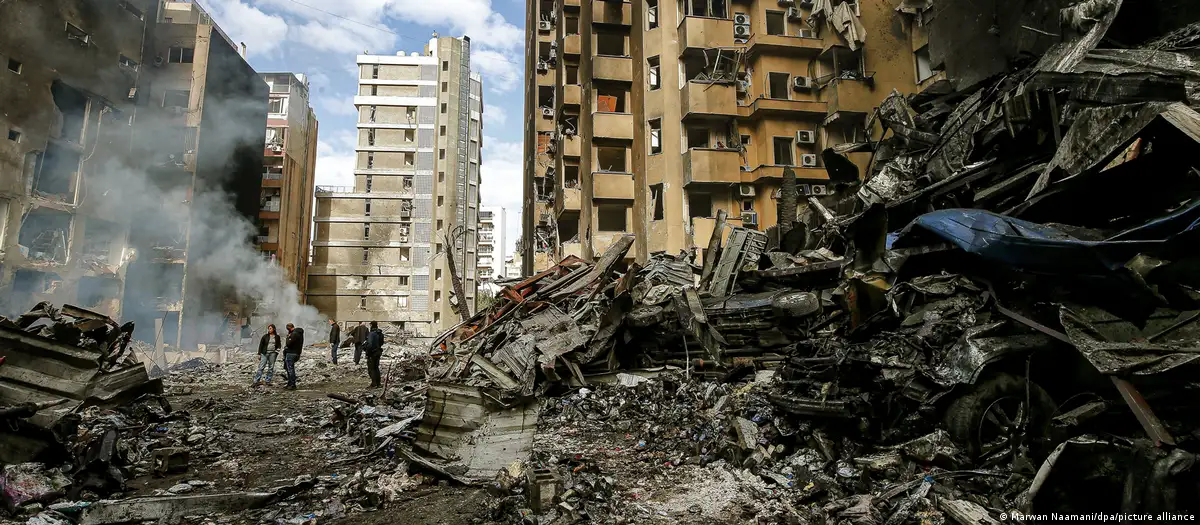
What you need to know
- Israel's Netanyahu said he told his Cabinet to start talks with Lebanon 'as soon as possible'
- Germany's Merz has said Berlin will reopen contact with Tehran
- Israel has issued an evacuation order for southern Beirut
- Iran has said negotiations with the US are 'meaningless' if Israel continues to attack Lebanon
- Crowds have gathered in Tehran for the 40th day of mourning for the death of Ali Khamenei
- Iran, the US and Israel remain at odds over whether Lebanon was part of the ceasefire deal
These updates have been closed. Thank you for reading.
You can follow our latest coverage of the situation in Israel, Iran and the Middle East here.
Below, you can review news from the US-Israel war with Iran and the wider conflicts in the Middle East from Thursday, April 9:
Iran 'better not' impose tolls on Strait of Hormuz — Trump
US President Donald Trump made a series of posts on his Truth Social platform on Thursday critical of Iran.
He warned Iran against imposing tolls on ships passing through the Strait of Hormuz.
"There are reports that Iran is charging fees to tankers going through the Hormuz Strait — They better not be and, if they are, they better stop now!" Trump wrote.
In a separate post, Trump said that oil would soon "start flowing" and that Washington would achieve this "with or without the help of Iran."
Trump previously suggested that the United States and Iran could run a "joint" toll program in the crucial waterway without providing details or any indication that Tehran had agreed to the proposal.
In a later post, Trump wrote that Iran was doing "a very poor job" of allowing oil to go through the Strait of Hormuz, adding, "That is not the agreement we have!"
Iran agreed to reopen the strait as part of a two-week truce with the United States that went into effect on Wednesday.
Tehran had effectively closed the Strait of Hormuz — a major energy chokehold that sees some 20% of the world's oil deliveries pass through it — in response to the United States and Israel's bombardment of Iran.
German foreign minister calls on Iran to respect ceasefire
German Foreign Minister Johann Wadephul spoke Thursday with his Iranian counterpart, Abbas Araghchi, and called for Iran to respect the ceasefire.
Wadephul, in a post on X, also called for Tehran to engage in constructive negotiations to ensure the safe passage of ships through the Strait of Hormuz.
READ: Fragile Iran truce brings brief relief to African markets
The truce between the US, Israel and Iran has eased pressure on African markets.
But economists warn that deep‑rooted vulnerabilities mean the rebound may be short‑lived.
Read more about the impacts of the crisis in the Middle East on Africa.
Iran's Mojtaba Khamenei says Strait of Hormuz to be brought to 'new phase'
Iranian Supreme Leader Mojtaba Khamenei said Tehran would take its management of the Strait of Hormuz into a "new phase" in a message read out on state television.
"We did not seek war and we do not want it," he was cited as saying in the message attributed to him.
"But we will not renounce our legitimate rights under any circumstances, and in this respect, we consider the entire resistance front as a whole," he said.
Iran refers to itself and allied militia groups in Lebanon, Iraq, Yemen and the Palestinian territories as an "Axis of Resistance" against the United States and Israel.
He also called for Iranians to take to the streets in support of the government.
"Your voices in public squares are undoubtedly influential in the outcome of the negotiations," Khamenei said.
Khamenei was speaking 40 days after his father and predecessor, Ayatollah Ali Khamenei, was killed in US-Israeli strikes on February 28.
He replaced his father in the role of supreme leader on March 8 but has not been seen in public since then, leading to speculation that he was also wounded in the strikes, with some suggesting he may have died.
READ: Tehran claims victory but people fear what's next
As a tenuous truce takes hold after over a month of bombing, Iranians fear a wounded yet surviving regime will clamp down even more harshly on its opponents at home.
Read more on how Iranians are fearing the fallout of the war at home.
Trump said Netanyahu will be more 'low-key' in Lebanon
US President Donald Trump said he was "very optimistic" about the possibility of reaching a deal with Iran ahead of scheduled weekend talks in Islamabad, Pakistan.
He told US broadcaster NBC that Iran's leaders "talk much differently when you're at a meeting than they do to the press. They’re much more reasonable."
He insisted that Iran had been "conquered," adding: "If they don’t make a deal, it’s going to be very painful."
Trump threatened that "a whole civilization will die tonight" on Tuesday, shortly before the two parties reached a two-week ceasefire deal.
On Thursday, Trump also said that Israeli Prime Minister Benjamin Netanyahu told him Israel would scale back its offensive in Lebanon.
"I spoke with [Netanyahu] and he's going to low-key it. I just think we have to be sort of a little more low-key," Trump said.
Iran has said it considers Israel's operations in Lebanon to be a violation of Tehran's two-week truce with the United States.
Hezbollah calls for ceasefire as prerequisite for talks with Israel
Hezbollah lawmaker Ali Fayyad said that the party rejects direct talks with Israel.
It comes after Israeli Prime Minister Benjamin Netanyahu said he had instructed his Cabinet to engage in negotiations with Beirut "as soon as possible."
Fayyad said that Lebanon should demand a ceasefire as a precondition to any further talks.
He also called for a withdrawal of Israeli troops from Lebanese territory and for displaced residents to be able to return to their homes.
The political wing of Hezbollah has two ministers in Lebanon's governing coalition, but Beirut banned its armed wing's military activities early in March.
Death toll from Israel's Wednesday strikes on Lebanon rises to over 300
Lebanon's Health Ministry has revised the death toll from Israeli strikes on Wednesday up to 303.
At least 1,150 were injured in the strikes, the ministry said.
This brought the total toll since March 2 up to 1,888 killed and 6,000 wounded, according to the figures.
The ministry said the death toll could rise further as rescue teams were still removing bodies from under the rubble.
Over 4 million displaced in war in Iran, Lebanon
More than 4.25 million people have been displaced in the war in Iran and Lebanon since February 28, according to figures released by the World Health Organization (WHO).
Some 3.2 million people have been displaced in Iran and over 1 million in Lebanon, according to the report. It also gave figures for deaths and injuries in the countries involved in the conflict:
- Iran: 2,362 dead, 32,314 wounded
- Lebanon: 1,739 dead, 5,873 wounded
- Iraq: 109 dead, 300 wounded
- Israel: 24 dead, 7,183 wounded
WHO said that the conflict has been marked by an increase in attacks on healthcare facilities, with 6 verified attacks on facilities in Israel, 106 on facilities in Lebanon and 23 on facilities in Iran.
It also warned that several countries depend on desalination for their drinking water, pointing to attacks on four desalination facilities in Iran, Bahrain and Kuwait.
Peace talks 'contingent' on ending war in Lebanon — Iranian Foreign Ministry
Iran's Foreign Ministry said that Tehran's participation in peace talks with the United States is dependent on Washington observing the two-week ceasefire deal, including in Lebanon.
"The holding of talks to end the war is contingent on the US' adherence to ceasefire commitments on all fronts, especially in Lebanon," ministry spokesperson Esmaeil Baghaei said.
"The cessation of the war in Lebanon is an integral part of the ceasefire agreement proposed by Pakistan," he said.
Iran has repeatedly insisted that Lebanon is part of the ceasefire deal, even as the US and Israel say that it isn't.
Israel to begin talks with Lebanon 'as soon as possible' — Netanyahu
Israeli Prime Minister Benjamin Netanyahu said he had ordered his Cabinet to swiftly begin direct talks with Lebanon.
"In light of Lebanon's repeated requests to open direct negotiations with Israel, I instructed the cabinet yesterday to begin direct negotiations with Lebanon as soon as possible," Netanyahu's office said in a statement.
"Negotiations will focus on disarming Hezbollah and establishing peace relations between Israel and Lebanon," the statement read. "Israel appreciates today's call by the Prime Minister of Lebanon to demilitarize Beirut."
Multiple countries — including several US allies — have expressed concern that Israel's bombardment of Lebanon could jeopardize a ceasefire agreement between the United States and Iran, with Tehran saying Israel's continued offensive constitutes a violation of the truce.
What has happened since the US-Iran truce was announced?
The United States and Iran reached a two-week ceasefire agreement early on Wednesday through Pakistani mediation. Here are some of the major developments since then.
- World leaders warily welcomed the truce between Washington and Tehran
- US declared 'victory' in war, while Iran called it a 'humiliating retreat' on the part of Washington
- Trump said Iran and the US could work together to secure the Strait of Hormuz
- Some ships passed through the strait, but others reported being sent back
- In-person talks between Iran and the US are set to begin in Pakistan on Saturday
- The White House said Vice President Vance would lead the US delegation
- Israel has continued its bombing campaign in southern Lebanon and Beirut
- Iran threatened to end the truce after accusing Israel of violating the ceasefire agreement by continuing its Lebanon offensive
- Iranian parliamentary speaker Ghalibaf said Israel had violated three parts of the agreement already on Wednesday
- US maintained that the truce did not cover Lebanon, with US Vice President JD Vance saying Iran's position was based on a 'misunderstanding'
- Pakistan, France, Russia and other countries have called for Lebanon to be included in the ceasefire deal
- Germany has said it will restart talks with Iran while Spain is set to reopen its Tehran embassy
Merz: Germany to reengage with Iran after 'excessive' Trump threat averted
German Chancellor Friedrich Merz delivered a surprise on Thursday afternoon with the announcement that Berlin would be reengaging with Iran in an effort to end the war in the Middle East for good.
"After a long period of silence, for which there were serious reasons on our side, we as the Federal Government are now resuming talks with Tehran," he told reporters.
According to Germany's Federal Press Office, Merz had been in contact "with all relevant parties" over the Easter weekend, including US President Donald Trump.
Until now, however, the Chancellor had not spoken publicly about the situation not a single word, for instance, on President Trump's threat to wipe out a "whole civilization" before announcing a ceasefire.
Merz's silence had puzzled many observers in Berlin but, after welcoming the ceasefire, he said: "The threat of an excessive escalation, which had been looming in recent days, has thus been averted, at least for the time being."
A German Chancellor calling the behavior of a US president "excessive" yet another step in the increasing estrangement between Berlin and Washington.
Some Lebanon hospitals dangerously low on supplies, WHO official warns
A World Health Organization (WHO) representative in Lebanon has warned of shortages of life-saving trauma medical kits in an interview with Reuters.
The kits, which include bandages, antibiotics and anaesthetics, are used to treat patients who sustained war-related injuries.
"Some of the trauma management supplies were in short [supply] and we may run out in a few days," the WHO's representative in Lebanon Abdinasir Abubakar told Reuters.
Speaking a day after Israel's largest bombardment of the conflict to date killed more than 200 people and wounded more than 1,000, Abubakar said such widespread attacks put considerable strain on supplies.
"If we have another mass casualty, like what happened yesterday, it will be a disaster," he said. "Probably we will lose more lives just because we don't have enough supplies."
He said that Wednesday's attacks led to supplies that would usually last around three weeks being depleted in a single day.
Russia says it believes US-Iran truce applies to Lebanon
Russian Foreign Minister Sergei Lavrov said that Moscow supported peace negotiations between Washington and Tehran in a call with his Iranian counterpart, Abbas Araghchi.
"Lavrov expressed hope for the success of the negotiations," the ministry said in a statement.
It said that Russia welcomed the announcement of a two-week truce between the United States and Iran, while emphasizing that "Moscow firmly believes that these agreements … have a regional dimension and, in particular, apply to Lebanon."
In a separate statement, ministry spokesperson Maria Zakharova condemned Israel's offensive in Lebanon, saying that the operations "threaten to derail the emerging negotiation process."