Germany updates: Driving tests – and costs – at record high
Published February 11, 2026last updated February 11, 2026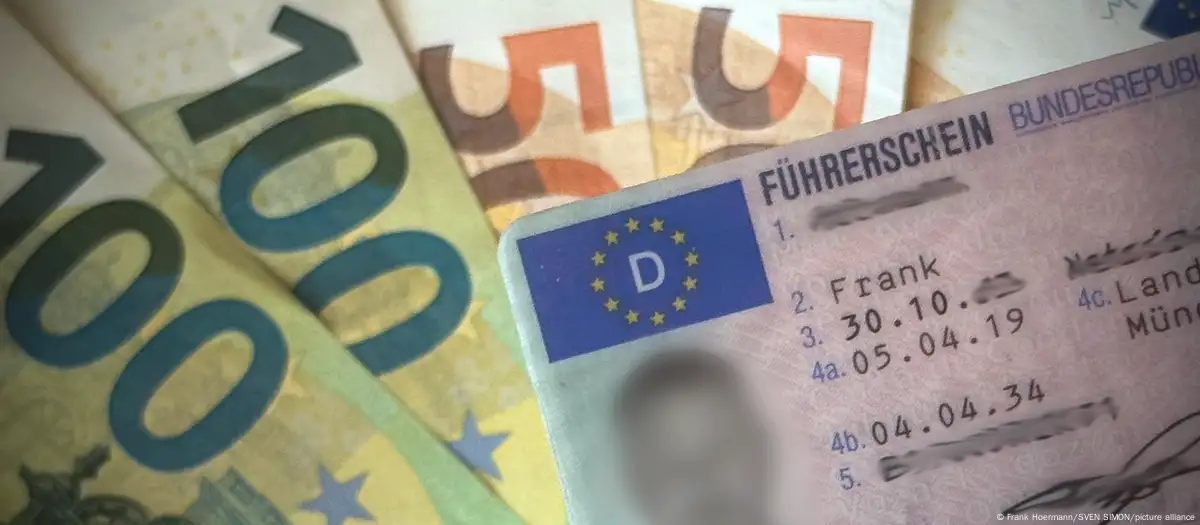
What you need to know
- Driving tests – and costs – at record high in Germany
- Olympics: German medal hopes in biathlon after successful Tuesday
- Foreign Minister Wadephul to meet Central Asian counterparts
This blog is now closed. Below is a roundup of DW's coverage of the latest headlines out of Germanyon Wednesday, February 11.
Merz calls for economic deregulation across EU
German Chancellor Friedrich Merz called for "bold" action by the European Union to reverse a quarter century of industrial "decline" in and compete with the US and China.
"Only an economically powerful Europe will be a sovereign Europe," Merz told industry chiefs gathered in the Belgian port city of Antwerp on the eve of EU talks on the economy.
"It is high time for Europe to act, to act swiftly and to act decisively," he said, calling for the EU to "deregulate every sector".
The leader of Europe's largest economy also said the EU's existing carbon market could be revised or even postponed to these ends.
"The system is implemented to reduce CO2 emissions and at the same time to enable the companies to come to CO2-free production lines," Merz said.
"So if this is not achievable, and if this is not the right instrument, we should be very open to revise it, or at least to postpone it."
French President Emmanuel Macron also told business leaders that the only solution to economic rivalries was to make Europe "an independent power" while European Commission President Ursula von der Leyen said EU members states needed to unify their financial policies in order to bring in more capital and better compete in the world market.
BMW plans global recall of hundreds of thousands of cars amid fire risk
German carmaker BMW has confirmed reports of plans for a global recall of several hundred thousand cars.
This is the upshot of an engine starter defect that could in the worst case scenario lead to a fire hazard, which had already prompted a product recall for the US market a few days ago.
According to the specialist publication kfz-betrieb that first published the news in Germany, the recall could affect a total of 575,000 cars of different models, at least 28,000 of them in Germany.
BMW said that the potential defect was identified via a combination of product testing and customer feedback. An electromagnet fault could in rare cases lead to a short circuit that in turn could cause a fire, it said.
Sixteen models equipped with a starter produced between July 2020 and July 2022 could be affected, the company said, it recommended that affected customers do not leave a vehicle unattended with the engine running.
Tesla charges union worker at Grünheide factory in IG Metall fight
A trade union member was detained by police at Tesla's Gigafactory in Grünheide this week, with the company accusing him of being caught in the act recording a private meeting.
The IG Metall trade union, however, has disputed this account of events, amid tensions between Germany's main metalworkers' union and the US carmaker in the run-up to works council elections in early March.
Football: Hertha crash out of cup, Bayern face Leipzig tonight
Hertha Berlin's wait for a German Cup final appearance at "home" in the Olympiastadion has been extended for another year after a quarterfinal defeat to SC Freiburg on penalties on Tuesday night.
The German Cup (DFB Pokal) final has taken place in Berlin since 1985 – but Hertha, who play their Bundesliga 2 home games at the Olympiastadion, haven't reached a cup final since 1979 when they lost to Fortuna Düsseldorf in Hannover.
Ironically, Hertha's amateur reserve team sensationally reached the final in 1993, losing to Bayer Leverkusen, but the first team has never made it that far.
After 90 goalless minutes on Tuesday, Bundesliga side Freiburg took the lead in extra-time through Japanese midfielder Yuito Suzuki. Fabian Reese drew Hertha level with a stunning goal to take the tie to penalties, where Freiburg won 5-4 to join Bayer Leverkusen and defending champions VfB Stuttgart in the semifinals.
The final quarterfinal takes place on Wednesday night as Bayern Munich (who haven't reached a cup final since 2020) face RB Leipzig.
US citizen sentenced to jail in China spy case
A former member of the United States armed forces was sentenced in Germany to two years and eight months in prison on Wednesday after being found guilty of planning to pass on sensitive military information to Chinese intelligence.
The court found that the 39-year-old US citizen, who had previously served in the US Navy before working for a civilian contractor on US military bases in the southwestern German cities of Wiesbaden and Mainz, had contacted Chinese state institutions on several occasions in summer 2024 with offers of intelligence.
He was arrested on November 7, 2024, before actually managing to pass on any information.
The court determined that the man's motivation stemmed from a falling out with his employer relating to perceived injustices against the US military, for example, alleged billing fraud. According to the judge, the accused raised these issues with both his employer and US authorities. Feeling ignored and seeing no improvement, he decided to take further action.
The court noted that the Chinese authorities appear to have shown little interest in the information offered.
EU 'falling behind in global competition,' German businesses warn
A group of leading German businesses has warned that the European Union is "falling behind in global competition" and called on the bloc's leaders to implement key reforms to boost competitiveness with global players like the United States and China.
The "Made for Germany" alliance of 123 companies and investors said in a statement on Wednesday that Europe's industrial base is under immense pressure, facing off against nations that control their industrial policy, deliberately deregulate the economy and rapidly expand key technologies.
"Many European companies are losing competitiveness every day," warned the group, which includes German heavyweights like Siemens and Deutsche Bank, calling for a move "away from overregulation."
"Europe must master the critical technologies that underpin industry, energy supply and security," said Siemens chief executive Roland Busch. "We have everything we need to do this: a strong industrial base, first-class talent and in-depth technological expertise."
Deutsche Bank chief executive Christian Sewing criticized the EU for not playing to its strengths, saying, "There is already considerable interest in investing in Europe again, and it will grow even more if we set the right course now."
The "Made for Germany" initiative was launched last year in a bid to boost the country's ailing economy, with businesses and investors pledging to invest over €800 billion ($952 billion) by 2028.
The group's statement comes a day before EU leaders are set to gather in Belgium to discuss the bloc's economic challenges.
Olympics: Gold and silver for Germany
Germany continued its impressive start to the Winter Olympics in Milan-Cortina with another two medals on Tuesday: Julia Taubitz won gold in the women's single luge and Emma Aicher and Kira Weidle-Winkelmann won silver in the Alpine skiing women's team combined.
After gold for Max Langenhan in the men's luge on Sunday and Philipp Raimund in the men's ski jumping on Monday, plus bronze in the biathlon mixed relay, "Team D" (for Deutschland) is currently joint-second with Sweden in the early medal table, behind first-place Norway.
On Wednesday, German medal hopes will be focused on the women's biathlon singles, where world champion Franziska Preuss is going for gold — along with fellow Germans Vanessa Voigt, Janina Hettich-Walz and Selina Grotian.
Foreign Minister Wadephul to meet central Asian counterparts
German Foreign Minister Johann Wadephul is set to welcome counterparts from several Central Asian countries to Berlin on Wednesday.
In addition to bilateral meetings with the foreign ministers of Turkmenistan, Tajikistan, Kyrgyzstan, Uzbekistan and Kazakhstan, meetings with business representatives are also planned.
According to the German Foreign Ministry, Central Asian states are becoming increasingly important partners for Germany on various current issues, including energy, raw materials and climate change.
Countries in Central Asia are also key when it comes to preventing Russia's circumvention of sanctions imposed in relation to the ongoing invasion of Ukraine.
Driving tests at record high — but one in three fail at first attempt
A record number of people took driving tests in Germany in 2025 — but the first-attempt pass rate remained relatively low, according to the latest annual figures from the Technical Inspection Association (Technischer Überwachungsverein or TÜV), which carries out driving tests, licensing and inspections.
According to the TÜV, 1.89 million practical driving tests were administered in 2025, some 90,000 more than in 2024 — marking an increase of 4.9%. Theory tests were also up by around 33,000 to 2.04 million, an increase of 1.6%. The vast majority of tests were for the standard category B license (73% of practical tests and 80% of theory tests).
"Driving licenses are booming as much as ever," said TÜV spokesman Richard Goebelt.
The majority of learner drivers in Germany passed their tests first time (65% practical, 63% theory), meaning that every third applicant faced a re-test, where the pass rate was significantly lower (58% practical, 44% theory).
"Repeat applicants have a hard time and some even fail several times," said Goebelt, explaining that every failed test adds extra psychological and financial pressure. "If you want to get your driving license faster and cheaper, you have to do everything to pass at the first attempt."
The cost of obtaining a driving license in Germany has skyrocketed in recent years. According to the ADAC, Europe's largest automobile association, learner drivers in 2026 can expect to pay between €2,500 and €4,500 ($2,980 and $5,360) in total costs. By way of comparison, the average cost in 2020 was around €2,200 and in 2017 around €1,900.
German Transport Minister Patrick Schnieder (CDU) has announced reforms on which he is expected to elaborate this week. According to the minister, the goal of the reform is "to make obtaining a driving license more affordable — while maintaining the same high standards of road safety."
The TÜV Association has proposed "mandatory, standardized digital progress checks" to determine "readiness for the driving test" before the exam. The association is critical, however, of "proposals that amount to a blanket reduction of requirements for preparing novice drivers — for example, reductions in driving time, test duration and the question catalog."
Welcome to our coverage
Guten Morgen! Welcome to DW's coverage of what Germany is talking about on Wednesday, February 11.
A record number of people took driving tests in Germany last year, according to new figures, despite rising costs. The German government is currently planning reforms to the system.
Meanwhile, in geopolitics, Foreign Minister Johann Wadephul is set to meet counterparts from several Central Asian states in Berlin.
And after a successful day at the Olympics in Milan-Cortina yesterday, Germany is hoping for another medal on Wednesday.