Germany news: Household wealth reaches record €10 trillion
January 3, 2026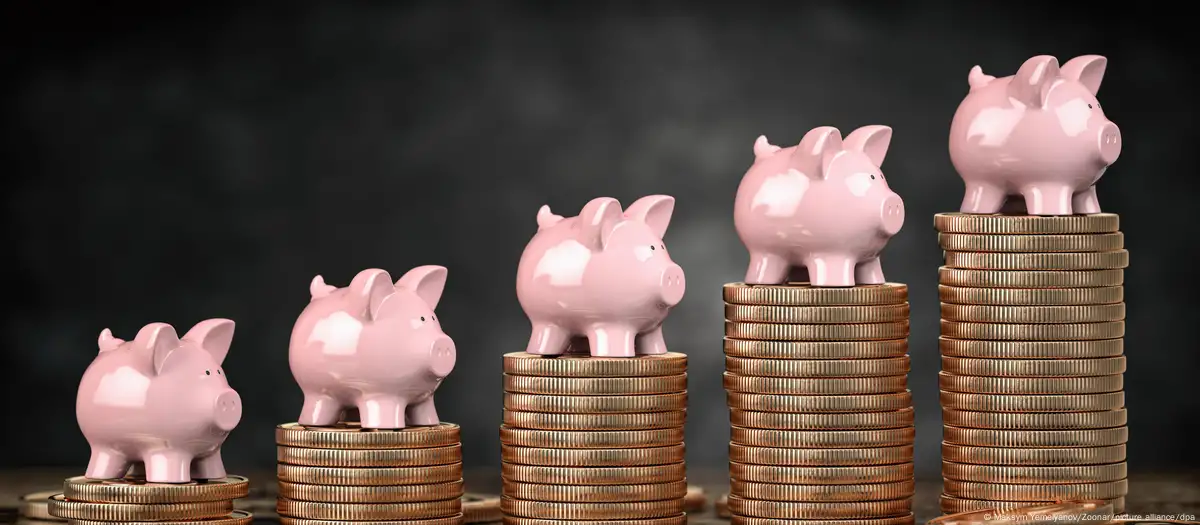
What you need to know
- Private households are hoarding more personal wealth than ever before
- Indian workers earn highest median pay in Germany
- Third bank safe-deposit theft hits western state in days
- Homemade New Year's fireworks killed two teenagers in western Germany
- Germany records large fall in illegal border entries
- Job insecurity climbs to financial crisis levels
Below is a roundup of the main headlines from Germany during the Christmas and New Year week:
We are pausing our coverage
We'll be back on Saturday morning for more updates from Germany.
Brandenburg AfD ends one of its lawsuits against domestic intelligence agency
The Brandenburg state chapter of the far-right Alternative for Germany (AfD) party has taken back its lawsuit against the domestic intelligence agency over being classified as suspected right-wing extremist.
The move, however, is just a formality as the party continues its lawsuit over the agency's new classification of the local branch as confirmed right-wing extremist.
"With the classification as 'confirmed right-wing extremist' that has now taken place, the previous lawsuits against the observation as a suspected case have been settled," Brandenburg AfD chairman Rene Springer said.
The local branch of the party was classified as suspected right-wing extremist six years ago, but this was upgraded to confirmed in 2025.
Springer called this a "politically motivated escalation."
A date for the hearing in the party's new lawsuit against the confirmed classification has not been set.
Indian workers earn highest median pay in Germany
Indian employees have emerged as the highest earners among foreign workers in Germany, according to a new study.
The employer-linked Institute of the German Economy said the median gross monthly wage for Indian workers reached €5,393 (about $6,300) in 2024, ahead of Austrians, at €5,322; Americans, at €5,307; and Irish nationals, at €5,233.
German workers earned a median gross income of €4,177, while foreign workers overall earned €3,204, the institute said.
Read more about how high salaries are attracting larger numbers of Indians to Germany.
Third bank safe-deposit theft hits western state in days
Safe-deposit boxes have been broken into again at a bank branch in the western state of North Rhine-Westphalia, marking the third such case in just a few days.
After incidents in Bonn and a major vault break-in in Gelsenkirchen, police have now confirmed a case in Halle, near Bielefeld.
In Halle, four safe-deposit boxes were forced open around midday Tuesday during regular business hours, police confirmed on Friday.
Check out our report for more details on the latest bank robbery to hit North Rhine-Westphalia.
Women lose ground in boardrooms of top German firms
Efforts to boost gender equality at the top of Germany's biggest companies have stalled — and in 2025, they slipped backward.
The share of women on executive boards at the 90 largest firms listed on the Dax and MDax fell slightly last year, ending a decade-long upward trend, according to a study by executive search firm Russell Reynolds.
In the Dax, which tracks Germany's 40 largest companies (blue chips), women now hold 25.5% of board seats, down 0.2 percentage points from a year earlier.
Only four companies—Beiersdorf, Merck, MTU, and Siemens Healthineers — stand out with women making up more than half of their executive boards. At the other end of the scale, Porsche and Brenntag still have no women at the board level.
The picture is even weaker in the MDax, which tracks the next 50 successful mid-sized companies. The share of female executives slipped by 0.4 points to 19.5%, marking the first decline after 10 consecutive years of progress.
The study also found that women on boards are disproportionately assigned to human resources roles rather than operational leadership positions.
In a European comparison of nine countries, Germany and Sweden were the only ones to record a setback, while Norway led the field with women accounting for well over one-third of board members.
"The international comparison, the distribution of power within boards, and the shorter tenure of women all show that real structural equality in German boardrooms has still not been achieved," said study author Jens-Thomas Pietralla.
Despite years of political pressure to promote more women into top jobs, the figures suggest Germany’s corporate glass ceiling remains firmly in place.
Most Germans still see themselves as punctual, survey finds
More than 90% of adults in Germany say they are punctual, according to a representative YouGov survey conducted for the DPA news agency.
When asked whether they would describe themselves as punctual, 69% answered "yes" and another 24% said they would consider themselves on balance to be punctual. Only 7% expressed doubt that they were.
The poll, conducted in mid-December among more than 2,000 adults, shows clear generational differences. Older Germans are far more likely to consider themselves punctual than younger ones.
Among people over 80, virtually everyone said they were punctual.
About 97% of baby boomers aged 61 to 79 agreed, followed by roughly 92% among Generation X and Millennials aged 29 to 60.
In Generation Z, however, the share drops noticeably, with about 81% of 18- to 28-year-olds describing themselves as punctual.
Across age groups, there is broad agreement that punctuality is declining.
Overall, 70% said punctuality is less common in Germany today than in the past. That view was shared by more than 80% of the oldest respondents and by 62% of young adults under 28.
German business chief urges rethink of climate and energy policy
One of Germany's top business lobbyists has warned that the country's current climate and energy policy risks damaging large parts of industry and called for a course correction.
Peter Adrian, president of the German Chamber of Industry and Commerce (DIHK), told the DPA news agency that the path Germany is on is already undermining key sectors.
Adrian warned of deindustrialization with what he described as absurd results. He said Germany could end up importing goods that are already produced efficiently and in a climate-friendly way at home from countries where production is less efficient and generates higher CO2 emissions.
He said Germany needs a different approach to climate and energy policy and should stop "playing the know-it-all for the rest of the world." Instead, he argued, Berlin should focus on closer cooperation with other countries.
Adrian stressed that the DIHK does not oppose the goal of climate neutrality. However, he criticized the chosen path and the high costs of the transition, particularly in the energy sector.
A study commissioned by the DIHK found the energy transition under the current strategy would be far too expensive for companies to manage.
Major cost drivers include investment in power grids, the overhaul of industrial processes, new power plants, and energy prices that remain high by international standards.
German film body strips honors over Nazi-era ties
Another key institution in Germany’s film industry has moved to examine possible links to the Nazi era.
The Film Funding Agency, or FFA, has said it will commission an independent study to clarify whether former board members or committee figures were involved with the Nazi regime.
FFA chief executive Peter Dinges told Germany's DPA news agency that the review was prompted by earlier findings from the Spitzenorganisation der Filmwirtschaft (Spio), which had already investigated historical ties among past leaders and award recipients.
Dinges said the FFA, founded in 1968 was younger than Spio but still had a responsibility to confront its early history. "It was a period when Nazi involvement was still possible, and we will get to the bottom of it," he said, adding that the review was owed both to the public and to the institution itself.
The study will be carried out by the Institute for Contemporary History. Based on the Spio findings, Dinges said there were overlaps involving at least two individuals with confirmed Nazi-era ties: Joachim Raffert and Alexander Grüter, both former members of the FFA’s administrative council.
Spio stripped honorary medals from 14 prominent figures in its history, after a study found they were linked to or compliant with the Nazi regime. The body known as Spio said the move was a correction of historical mistakes, following research by Munich's Institute for Contemporary History.
Those affected include actor Heinz Rühmann, who died in 1994, and filmmaker Leni Riefenstahl, who died in 2003. She was closely associated with the Nazi leadership, and her work was seen as a glorification of Third Reich ideology.
The list also includes former Berlinale director Alfred Bauer and actress Olga Tschechova.
Spio described the decision to honor Riefenstahl in particular as a "serious error."
The association said it commissioned the study ahead of its 100th anniversary and amid growing concern about the resurgence of right-wing extremism.
CSU pushes tougher line on refugees and returns
Bavaria's Christian Social Union (CSU) is calling for a sharp tightening of migration policy and faster returns of Syrian refugees, arguing the situation has fundamentally changed.
In a position paper for a party retreat in the lake resort of Seeon, the CSU says most Syrians with temporary protection should lose their right to stay in Germany now that the civil war has ended and that returns should be launched quickly if people do not voluntarily leave.
The CSU draft document, reported by the Münchner Merkur newspaper, says 2026 should bring a full-scale deportation drive.
The position paper calls for removals by scheduled flights, including to Syria and Afghanistan, as well as the creation of nationwide departure centers and a dedicated deportation terminal at Munich airport.
The CSU — the sister party to Chancellor Friedrich Merz's conservative Christian Democrats — is also signaling a harder stance toward Ukrainian refugees.
The paper says the party will push for "particularly military-age Ukrainian men" to contribute to the defense of their country, without giving further details on how this would be enforced.
Wadephul calls for UN Security Council reform
German Foreign Minister Johann Wadephul has called for far-reaching reforms of the UN Security Council, citing repeated blockades in the body.
The conservative Christian Democratic Union (CDU) politician told the DPA news agency in Berlin that the Council must reflect the realities of the 21st century rather than the immediate postwar world of 1945. He added that Germany would push for a much stronger role for the global south.
Germany is running in June 2026 for a non-permanent seat on the UN Security Council for the 2027–2028 term.
The Council has 15 members out of the UN's 193 states. Five countries — the United States, China, Russia, Britain and France — are permanent members with veto power, while the remaining 10 seats rotate every two years among other UN member states.
Asked how Germany plans to prevail against rivals Austria and Portugal, Wadephul said Berlin must remain fully engaged with international partners. Using a football analogy, he said Germany must "be available to play in every position for our international partners."
Wadephul cited Germany's work with small island states on climate-focused foreign policy tailored to their specific vulnerabilities.
He added that after strong engagement in Europe and Asia, Germany would step up efforts in the Indo-Pacific, Africa and Latin America in 2026 to build and deepen global partnerships.
German household wealth tops €10 trillion
German households are sitting on a record pile of savings, with private financial assets climbing above €10 trillion ($11.7 trillion) for the first time.
According to an estimate by DZ Bank, household money assets rose by just over 6% in 2025, or nearly €600 billion, reaching about €10.03 trillion.
The steady rise reflects years of strong saving behavior and, increasingly, gains from rising stock markets, despite Germans' traditionally cautious attitude toward equities.
DZ Bank economist Michael Stappel said the upward trend is likely to continue in 2026, even if market gains ease and households save slightly less.
Under current assumptions, private financial wealth is expected to grow by a further 5% next year to around €10.5 trillion.
Stappel said that while returns may be lower, the absolute amount saved by households is likely to remain broadly unchanged from this year.
Economic uncertainty, job security concerns, and higher living costs have led many households to hold back on spending and to build financial buffers.
We're resuming our coverage
As things get back to normal after the New Year holiday here in Bonn, we'll be keeping track of all the latest news from Germany.
Just stick with us here for all the latest headlines.
We've paused our blog
We'll be back with the latest news once again later in the day on January 2.
Germany records large fall in illegal border entries
Germany recorded more than 62,000 illegal entries at land, air and sea borders in 2025, a 25% drop from the previous year.
Die Welt newspaper cited Federal Police data showing that the number of illegal border entries has dropped by over 50% in the past two years.
In 2023, border officers were detaining more than 20,000 people in some months, while in December, that figure had dropped to under 4,600, the figures showed.
Germany reinstated border checks at all land crossings in September 2024, expanding earlier partial controls. The temporary measures, which aim to reduce illegal migration, have already been extended twice.
The data showed that tens of thousands of people have been turned back at the border in the 15 months since then and that nearly 2,000 people smugglers have been detained.
German job insecurity climbs to financial crisis levels
Germans are as worried about job security now as they were at the height of the 2008-09 global financial crisis, a survey published Thursday found.
The study by consultancy firm EY found that 16% of German residents considered their job to be "very insecure" or "rather insecure." In 2009, the figure was 22%.
"We do see a gradual decline in job security, but we are far from a general sense of doom," said Henrik Ahlers, chairman of the management board of EY, told Die Welt newspaper.
Among those earning less than €25,000 ($29,360) a year, 36% were worried about their job, while only 8% of those earning more than €70,000 were anxious about possible layoffs.
Ahlers noted "great skepticism" among Germans about their own financial situation, with more than a quarter of those surveyed fearing they will have less disposable income in 2026.
Meanwhile, business daily Handelsblatt reported Thursday that Germany spent nearly 13% more on unemployment benefits in 2024 than the previous year, totalling €6 billion.
The calculation came from the Institute for Employment Research (IAB), which said generous hikes in the basic financial support for the unemployed largely drove the increase.
Almost 3 million people are currently unemployed in Germany, which the IAB said has also reached the level of the financial crisis.