Iran war: One downed US fighter jet pilot rescued
Published April 3, 2026last updated April 3, 2026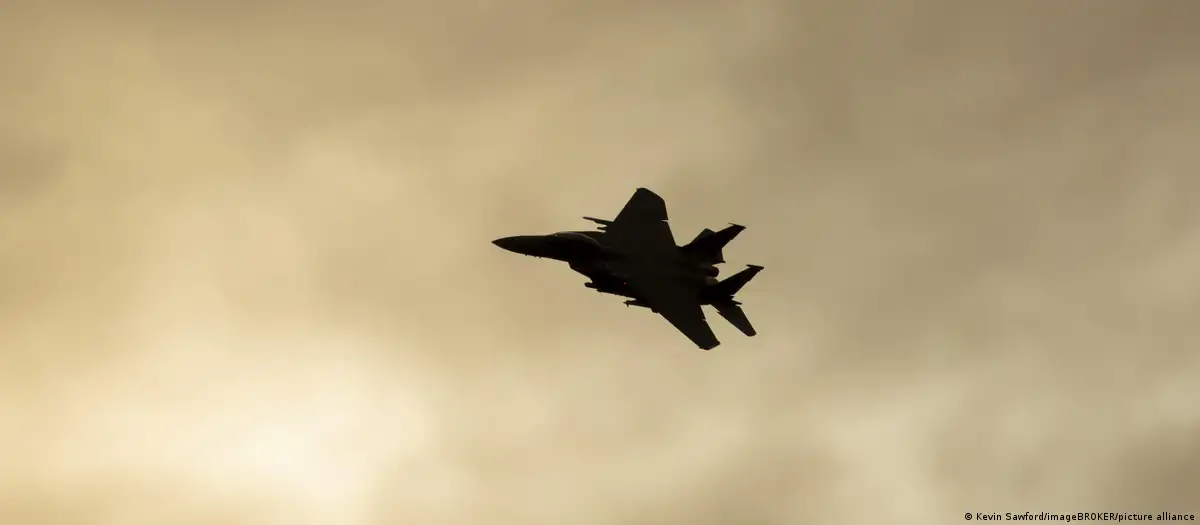
What you need to know
- One crew member was rescued, and a rescue mission is underway to find another after a US fighter jet was shot down over Iran
- Still far below pre-war levels, more ships are passing through the Strait of Hormuz
- Trump says US military has 'not even started' destroying what's left in Iran
- US strikes will target 'bridges next, then electric power plants,' Trump adds
- US oil prices continue to climb to more than $111 per barrel on fears of escalation in Iran war
- France, South Korean leaders pledge to work together on reopening Hormuz
Here are the main developments in the US-Israeli war with Iran on April 3:
US Embassy in Beirut urges Americans to leave Lebanon
The US Embassy in Beirut urged Americans to leave Lebanon on Friday while commercial flights remain available.
"The security situation in Lebanon is volatile and unpredictable," the embassy said in a statement.
"Airstrikes, drones and rocket attacks occur throughout the country, especially in the south, the Beqaa, and parts of Beirut," it said.
The embassy also said that "Iran and its aligned terrorist militias may intend to target universities in Lebanon," citing Iranian threats against American universities in the region.
In its statement, the embassy did not mention numerous Israeli strikes that have hit Beirut and other parts of Lebanon (see entry below).
'US does not have air superiority over Iran,' expert tells DW
The downing of a US jet in Iran showed that Tehran still had the ability to damage US interests in the Middle East, military expert Emma Salisbury told DW.
Despite the US Air Force having newer and more capable aircraft than Iran, she said Iranian drones and missiles remained a significant threat.
"A lot of the damage that we've seen to both aircraft and ships that has been done by the Iranians has all been drones and missiles," she said. "Ultimately, the US does not have air superiority over Iran, and this is something that I don't think it will be able to achieve anytime soon."
Iran's supply of drones and missiles is also difficult for US and Israeli airstrikes to destroy, she added.
"The Iranians do have huge stocks of drones and huge stocks of missiles, and they are able to fire those from so many locations within Iran that it is really very difficult to attack that kind of capability," Salisbury said.
Salisbury, a senior fellow at the US-based nonpartisan think tank Foreign Policy Research Institute, spoke to DW shortly before US and Israeli media reported that one of the F-15's two crew had been rescued.
A search-and-rescue operation is ongoing to find the jet's navigator.
"There are a couple of US Air Force planes conducting a search and rescue operation at the moment," Salisbury said. "It is risky for these planes to be flying so low over hostile land, but it's very important to the US military that they never leave anyone behind."
One US fighter jet crew member reportedly rescued
One of the two crew members aboard a US fighter jet that was downed over Iran has reportedly been rescued, according to US and Israeli media. The individual is reportedly alive.
US broadcaster CBS News reported the development, citing two anonymous US sources.
Israel's public broadcaster Kan cited Western security sources and online outlet Walla quoted an Israeli security source making similar comments about the pilot's fate.
US media reported that President Donald Trump had been briefed on the situation. There has not yet been an official response from the White House or the Department of Defense to requests for comment on the fate of the jet's crew members.
A search-and-rescue operation to find the jet's navigator continues.
Israel says it is striking 'terror infrastructure' in Beirut
The Israeli military (IDF) said on Friday it was carrying out strikes on what it called "terror infrastructure" in the Lebanese capital, Beirut.
Correspondents from the Reuters and AFP news agencies reported hearing loud explosions echoing across the city.
Local media said the strikes hit Beirut's southern suburbs, hours after Israel's army issued an evacuation warning for the area.
The densely populated neighborhoods in the city's south are considered a stronghold of the Iran-backed Hezbollah militia. Hundreds of thousands of residents have fled the district to escape the Israeli attacks.
Also on Friday, the Israeli military said it had launched attacks on Tehran, alongside the strikes in Lebanon's capital.
"In addition to the strikes in Beirut, the IDF has begun a wide-scale wave of strikes targeting infrastructure of the Iranian regime in Tehran," it said.
Blast in southern Lebanon injures 3 UN peacekeepers
The UN peacekeeping force in Lebanon says three peacekeepers were injured when an explosion hit one of its positions in the country's south on Friday.
It is the third such incident in a week.
"This afternoon, an explosion inside a UN position near El Adeisse injured three peacekeepers, two seriously. They are all currently being evacuated to hospital," a statement from the force, known as UNIFIL, said.
"We do not yet know the origin of the explosion," the statement added.
The peacekeeping mission called on all parties to respect their obligations to ensure the safety and security of UN personnel "by avoiding combat activities nearby that could put them in danger."
UNIFIL is deployed along the border area between Lebanon and Israel, where fighting between Israeli forces and Iran-backed Hezbollah has intensified over the past month.
Lebanon was dragged into the Middle East war in early March when Hezbollah launched rockets at Israel following the killing of Iranian Supreme Leader Ayatollah Ali Khamenei in a US-Israeli attack in Tehran. Israel responded with airstrikes across Lebanon and a ground operation.
On Sunday, a UN peacekeeper was killed when a projectile hit a position near Adchit al-Qusayr in southern Lebanon.
A day later, two Indonesian peacekeepers were killed when an explosion destroyed the vehicle they were traveling in.
UNIFIL said both incidents are under investigation. UN peacekeepers have been monitoring the border region between Israel and Lebanon since 1978.
Iran offers bounty for US pilots reportedly shot down
Iran says it has deployed troops and offered a bounty in its search for US Air Force personnel who were reportedly shot down over southwestern Iran on Friday.
"Military forces have launched a search operation to find the American fighter pilot who was hit earlier today," the state-run Fars news agency said, calling on inhabitants of the Kohgiluyeh and Boyer-Ahmad province to help in the search.
"If you capture the enemy pilot or pilots alive and hand them over to the police and military forces, you will receive a valuable reward and bonus," said an Iranian television reporter on an official local channel.
US Central Command (CENTCOM), responsible for military operations in the Middle East, did not immediately respond to requests for comment from international media.
But The New York Times and Reuters news agency cited US and Israeli officials who reportedly acknowledged the incident and said a search-and-rescue operation has been launched in an attempt to beat the Iranians to any survivors. The Wall Street Journal and Axios have also reported on the search operation.
Security Council postpones vote to reopen Strait of Hormuz
The UN Security Council has pushed back a vote on using force to reopen the Strait of Hormuz from Friday until at least Saturday.
The resolution, put forward by Bahrain and backed by other Gulf monarchies, would authorize the use of "defensive" force to protect shipping from Iranian attacks.
The Associated Press reported that the proposal had been watered down after opposition from three veto-wielding permanent members of the Security Council: China, France and Russia.
A previous draft reportedly sought to authorize "to use all necessary means" — potentially opening the door to military intervention.
Earlier, on Thursday, China's envoy, Fu Cong, told the Security Council that "legitimizing the unlawful and indiscriminate use of force, which would inevitably lead to further escalation of the situation and lead to serious consequences."
French President Emmanuel Macron, meanwhile, told reporters on Friday that reopening the Strait of Hormuz using force was "unrealistic."
Iranian Foreign Minister Abbas Araghchi has cautioned the United Nations Security Council against taking what he called "provocative action."
Strait of Hormuz: More ships passing through
The number of ships passing through the Strait of Hormuz reportedly increased for three consecutive days this week, according to a report by the data firm Windward.
Windward said 16 cargo ships transited the largely blocked strait on Wednesday, compared with 11 on Tuesday and fewer still on Monday — but the traffic is still a fraction of what was traversing the key sea-route before Israel and the United States began launching attacks on Iran at the end of February.
Windward said most of the ships sailed close to the Iranian coast past the island of Larak, allowing Iran to maintain a "permission-based, selective blockade." However, three ships also reportedly passed closer to the coast of Oman avoiding the corridor controlled by Iran.
One of the ships, the liquefied natural gas (LNG) tanker Sohar, is thought to be the first LNG tanker to have passed through the strait since the outbreak of the war, while a French container ship has reportedly also passed through and left the Persian Gulf (see post below).
US President Donald Trump has threatened to take control of the Strait of Hormuz by force. Thousands of US troops have been deployed to the region.
On Friday, Trump wrote on social media: "With a little more time, we can easily OPEN THE HORMUZ STRAIT, TAKE THE OIL, & MAKE A FORTUNE. IT WOULD BE A 'GUSHER' FOR THE WORLD???"
He didn't elaborate on exactly how the US would achieve this or what oil he was referring to.
Jerusalem's Old City quiet as war casts shadow over Good Friday celebrations
The narrow streets of East Jerusalem's Old City should be bustling with crowds of pilgrims during Catholic Easter celebrations. But Israeli restrictions due to the US-Israeli war with Iran have kept shops and most holy sites closed. After Ramadan, the war is now casting its shadow over Easter and Passover.
As night fell on Wednesday evening, the Passover festival began for Jews worldwide. On Holy Thursday, Christians began Easter celebrations.
Normally, on Good Friday, tens of thousands of Palestinian and Christians from abroad would be making their way through the narrow streets of the Old City in Israel-annexed East Jerusalem to follow the Via Dolorosa.
This year, however, only a small group of Franciscan monks was permitted to hold a symbolic procession along the route, which is believed to be the path Jesus took on the way to his crucifixion in Roman Jerusalem.
The procession ends at the Church of the Holy Sepulchre, one of the most significant Christian churches, where Jesus is believed to have been buried and resurrected.
Journalists were only allowed to film the small congregation for a few meters; Israeli police cited the lack of shelters in the area as the reason for the restrictions, in case an Iranian missile alert sounded.
“It's very sad, to see this. Obviously, Good Friday is a sad day, as Jesus was suffering carrying the cross, but with all that is happening, it is important to carry on with our traditions. But it’s sad to see there are no pilgrims here," Issa Kassasieh, a local Christian from the Old City, told DW. "I can just pray that this war will stop soon."
Palestinian Old City inhabitants questioned the Israeli authority’s security concerns and called them a double standard. While the Old City is completely closed off, a few meters away in West Jerusalem, cafes and shops are open.
"We were given orders just to open for takeaway things as we don’t have shelters in the Old City," a coffeeshop owner told DW, who requested to stay anonymous. "But even that doesn’t make sense, there are almost no people here."
The procession only stopped briefly at each of the 14 stations of the Via Dolorosa, with the participants praying for a short while before quickly moving on. Catholic Easter will be followed by Greek-Orthodox Easter next week, another major holy holiday in Israeli-annexed East Jerusalem.
While some church leaders here in Jerusalem have decried the sadness of the current situation, they pointed out that many Christians in the region are struggling much more, particularly those in neighboring Lebanon, where civilians are facing heavy bombardments and hundreds of thousands have been displaced.
Middle East war: Few solutions to fuel shortages in Africa
Africa is running low on fuel. The US-Israel war against Iran has sent fuel prices skyrocketing. Are African countries doing enough to calm the fuel market?
Find out how African governments are tackling the fuel shorages in this report.
French container ship passes Strait of Hormuz
A container ship operated by French shipping and logistics firm CMA CGM has passed through the Strait of Hormuz despite Iran’s closure of the waterway, according to a media report.
The Maltese-flagged Kribi crossed the strait on Thursday to exit the Gulf. By Friday it was off the coast of Muscat, Oman, still broadcasting the message "owner France."
Broadcaster BFM TV, itself a subsidiary of CMA CGM, reported it was initially unclear how the vessel managed the transit. The company and the French Foreign Ministry declined to initially comment.
The strait, a key global shipping route, has faced heightened tensions, with recent reports suggesting potential attackers had demanded payments to allow safe passage for cargo vessels.
The transit is seen as the first known passage by a major European shipping group through the strategic waterway since it was largely paralyzed by the Middle East conflict after US and Israeli strikes on Iran began on February 28.
Gas plant shutdown reported after air defense action
A gas facility in Abu Dhabi has halted operations following an air defense response, according to official reports.
The emirate's media office said debris had fallen onto the Habshan gas plant site, and authorities were battling a fire while suspending operations.
"Abu Dhabi authorities are responding to an incident of falling debris at the Habshan gas facilities, following successful interception by air defence systems. Operations have been suspended while authorities respond to a fire. No injuries have been reported," the Abu Dhabi Media Office posted on social media.
Officials said the shutdown was precautionary as emergency teams worked to contain the situation.
Germany's Wadephul: 'Of course' Trump's NATO comments 'concern me'
German Foreign Minister Johann Wadephul has tried to strike a balance between concern and confidence in a major newpaper interview when asked about US President Donald Trump questioning the value of NATO.
"Of course such statements concern me," Wadephul told the Funke media group of newspapers.
However, he also said he did not consider a US exit from the alliance to be the likely scenario, despite the Trump administration's expressions of dissatisfaction in recent days.
"I think that our clear commitment and our determined support for the alliance will convinced the United States to continue this success story together," he said.
Wadephul said NATO was of "enormous importance" to German security and that of all other allies, and also argued that the alliance was stronger than ever before. He pointed to Sweden and Finland, neutral throughout the Cold War, joining since Russia's invasion of Ukraine, and to European commitments to continue increasing defense spending after pressure from Trump.
Wadephul also said that Trump would need "at least the approval of the Senate" in order to withdraw from NATO.
Still, Trump and senior members of his administration have criticized NATO allies for their reticence to get invovled in the war with Iran this week. Asked by conservative British newspaper The Telegraph whether he would reconsider membership, Trump said: "Oh yes, I would say [it's] beyond reconsideration."
Attack damages key energy and water sites in Kuwait
An attack has damaged parts of a desalination plant and a power station in Kuwait, according to official statements.
Authorities said emergency crews were deployed and had been working to keep operations running, adding that only material damage had been reported so far.
Kuwait relies heavily on desalination to produce drinking water due to its arid conditions. The process is energy-intensive, and damage to such facilities can also carry environmental risks.
Earlier, the state-run Kuwait Petroleum Company reported an attack that caused fires across several units at the Mina Al-Ahmadi refinery, a key energy site in the country.
Global food prices rise in March on energy costs
World food prices rose in March, driven largely by higher energy costs tied to the escalating conflict in the Middle East.
The latest Food and Agriculture Organization's Food Price Index averages 128.5 points, up 2.4% from a revised February level.
The index tracks changes in a basket of globally traded food commodities and has been supported by ample cereal supplies despite rising costs.
"Price rises since the conflict began have been modest, driven mainly by higher oil prices and cushioned by ample global cereal supplies," FAO Chief Economist Maximo Torero said.
He warned that if the conflict lasts more than 40 days and input costs remain elevated, farmers may plant less, or switch crops — potentially reducing future yields and affecting supply and prices through this year and next.