Middle East updates: Iran, Israel declare pause in attacks
Published June 8, 2026last updated June 9, 2026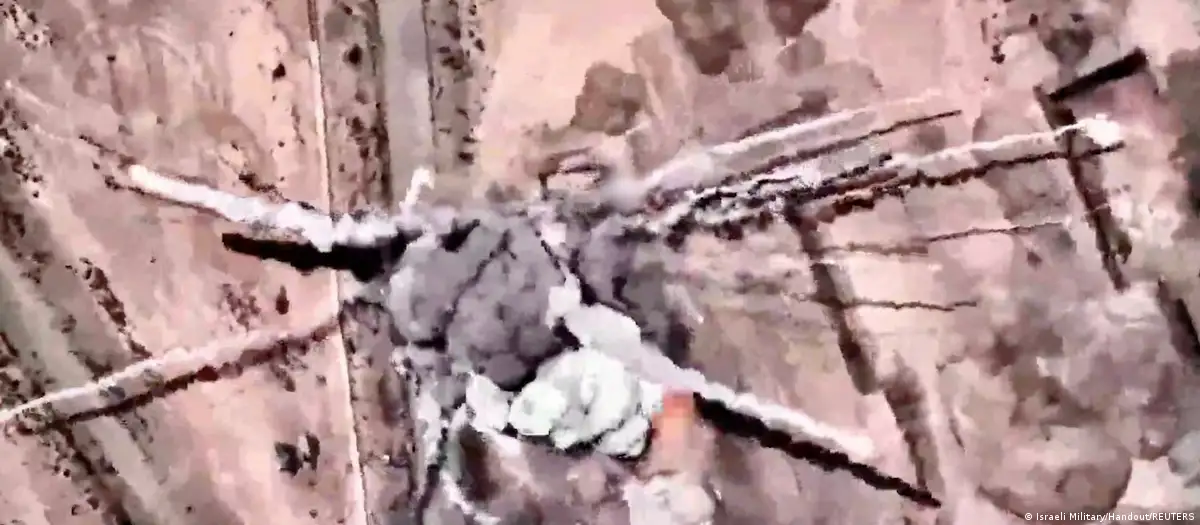
What you need to know
- Iranian and Israeli leaders both said they were stopping attacks, with each claiming their strikes to be successful
- Israel and Iran both fired at each other in the latest escalation
- US President Donald Trump had called for an immediate halt in fighting
- The Iran-backed Houthis have threatened to target Israel-linked ships in the Red Sea
- The EU's top diplomat has urged all parties to return to the negotiating table
This blog is closed. It covered news related to the Iran war and the wider Middle East on Monday, June 8, 2026.
Tired of missing our real-time updates? Click here to add us as a Preferred Source on Google. Then tap the "Star" or "Preferred" to keep DW News at the top of your feed
Tehran's international airport reopens
Tehran's main international airport has reopened, and flights carrying hajj pilgrims from Saudi Arabia have begun landing.
Iranian state media say operations resumed at Imam Khomeini International Airport early Tuesday after a brief suspension. A deputy airport official confirmed that both regular flights and pilgrim services are now arriving.
The airport halted all incoming flights on Sunday following Iranian missile strikes on Israel and Israeli retaliation.
The disruption is the latest for the airport, one of two serving Tehran. It had only reopened in April after being closed for weeks during the wider Middle East war.
Drone intercepted over Israel's south: military
The Israeli military said a drone launched from Yemen was intercepted over the city of Eilat.
"The Israeli Air Force intercepted a drone launched from Yemen's territory," the Israeli Defense Forces posted on their Hebrew-speaking X account.
No injuries or damage have been reported as a result, according to reports in Israel.
While no responsibility has been taken so far, Yemen-based Houthis, backed by Iran, repeatedly launched drones and rockets at Israel's south, with the renewed escalation between their backers and Israel being a possible cause.
Trump urged Netanyahu to not retaliate after Iranian missile attack — report
US President Donald Trump spend the last day trying to deescalate tensions between Israel and Iran after the war heated up once again, Barak Ravid of the US outlet Axios and Israel's Channel 12 reported.
The Axios report said that Trump was unhappy when on early Sunday Israel hit a Hezbollah target in Beirut. That attack led to a response from Iran, with Iran then launching missiles at Israel as the Iranians had threatened if Israel hits Beirut again.
Trump was then concerned that this could escalate further and lead again to all-out war again between Israel and Iran. Trump told Ravid in a phone interview that he warned Israeli Prime Minister Netanyahu could end up fighting alone with Iran if the war starts reignites.
Trump spoke with Netanyahu late on Sunday and called on him not to retaliate against Iran's missile attack.
After that phone call, Netanyahu later told US Secretary of State Marco Rubio he ordered new strikes against Iran. Israel then hit the Bandar Imam Petrochemical Complex near the city of Mahshahr in southwest Iran.
Trump told Axios that five different countries in the Mideast "were very concerned" by the Israeli strikes.
"They love the deal that we have been negotiating," Trump said, again boasting of a deal to the end the war that has not yet come to fruition.
IAEA chief Grossi calls on Iran to 'reengage' on nuclear inspections
International Atomic Energy Agency chief Rafael Grossi urged Iran to "reengage" on the issue of nuclear inspections.
The agency wants to assess the damage caused during last year's twelve-day war, when the US and Israel bombed Iranian nuclear sites. Iran has not yet provided the IAEA with information on the status of those sites or the nuclear material stored there.
"I call on Iran to engage the Agency constructively in order to faciliate the full and effective implementation of safeguards in Iran," Grossi said in a written message to the IAEA board.
"I have sporadic contacts with the foreign minister and others, but basically the channel of communication is broken," Grossi told a media briefing after meeting with the board.
Meanwhile, the US is calling on Iran, in a draft resolution to the IAEA board, to give "precise" information on its enriched uranium stockpile and bombed sites "without delay." The draft would have to be approved by all 35 members of the IAEA board to be binding.
Iran blames Israel, US over IAEA cooperation
The Iranian government, meanwhile, turned the tables on the US and Israel over cooperation with the agency.
"The present circumstances with regards to Iran nuclear cooperation with the IAEA are a direct consequences of 17 waves of illegal armed attacks" by the US and Israel against "Iranian safeguarded peaceful nuclear facilities as well as ongoing grave threats," the Iran Mission to the UN in Vienna posted on X. "This is unprecedented in IAEA history."
"The Board must not be instrumentalized to relieve those who carried out these attacks of their responsibility," the post continued.
During the twelve-day war, the US military used "bunker buster bombs" to target the nuclear facilities at Fordow, Natanz and Isfahan. Israel also targeted the Arak Nuclear Complex and the Tehran Nuclear Research Center, among other nuclear-related locations.
Germany's Wadephul welcomes apparent Iranian climbdown
German Foreign Minister Johann Wadephul has welcomed Iran's comments about halting attacks on Israel.
"Today's statement by Iran that the attacks have ceased could be an important step," Wadephul said during an appearance with his Australian counterpart Penny Wong in Berlin. "We will not be closely monitoring how credible this statement is."
The German minister was making these comments shortly before Israeli Prime Minister Benjamin Netanyahu similarly said in a video address that strikes against Iran had halted once more.
Wadephul also called on Iran to exert greater influence over the Hezbollah militia in Lebanon to bring an end to its attacks on northern Israel from Lebanese territory.
He appealed to "all parties involved to avoid a resurgence of hostilities."
Wadephul also reiterated Germany's support for US efforts to mediate a diplomatic solution between Iran and Lebanon, saying: "A willingness to negotiate is a prerequisite for any long-term peace."
Lebanon reports attacks in Tyre, condemns damage to UNESCO heritage site
The Lebanese Red Cross said an Israeli strike wounded four rescuers near their center in the southern Lebanese city of Tyre.
It said the strike hit in front of the Red Cross center in the city. Lebanese state media had earlier reported an Israeli strike on a vehicle in front of the center.
Tyre is one of the cities in southern Lebanon that has come under fairly regular fire despite the nominal ceasefire reached in mid-April that had for the most part stopped attacks further north in Lebanon or against the capital Beirut — with the exception of the strikes on southern Beirut this past weekend that contributed to the flare-up between Israel and Iran.
Israel's military on Monday ordered residents of certain parts of the city to leave their homes, in a message that typically precedes strikes.
Meanwhile, Lebanon's Ministry of Culture condemned the attacks on Tyre, saying that one on Sunday, June 7 had struck the entrance to an archaeological property that's part of the UNESCO cultural heritage site in the ancient city.
According to the ministry, the attack hit a historic building, electricity generators near the main entrance, offices belonging to the Directorate General of Antiquities, and the southeastern section of the archaeological complex.
Authorities said the extent of the damage had not yet been determined because security conditions prevented a comprehensive field assessment.
The ancient city of Tyre has been listed as a UNESCO heritage site since 1984. In November 2024, it was granted Enhanced Protection status under special conventions seeking to provide additional proection amid armed conflicts.
The Lebanese ministry said the latest incident was part of a series of attacks that have affected the site and its surroundings since 2024.
Netanyahu says fire on front with Iran 'is contained' at present
Prime Minister Benjamin Netanyahu has said that Israeli strikes on Iran had led to the Islamic Republic ceasing its latest round of attacks.
"At this moment, the fire on that front is contained — after we struck the terror regime in Tehran, it stopped attacking us," Netanyahu said in a televised statement.
However he warned that should Iran "make the mistake of resuming attacks against us, we will respond with full force."
Iran had also announced a halt in fire, but had instead claimed this was after its "warning strikes" had delivered a "painful response" to Israel.
Netanyahu also touched on the reports of tension between him and US President Donald Trump over the latest round of fire in his video address.
"Israel has a full right to defend itself, and we implement it when needed. I say this to you, just as I say it with appreciation and respect in my good conversations with my friend President Trump," Netanyahu said.
Netanyahu said that both Iran and the Hezbollah militia in Lebanon had been significantly weakened but that Israel's conflict with them was not yet over. He said they had mistakenly tried to impose a "new equation" on Israel in the preceding 24 hours.
"They thought they could fire at Israel from Lebanese and Iranian territory and that we would not respond," Netanyahu said.
Around the same time as Netanyahu's address, Israel's Education Ministry said that most schools would reopen for classes as normal on Tuesday.
EU approves more sanctions against Iran
In response to the near-total blockade of the Strait of Hormuz, the European Union has imposed additional sanctions on Iran.
According to an EU statement, the measures target the Hormozgan Provincial Command of the Islamic Revolutionary Guard Corps Navy (IRGCN), as well as Mohammad Akbarzadeh, the deputy commander who acts as a spokesperson for the IRGCN.
Additionally, Hamid Hosseini, a representative of Iran’s Oil, Gas, and Petrochemical Products Exporters' Union, has been sanctioned.
According to the EU, all of them were involved in disrupting transit through the strait. The sanctions decision requires the freezing of assets within the European Union. An EU entry and transit ban is also applicable to individuals.
Top EU diplomat Kaja Kallas said this is the first time the EU has applied its new freedom-of-navigation sanctions system, adding that it will be applied again "where necessary."
Iran still at negotiating table, president says
Iranian President Masoud Pezeshkian said that Tehran remained at the negotiating table after halting attacks on Israel.
"Diplomacy and defense are the two wings of national power; we have neither left the battlefield nor the negotiating table," Pezeshkian wrote on X.
He also added that Tehran "will not retreat in the face of any threat."
Earlier on Monday, US President Donald Trump in a post on Truth Social urged srael and Iran to "immediately stop shooting."
Later, he added in a new post that "final negotiations" towards peace were proceeding "subject to ignorance or stupidity getting in its way."
Iran says it is ending attacks on Israel
The Iranian military announced on Monday that it was halting its offensive operations against Israel after a day of reciprocal missile exchanges.
The Tehran regime's joint command said "much more severe and crushing measures than before will follow" if Israel or its allies carry out any further "aggression and hostile acts," including in southern Lebanon.
The traded missile fire marked the most serious confrontation since a ceasefire took effect in April.
Lebanon: Israel has breached ceasefire 3,500 times
Lebanese Prime Minister Nawaf Salam has claimed that Israel has carried out nearly 3,500 air strikes on Lebanon and hundreds of controlled explosions since a fragile US-brokered ceasefire came into effect in mid-April.
In comments published by his office after a cabinet meeting, Salam said that Israeli forces had since carried out 3,491 air strikes, 407 controlled demolitions and six "razing" operations which have reportedly left some villages in southern Lebanon entirely flattened.
The Israeli military is yet to respond to Salam's figures but regularly claims that it only targets premises and infrastructure belonging to the Iran-backed Islamist group Hezbollah.
Israel: Iran has fired nearly 30 missiles since Sunday
An Israeli military official has claimed that Iran has fired nearly 30 missiles toward Israel since the resumption of hostilities between the two countries on Sunday.
"Last night the Iranian regime began firing ballistic missiles towards Israel ... they fired close to 30 ballistic missiles towards Israel," the official told journalists on Monday, adding that Yemen's Houthi rebels have fired two missiles at the country in separate attacks.
Iran has stated that it launched two waves of missiles at targets in Israel in response to Israeli air strikes on the Lebanese capital, Beirut, over the weekend.
Trump demands stop to Israel-Iranian attacks
US President Donald Trump has demanded an immediate cessation of the renewed hostilities between Israel and Iran after the two countries began exchanging missile fire again.
"Israel and Iran must immediately stop 'shooting,'" Trump wrote on social media.
He said Iran and Israel wanted a ceasefire and that peace negotiations were ongoing, "subject to ignorance or stupidity" getting in the way.
The statements come after a phone interview with the Financial Times in which Trump claimed that he "calls the shots" in the conflict in the Middle East, not Israeli Prime Minister Benjamin Netanyahu.
Furthermore, an Israeli official said on Monday that Lieutenant General Eyal Zamir, the head of the Israel Defense Forces (IDF), had been in contact with the head of US Central Command (CENTCOM) twice in the past 24 hours.
"Over the past day, the IDF chief of the general staff has spoken twice to the commander of CENTCOM and they are discussing the situation," the official said, without elaborating.
Israel appears to have ignored requests from Washington in an overnight phone call not to launch retaliatory strikes against Iran, according to media reports.
Israel targets Iranian air defenses, explosions heard in Tehran
The Israeli military claimed on Monday to have completed a successful attack on Iranian air defense installations involving "dozens" of aircraft.
"A short time ago, dozens of Israeli air force fighter jets carried out a large-scale strike against strategic air defense systems," said a statement, adding that the targets had been destroyed.
According to the Israel Defense Forces (IDF), the systems targeted had been deployed across Iran as part of efforts to "reestablish detection and defense capacity" following earlier Israeli strikes several months ago.
Meanwhile, central Tehran was rocked by a huge explosion followed by repeated blasts believed to have come from air defense systems.
The AFP news agency reported that the initial explosion shook the premises of the Iranian Foreign Ministry.
"The exact location and source of this explosion are still unknown," reported the local Fars state news agency. "Simultaneously, air defense was also activated in some parts of Tehran."
India: Expansion of Gulf crisis would be 'worrying'
An expansion of the war in the Middle East to other areas is a cause for concern, according to Indian Oil Minister Hardeep Singh Puri.
"It may remain a conflict not confined to that theater ... you know you could have problems elsewhere," he told local broadcaster CNN-News18 on Monday.
"Maybe some other theater starts off. That would be worrying."
Puri said that India has total oil and gas reserves to last 76-80 days.