Russia fires Oreshnik hypersonic missile at Ukraine
Published January 9, 2026last updated January 9, 2026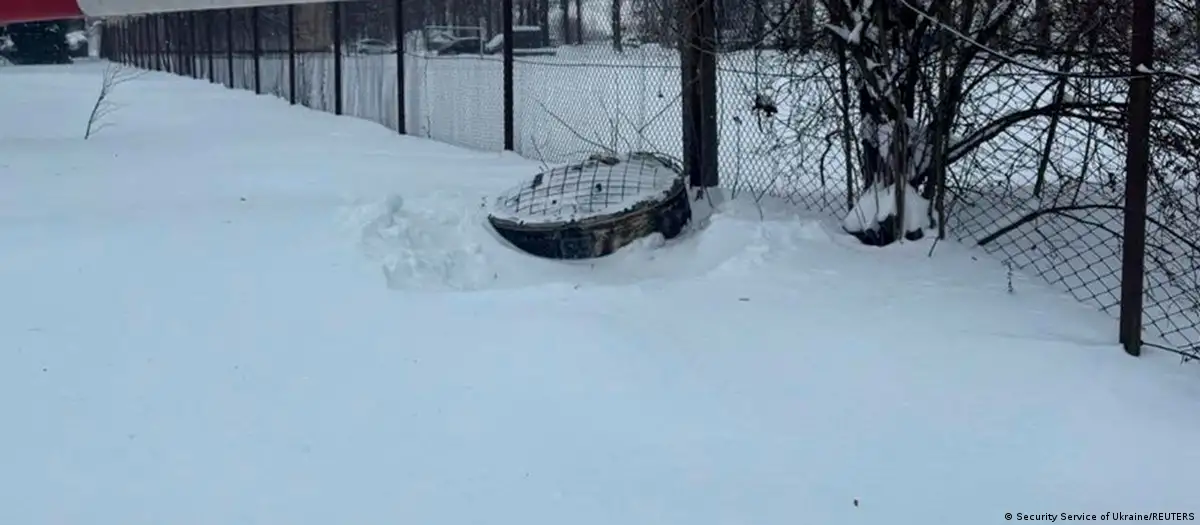
What you need to know
- Russia's Defense Ministry says hypersonic missile used in overnight strikes on Ukraine
- At least 4 dead in Russian drone attack in Kyiv
- Russian strikes also hit infrastructure in Lviv region
- Germany has strongly condemned Russia use of the hypersonic weapon
It was the roundup of the latest updates from Russia's war in Ukraine from Friday, January 9. This blog is now closed.
UN chief condemns Russian strikes on Ukraine infrastructure
UN Secretary-General Antonio Guterres "strongly condemns" Russian attacks on civilian infrastructure in Ukraine after strikes caused widespread heating outages in Kyiv, his spokesman said in a statement.
"These attacks have resulted in significant civilian casualties and deprived millions of Ukrainians of essential services, including electricity, heating and water at a time of acute humanitarian need," spokesman Stephane Dujarric said.
"Attacks against civilians and civilian infrastructure violate international humanitarian law," the statement said. "No matter where they occur, they are unacceptable, unjustifiable, and must stop immediately."
As sub-zero temperatures are expected to drop even further, Kyiv's mayor, Vitaly Klitschko, urged residents to leave the capital temporarily, as widespread heating outages caused by Russian strikes are expected to continue through the weekend.
Latvia seeks emergency UN Security Council meeting
Latvia has said it will seek an emergency meeting of the UN Security Council in response to what it described as the latest heavy Russian attacks on Ukraine.
Foreign Minister Baiba Braze announced the move on the platform X after Russia again carried out large-scale air strikes.
"Latvia will request an extraordinary meeting of the UN Security Council in response to Russia's barbaric attack against Ukraine, including using an intermediate range ballistic missile close to the EU and NATO border," Braze wrote.
Russia said it used its new Oreshnik intermediate-range missile for only the second time since the war began.
The attacks marked another escalation in Moscow's air campaign against Ukraine. Ukraine said a ballistic missile travelling "at about 13,000 kilometres [8,000 miles] per hour" had hit an "infrastructure facility" near the western city of Lviv.
Latvia took up a nonpermanent seat on the UN Security Council on January 1 and will serve on the body for two years.
The Baltic EU and NATO member, which borders Russia, is a close supporter of Ukraine, which has been resisting a Russian full-scale invasion for nearly four years.
Russia wants to shut down Ukrainian cities, Zelenskyy says
Ukrainian President Volodymyr Zelenskyy said Russia is trying to destroy Ukrainian cities by targeting them with aerial attacks.
"The Russians are exploiting the weather — the cold spell — and trying to hit as many of our energy facilities as possible," Zelenskyy said on Friday in his evening video message.
Most recently, Kyiv was hit with attacks severe enough that the capital's mayor recommended residents temporarily leave the city (see entry below).
"Russia's main tactic is to try to completely shut down cities," Zelenskyy said.
The Ukrainian leader demanded that administrations prepare and protect their citizens. In the cities under attack, electricity, water and heating supplies have largely failed.
The attacks are evidence that Russia is not interested in diplomacy and US peace efforts, Zelenskyy said.
IAEA seeks limited ceasefire to fix Zaporizhzhia power line
The International Atomic Energy Agency (IAEA) has been negotiating with Russia and Ukraine over a limited ceasefire at the Zaporizhzhia nuclear power plant to allow repairs to a damaged power line.
IAEA Director General Rafael Grossi said fighting on January 2 damaged the site's last 330-kilovolt emergency line.
The Russian-occupied plant in southern Ukraine is now being supplied only via its 750-kilovolt main line, with no backup in place. Grossi said a pause in fighting within about 10 kilometers (about 6.2 miles) of the site is needed so Ukrainian technicians can carry out repairs.
The IAEA has already brokered such pauses three times in recent months.
The plant's six reactors, the largest nuclear facility in Europe, are shut down but still require constant cooling.
Grossi said IAEA observers have noted increased fighting near the site in recent weeks.
Italy's Meloni urges EU to reopen talks with Russia
Italian Prime Minister Giorgia Meloni has called for the EU to restart dialogue with Russia and appoint a special envoy.
"It is time that Europe talks to Russia," Meloni said at a news conference on Friday.
She said Europe's influence would remain limited if it sought to help end the war in Ukraine while "only talking to one of the parties involved."
Meloni said she agreed with French President Emmanuel Macron, who described talks with Kremlin leader Vladimir Putin in December as "useful."
The Italian leader said the EU must decide who should conduct such talks. "We have had this problem since the beginning of the negotiations. There are many voices speaking and many formats," she said, arguing for a European special envoy for Ukraine so the 27-member bloc could "speak with one voice."
Meloni, a longtime supporter of Ukraine since Russia's full-scale invasion nearly four years ago, spoke as the EU has largely frozen contacts with Moscow since February 2022. Efforts to negotiate an end to the war are now being conducted mainly by the United States.
Qatar says no staff hurt in Kyiv strikes that hit embassy
Russia's overnight strikes on Ukraine hit the building housing the Qatari Embassy, but the mission said no diplomats or members of staff were hurt.
In a Foreign Ministry statement on Friday, the Qatari Embassy expressed "sorrow" that its building was attacked, stressing that embassies, diplomatic missions and headquarters of international organizations should be protected against the "repercussions of crises."
"The State of Qatar expresses its deep regret over the damage sustained by its embassy building in Ukraine as a result of the strikes on the capital, Kyiv, last night. It also confirms that none of its diplomats or embassy staff were harmed," the Foreign Ministry said.
Ukraine shares images of fragments it says from Russian Oreshnik missile
Ukraine's SBU security service released photos of fragments of what it says is Russia's Oreshnik missile, adding that it was fired in an overnight strike on the western Lviv region.
Among the parts found so far were the missile's stabilization and guidance unit, engine parts and nozzles, the SBU said.
"By attacking civilian targets in our country near the border with the European Union, the Kremlin attempted to destroy the region's life-support infrastructure amid sharply deteriorating weather conditions," the SBU said, without clarifying what had been targeted or the extent of any damage.
The SBU said it was treating the strike as a war crime.
Earlier reports from Russian media and military bloggers suggested the strike targeted a underground natural gas storage facility.
Lviv Mayor Andrii Sadovyi said that Russia struck critical infrastructure with a ballistic missile but did not provide details.
An unnamed Ukrainian official told Reuters news agency that the missile was likely carrying an inert "dummy" warhead and left craters in the forest near what Reuters called a "state enterprise" near Lviv.
Germany strongly condemns Russia's use of hypersonic missile
Germany has condemned Russia's launch of a hypersonic missile at Ukraine.
"Russia is continuing to escalate the situation without provocation," government spokesman Steffen Meyer said.
The missile is thought to have been fired at a gas facility, and was not carrying a warhead.
"These are symbolic gestures of intimidation intended to instill fear, but they are not effective," he added.
Meyer said Russia’s justification for using the missile has already been refuted.
Russia claims it fired the Oreshnik missile in response to an alleged drone attack on President Vladimir Putin's residence last month.
Ukraine denies the accusation, and the United States says the attack on Putin's house never happened.
Kyiv mayor calls on residents to 'temporarily' leave city due to heating cut
City services in Kyiv are operating in emergency mode after a massive overnight Russian strike severely damaged critical infrastructure, Mayor Vitalii Klitschko said.
Nearly half of the city's apartment buildings, about 6,000, are without heat, and water service has been disrupted in parts of the capital.
Klitschko urged residents who can leave for areas with power and heating to do so.
Writing on the Telegram messaging app, he said crews have restored heat to hospitals and maternity wards using mobile boiler units and are working with energy teams to bring electricity and heating back to residential buildings as quickly as possible.
Ukraine urges global response after deadly Russian missile strikes
Ukraine is urging a strong international response after Russia launched a massive overnight missile attack.
President Volodymyr Zelenskyy says Moscow used its new Oreshnik ballistic missile to strike western Ukraine, and four people were killed in Kyiv.
"A clear reaction from the world is needed. Above all from the United States, whose signals Russia truly pays attention to," Zelenskyy said on social media.
"Russia must receive signals that it is its obligation to focus on diplomacy, and must feel consequences every time it again focuses on killings and the destruction of infrastructure," he added.
Meanwhile, the strikes caused significant damage to critical infrastructure, leaving parts of the capital without power or water.
"Twenty residential buildings alone were damaged," Zelenskyy said. He added that a building of the Embassy of Qatar was hit by a Russian drone.
Governor of Russia's Belgorod says power, heating out for 500,000 after Ukraine strike
Belgorod Governor Vyacheslav Gladkov says more than half a million people are without electricity and heating after a Ukrainian rocket attack caused a massive blackout.
Around 200,000 residents in the Russian region also have no water or sewage services, he said.
Repair crews are working to restore power, but he stressed that "the situation is very difficult."
The strike marks a rare use of missiles by Ukraine, which usually relies on long-range drones to hit targets inside Russia.
It comes a day after Ukrainian authorities said more than a million people in Dnipropetrovsk and Zaporizhzhia were left without electricity and water following Russian air strikes.
IN PICTURES: Russian strike on Ukraine
Ukraine foreign minister say Oreshnik strike a test for the transatlantic community
Ukraine is calling for urgent international action after a Russian overnight strike that included the use of a hypersonic Oreshnik missile.
Foreign Minister Andrii Sybiha described the attack as "a grave threat to European security and a test for the transatlantic community."
He accused Russian President Vladimir Putin of deploying an intermediate-range ballistic missile near EU and NATO borders, calling it "a global threat that demands global responses."
Ukrainian media had earlier reported the hypersonic missile hit an unspecified location near the western city of Lviv.
Kyiv is requesting an emergency UN Security Council meeting, as well as talks with NATO and European institutions.
Ukraine also wants tougher measures against Russia's oil revenues and tanker fleet to curb Moscow’s war funding.
What we know about Russia's Oreshnik missile
- Oreshnik is Russian for hazel tree
- Moscow first fired an Oreshnik in November 2024 in a strike on Dnipro in Ukraine
- Russian President Vladimir Putin claims it can travel at more than 10 times the speed of sound
- The Pentagon says the Oreshnik is an experimental type of intermediate-range ballistic missile
- The Oreshnik is capable of carrying nuclear weapons
It is the longest-range weapon to ever have been used in conflict in Europe
Russia says Oreshnik hypersonic missile used in overnight strikes on Ukraine
Russia said it targeted "strategic targets" in Ukraine overnight with an Oreshnik hypersonic missile, without providing further detail.
This marks the second time Russia has used the weapon against Ukraine. This time, the apparent target was in Ukraine's Lviv region, Ukrainian media reported.
Ukraine's United 24 news website reported that the suspected Oreshnik missile was not carrying an explosive warhead.
Although Ukraine has not yet officially confirmed the Oreshnik had been deployed, Ukrainian media quoted the Ukrainian Air Force as saying that an unspecified ballistic missile was used in Friday's attack, which had been travelling at a speed of nearly 13,000 km per hour (8,000 mph), making it consistent with Oreshnik's capability.
Russia's Defense Ministry said its latest strike also involved other ground- and sea-launched missiles to target Ukraine's critical infrastructure.
It claims the strikes were in response to an alleged attack on President Vladimir Putin's residence late last month.
Ukraine denies any involvement in the alleged attack and accuses Russia of using the claim to justify strikes on government buildings in Kyiv.