Iran war: Tehran warns US against ground assault
Published March 29, 2026last updated March 30, 2026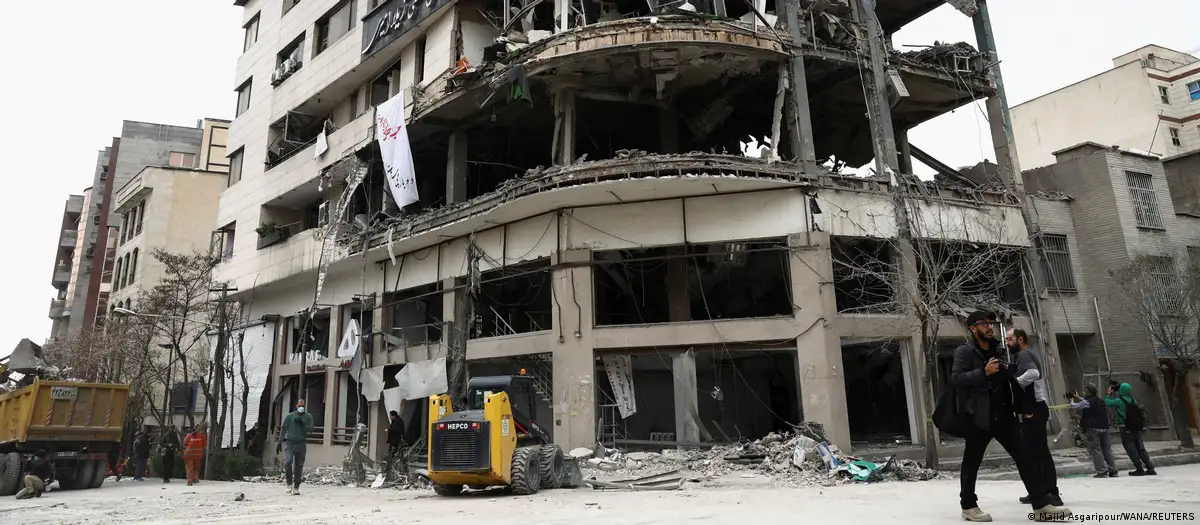
What you need to know
-
US plotting ground attack despite diplomatic efforts, said Iran parliament speaker
-
Pentagon preparing possible deployment of ground forces, The Washington Post reported, as first contingent of US Marines arrived in region
-
Israeli Prime Minister Benjamin Netanyahu ordered the military to further expand its 'buffer zone' in southern Lebanon
-
Pakistan's foreign minister said his country will be 'honored' to host talks between US and Iran
-
Israeli police blocked Catholic leaders from entering Jerusalem church for Palm Sunday Mass
This blog is closed. For continued coverage please move to Monday's blog, by clicking here.
This blog covered the developments in the US-Israel war with Iran on Sunday, March 29, 2026:
Israel parliament approves budget boosting defense
Israel’s parliament has approved the 2026 state budget, sharply increasing defense spending as the country remains at war on multiple fronts.
The military allocation will rise by more than $10 billion (€8.7 billion), pushing the defense budget above $45 billion. This is more than double its pre‑Gaza war level in 2023.
The overall national budget stands at roughly $270 billion.
Israel and its main ally, the United States, have been at war with Iran since February 28. Additionally, Israel is battling Hezbollah after invading southern Lebanon.
Local media say the government has also approved an $827 million advance for emergency military purchases.
To fund the surge in defense spending, all other Israeli ministries will face a 3% across‑the‑board cut.
Iran's Mojtaba Khamenei thanks Iraq in latest message
In a message attributed to Iran's Ayatollah Mojtaba Khamenei, the new supreme leader thanked Iraq's top Shiite cleric, Grand Ayatollah Ali Sistani, and the Iraqi public for their "clear stance against aggression."
Iranian media reported that the message was delivered in Baghdad after a meeting between Iraq's Islamic Supreme Council and Iran's ambassador.
Khamenei has not appeared in public since being named supreme leader after the death of his father, Ali Khamenei, in a February 28 airstrike.
His absence has fueled speculation about his condition, with all public statements so far read out by others on state television.
US embassy warns of potential attacks on universities in Iraq
The US Embassy in Baghdad warned that Iran and allied militias "may intend to target the American Universities in Baghdad, Sulaymaniyah, and Dohuk, along with other universities perceived to be associated with the United States," after Iran threatened American universities across the Middle East.
The embassy statement, posted on X, added the "Iraqi government has not prevented terrorist attacks against the United States and regional countries from Iraqi territory."
It reiterated a warning for US citizens to leave the country.
Earlier today, Iran's Islamic Revolutionary Guard Corps said it will target American and Israeli-affiliated universities in the region in retaliation for recent attacks on two Iranian universities.
Many universities in the region moved their classes online as the war expanded in the Middle East, with the American University in Lebanon announcing so too earlier today.
Iran's Khondab facility no longer operational, IAEA says
The International Atomic Energy Agency said on X that Iran's heavy-water production plant at Khondab hit on March 27 sustained severe damage and was "no longer operational."
The IAEA added that Khondab "contains no declared nuclear material." The Israeli military had described the site as a "key plutonium production site for nuclear weapons" when it hit the facility on Friday.
Iran reports power outages after attacks
Iran's Energy Ministry reported power outages in the capital Tehran and neighboring Alborz province on Sunday "following attacks on electricity industry facilities."
It said "electricity was cut off in these areas, and efforts are being made to resolve the problem," according to state television.
Reuters news agency later cited Iran's Fars news agency as reporting that power had been mostly restored.
US President Donald Trump has previously threatened to strike Iranian power stations if Tehran does not negotiate a peace deal before repeatedly extending a deadline to do so.
Trump's latest deadline is set to expire on April 6.
Israel carrying out strikes on Tehran, IDF says
Pakistan would be 'honored' to host talks between US and Iran, foreign minister says
Pakistan's Foreign Minister Ishaq Dar said Islamabad will be "honored" to host talks between the US and Iran amid efforts to deescalate the conflict.
Dar said he and Pakistani Prime Minister Shehbaz Sharif held several calls with Iranian senior officials including President Masoud Pezeshkian and Foreign Minister Abbas Araghchi. The Pakistani officials were also "actively engaged" with Washington, he added.
"In this context, Pakistan is very happy that both Iran and the US have expressed their confidence in Pakistan to facilitate the talks," he said. "Pakistan will be honoured to host and facilitate meaningful talks between the two sides in coming days, for a comprehensive and lasting settlement of the ongoing conflict."
Speaking in a televised speech after top diplomats from regional countries met in Islamabad (see entries below), Dar did not specify whether the talks would be direct or indirect. There was no immediate word from the US or Iran.
He said the foreign ministers of Turkey, Egypt and Saudi Arabia endorsed Pakistan's peace efforts. The ministers are expected to meet again Monday.
Pakistan's mediation efforts were also supported by China and the United Nations, Dar said.
Pakistan has emerged as a mediator between the US and Iran. The South Asian country's leaders have close ties to both President Donald Trump and Iranian President Masoud Pezeshkian.
American University of Beirut moves classes online
The president of the American University of Beirut said in a letter that the university in the heart of the Lebanese capital will be operating fully remotely on Monday and Tuesday "out of an abundance of caution."
President Fadlo Khuri said there was "no evidence of direct threats" to the prestigious university and its renowned hospital.
"The American University of Beirut has stood for the peaceful emancipation and progress of the people we educate and serve for more than a century and a half," Khuri said.
Earlier on Sunday, Iran's elite Revolutionary Guards said it will target American and Israeli-affiliated universities in the Middle East in retaliation for recent attacks on two campuses in the Islamic Republic.
Many universities in the region moved classes online since the Iran war began on February 28.
Israel will expand 'buffer zone' in southern Lebanon, Netanyahu says
Prime Minister Benjamin Netanyahu announced that Israel will widen the existing security "buffer zone" in southern Lebanon, as Israel continues its military activities in the country.
"I have just instructed to further expand the existing security buffer zone. We are determined to fundamentally change the situation in the north," Netanyahu said on a visit to northern Israel. He added, "Hezbollah still has residual capability to fire rockets at us."
The Israeli military chief of staff said Friday that troops would continue to operate in southern Lebanon "as long as necessary" to remove the threat of Hezbollah, the Iran-backed militant group in Lebanon.
Lebanon was drawn into the broader Middle East conflict on March 2, when Hezbollah began firing rockets into Israel after the killing of Iran's supreme leader, Ayatollah Ali Khamenei, in an Israeli-US attack.
Israel has since carried out strikes across Lebanon, and last week, launched a ground operation into the country as it aims to establish what it calls a buffer zone in the south.
The fighting between Israel and Hezbollah has killed more than 1,200 people in Lebanon, according to the Lebanese Health Ministry.
Over a million local residents have also been displaced.
Regional talks 'candid' and 'constructive,' says Pakistani FM
The Pakistani foreign minister, Ishaq Dar, took to X to share photos from quadrilateral talks hosted by Islamabad this morning.
Foreign ministers of Saudi Arabia, Turkey and Egypt joined Dar for talks in the Pakistani capital to discuss ways to end the ongoing Iran war.
"Our candid and constructive discussions focus on the evolving regional situation and advancing peace and stability, while strengthening our partnership and deepening cooperation across diverse domains," Dar said.
Egypt's Foreign Ministry said the talks addressed efforts to stop the conflict from escalating, as well as encouraging "a negotiations track" between Tehran and Washington to prevent the region "slipping into a state of complete chaos."
Pakistan has been facilitating backchannel communication between the US and Iran in an effort to end the war.
The South Asian nation signed a defense treaty with Saudi Arabia last year.
Pakistan's prime minister, Shehbaz Sharif, on Sunday hailed Saudi Arabia's "remarkable restraint" amid the ongoing conflict.
Israeli police prevent Catholic leaders from entering Jerusalem church
The Israeli police prevented Catholic leaders from marking Palm Sunday at the Church of the Holy Sepulchre "for the first time in centuries," the Latin Patriarchate said.
Police prevented religious leaders, including Cardinal Pierbattista Pizzaballa and the head of the Custos in the Holy Land, from celebrating Palm Sunday at the place where Christians believe Jesus was crucified and rose from the dead.
"This incident is a grave precedent, and disregard (sic) the sensibilities of billions of people around the world who, during this week, look to Jerusalem," the Latin Patriarchate of Jerusalem and the Custody of the Holy Land said in a joint statement.
Palm Sunday commemorates Jesus' triumphant entry into Jerusalem and launches the Week of Holy commemorations for Christians who follow the Latin calendar, which culminates in Easter next Sunday.
Israeli police said all holy sites in Jerusalem's Old City had been closed to worshippers since the beginning of the war on Iran.
But the Latin Patriarchate said the Church of the Holy Sepulchre has been hosting masses that aren't open to the public since the Iran war began on Feb. 28, and it was unclear why access to Sunday's Mass was any different.
Israeli Prime Minister Benjamin Netanyahu's office denied any "malicious intent" behind the decision to deny the Catholic leaders entry.
"Today, out of special concern for his safety, Jerusalem police prevented the Latin Patriarch Cardinal Pizzaballa from holding mass this morning at the Church of the Holy Sepulchre," the office said on X, adding that Israeli authorities were "putting together a plan to enable church leaders to worship at the holy site in the coming days."
What to know if you're joining us now
Iranian forces are "waiting for the arrival of the American soldiers on the ground to set them on fire and punish their regional allies once and for all," the country's parliamentary speaker said, warning of a possible US ground attack.
The comments come as 3,500 US sailors and Marines arrived in the region and as regional powers met in Pakistan to discuss an end to the war in the Middle East, which entered its fifth week on Sunday.
The Washington Post reported the US defense department was preparing for potentially weeks of ground operations in Iran, citing officials.
Meanwhile, the Iran-backed Houthi rebels of Yemen entered the war on Saturday morning, launching ballistic missiles at Israel and vowing further attacks following US-Israeli strikes on Iranian nuclear facilities.
Pope Leo condemns using God to justify war
Pope Leo XIV on Sunday rejected claims that God justifies war during a Palm Sunday Mass, as the Iran war entered its second month.
Addressing tens of thousands gathered in St. Peter's Square, the pontiff emphasized that Jesus must not be used to legitimize any form of warfare.
"Brothers and sisters, this is our God: Jesus, King of Peace, who rejects war, whom no one can use to justify war," Leo said.
"He does not listen to the prayers of those who wage war, but rejects them, saying: 'Even though you make many prayers, I will not listen: your hands are full of blood'," he added, citing a Bible passage.
Read our full story here.
Ukraine's Zelenskyy in Jordan as Middle East tour continues
Ukrainian President Volodymyr Zelenskyy was in Jordan on Sunday as he continued a tour of the region during which he has signed defense cooperation agreements with several Gulf states.
"Security is the top priority and it is important that all partners make the necessary efforts toward it," Zelenskyy wrote on social media alongside a video of him arriving in Aman. "Ukraine is doing its part. Important meetings ahead."
Zelenskyy's visit to Jordan comes on the back of visits to Saudi Arabia, the United Arab Emirates (UAE) and Qatar, all of whom are keen to benefit from Ukraine's experience in drone warfare.
Ukrainian anti-drone experts have been deployed to all three countries since Iran began responding to US-Israeli aerial bombardments with retaliatory strikes on Gulf states allied with Washington.
According to the French AFP news agency, a Ukrainian team has also been in Jordan for several weeks.
Kyiv has developed a mix of cheap drone interceptors, electronic jamming tools and anti-aircraft guns to down Russian drones - many of which are based on the Iranian "Shahed" design - which have been targeting Ukrainian cities on an almost daily basis for over four years as part of the ongoing invasion.
It has proposed swapping its interceptor technology for the expensive air-defense missiles that US allies in the region are currently using to down Iranian drones, but which Ukraine would like to use against Russian cruise missiles.
Two Indian-flagged ships pass through Strait of Hormuz
Two more Indian-flagged tankers passed through the Strait of Hormuz this weekend carrying a combined cargo of about 94,000 tons of liquefied petroleum gas (LPG), India's Shipping Ministry said on Sunday.
The two LPG carriers, BW TYR and BW ELM, are now proceeding toward India's western coast, the former headed for Mumbai and the latter for Mangaluru.
In retaliation for US-Israeli air strikes, Iran has all but halted maritime traffic in the Strait of Hormuz, a key route for global crude oil and LPG.
The closure of the strait has put pressure on the global economy – including in India, the world's fourth-largest buyer of liquified natural gas (LNG) and second-largest buyer of LPG, which is used for cooking and predominantly sourced from the Middle East.
India maintains strong relations with Iran, which is currently only allowing certain ships to pass through the Strait of Hormuz. Four other Indian LPG tankers had earlier transited the strait, but 18 Indian-flagged vessels – with 485 Indian sailors onboard – remain in the Gulf region.
Meanwhile, New Delhi has also steadily expanded cooperation with Israel in defense, agriculture, technology and cybersecurity, creating a diplomatic balancing act in the context of the current conflict.