Iran war: US wary of peace plan postponing nuclear deal
Published April 28, 2026last updated April 29, 2026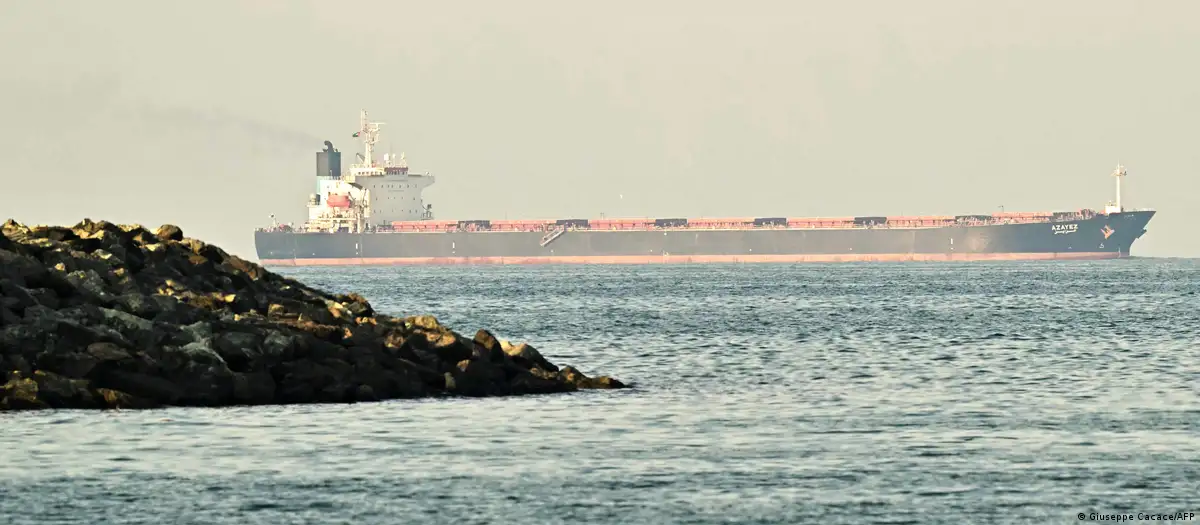
What you need to know
- US President Donald Trump is reportedly considering a proposed interim deal communicated to the US via Pakistan
- Iran would reopen the Strait of Hormuz in exchange for Washington ending its blockade of Iranian ports
- Tehran's proposal would postpone more complex negotiations over Iran's nuclear program
This blog is now closed. Below is a roundup of the latest developments around the war in Iran and the wider Middle East on Tuesday, April 28, 2026.
Trump says King Charles agrees Iran must not have nuclear bomb
During a state dinner in honor of the British monarch, President Donald Trump stated that King Charles III agrees that Iran cannot possess nuclear weapons.
Trump also told Charles and the other guests at the White House dinner that Iran had been "militarily defeated."
This was his first public comment on the sensitive topic during the ongoing royal visit.
"We have militarily defeated that particular opponent," Trump said and added: "Charles agrees with me even more than I do — we're never going to let that opponent have a nuclear weapon."
German FM says Merz's 'humiliation' remark was 'a clear warning to Tehran'
German Foreign Minister Johann Wadephul has clarified the comments of Chancellor Friedrich Merz in which he said the US was "being humiliated by the Iranian leadership."
In an interview with DW's Berlin bureau chief Max Hoffmann in New York City, Wadephul said Merz's remarks were "a clear warning to Tehran not to misunderstand the whole situation."
"The US has still assembled a lot of military equipment around Iran. We are now in a ceasefire situation, fortunately, but this time has to be used also by Tehran," Wadephul said.
"What we currently see is that Tehran is playing for time and not really negotiating in a way which is necessary and which is which is needed," he added.
After Merz' comments, Trump hit back on his Truth Social platform to say that Merz "doesn't know what he's talking about!"
Wadephul was then asked whether Merz's use of the word "humiliated" was a poor choice of words.
"It was addressing the behavior of Iran," Wadephul replied.
"They are, as I said, misunderstanding their position and overplaying their role, so this is what the chancellor said," the minister stressed.
Trump says Merz 'doesn't know what he's talking about' on Iran
US President Donald Trump has slammed German Chancellor Friedrich Merz for his comments on the US-Israel war with Iran.
Merz said on Monday that Washington appeared to lack a clear strategy and questioned what kind of exit the US might pursue. He added that Tehran was in the process of "humiliating" the United States in the ongoing conflict.
In his response on Tuesday, Trump said the German chancellor "doesn’t know what he’s talking about" and that if Iran acquired a nuclear weapon, "the whole world would be held hostage."
"I am doing something with Iran, right now, that other Nations, or Presidents, should have done long ago. No wonder Germany is doing so poorly, both Economically, and otherwise!" Trump wrote in a post on his Truth Social platform.
Lebanese army says 2 soldiers injured in Israeli strike
The Lebanese army said two of its soldiers were wounded in an Israeli strike in the southern Lebanese village of Majdal Zoun.
The army said Israel was targeting an army patrol in Majdal Zoun who were taking part in a rescue operation.
US Marines board and then release ship suspected of circumventing Hormuz blockade
US Central Command said the US Marines boarded a ship in the Arabian Sea which the US military believed was attempting to circumvent the naval blockade on Iranian ports.
"Earlier today in the Arabian Sea, US Marines from the 31st Marine Expeditionary Unit boarded M/V Blue Star III, a commercial ship suspected of attempting to transit to Iran in violation of the US blockade of Iranian ports," US CENTCOM said in a post on X. "US forces released the vessel after conducting a search and confirming the ship's voyage would not include an Iranian port call."
"American forces continue to operate and enforce the blockade across the Middle East," the post added. "So far, 39 vessels have been redirected to ensure compliance."
Germany's Wadephul: Global community united in push to reopen Strait of Hormuz
German Foreign Minister Johann Wadephul, who is in New York City for talks at the United Nations, said the global community is united in the belief that the Strait of Hormuz must be reopened for navigation.
Wadephul said he got this impression from his meetings at the UN, including with Argentinian Foreign Minister Pablo Quirno.
"It's a good sign," Wadephul said, while adding that the "international community is also clearly of the opinion that Iran must be prevented from developing a nuclear weapon."
"This world does not not need new nuclear powers; rather, this world needs fewer nuclear weapons," Wadephul said.
UK summons Iranian ambassador over 'unacceptable and inflammatory comments'
The UK's Foreign, Commonwealth and Development Office has summoned the Iranian Ambassador to the UK over the "Iranian embassy's unacceptable and inflammatory comments on social media."
The UK Minister for the Middle East, Hamish Falconer, was involved in the summoning of the ambassador.
"The Minister made clear that these actions and comments were completely unacceptable, and that the Embassy must cease any form of communications that could be interpreted as encouraging violence in the UK or internationally," a statement from the UK Foreign Office said.
"Iran's brutal and repressive regime will continue to be called out by the UK Government for its malign activities on UK soil, its reckless attacks against our allies in the Gulf, and its violence against its own people," the statement added.
It came after British media outlets reported on a post made by the Iranian Embassy in London's Telegram account. The Telegram post urged Iranians in the UK to enroll in its "life sacrifice" program and defend Iran.
The post has raised accusations that Iran is using its social media presence to recruit martyrs.
"The Iranian regime is reportedly using its embassy in the UK to recruit terrorists," the Israeli Foreign Ministry said in response to a report from the Daily Mail on the post. "Diplomatic cover cannot be a shield for terror activity. Acting against such missions is a necessary response to a regime that exploits diplomacy to spread violence."
An Iranian Embassy in London spokesperson said the "life sacrifice" or Jan Fada program "does not promote any form of hostility."
Oil price jumps above $110 amid Hormuz standoff
The price of Brent Crude oil rose above $110 (€94.06) for the first time in three weeks as a standoff in the Strait of Hormuz continues.
There appears to be no clear end to the war, which has now lasted two months, as Pakistan-mediated ceasefire talks have stalled.
The Trump administration is currently reviewing a proposal to reopen the Strait of Hormuz from Iran. Reopening the Strait would alleviate pressure on energy prices.
Trump: Iran wants us to 'Open the Hormuz Strait'
US President Donald Trump, in his latest post on Truth Social, said Iran "has just informed us that they are in a 'State of Collapse.'"
"They want us to 'Open the Hormuz Strait' as soon as possible as they try to figure out their leadership situation (which I believe they will be able to do!)," Trump said.
The US has been implementing a naval blockade on Iranian ports over the past few weeks. The aim of the blockade is to stop Iran from profiting off its oil which is exported via ship through the Strait. Oil is a key source of income for the Iranian government.
Iran, meanwhile, has fired on ships traveling through the Strait, with Iranian boats also laying mines in the strategic waterway.
About one fifth of the world's oil and gas moves through the Strait of Hormuz, with Asian countries such as China, Japan, South Korea, and India particularly reliant on the Strait for their energy needs.
The US-Israeli war against Iran, which has now gone on for two months, has caused the cost of oil to spike, putting pressure on economies around the world.
UAE quits OPEC in shock move amid energy turmoil
The United Arab Emirates has said it will leave OPEC and OPEC+, dealing a major blow to the producer alliance during a global energy shock.
State media said the move, effective May 1, reflects the UAE's long-term strategic and economic priorities as oil markets remain volatile amid the Iran war.
Read more about the story here.
Qatar warns against 'frozen conflict' in Gulf
Qatar has warned against the risk of a prolonged "frozen conflict" as US-Iran peace talks stall.
Qatari Foreign Ministry spokesman Majed al-Ansari said Doha does not want to see tensions repeatedly flare.
"We do not want to see a return to hostilities in the region anytime soon. We do not want to see a frozen conflict that ends up being thawed every time there is a political reason," al-Ansari told a press conference.
The White House said it is reviewing Iran's latest proposal to reopen the Strait of Hormuz, which has been effectively closed for two months since the war began.
Negotiations aimed at ending the conflict and restoring full access to the key shipping route have remained inconclusive since a ceasefire took effect on April 8.
"We are very keen to see an end to this war that is sustainable, that takes into account all of our concerns in the region and beyond," Ansari added.
Iran eases internet curbs for businesses after blackout
Iran has approved a temporary plan to ease internet restrictions for businesses after weeks of tight controls during the war.
A government spokesperson said the country's top security body authorized limited access following a near-total blackout imposed at the start of the conflict with the US and Israel.
Most Iranians have been unable to access the global internet for around 60 days, according to NetBlocks, with only a small number able to get online using costly VPN services.
Authorities have kept broad restrictions in place, citing security concerns, while allowing limited relief for parts of the economy.
"The Supreme National Security Council approved the 'Internet Pro' scheme to preserve businesses during times of crisis," said government spokesperson Fatemeh Mohajerani. She did not say when the new measures, which had not been previously disclosed by the government, would be introduced.
"Once the situation is announced to be normal by relevant authorities, the situation of the internet will also change," she added.
BP profit jumps as oil prices surge on war
Oil giant BP has reported a sharp rise in first-quarter profits as oil prices climbed during the Middle East war.
The company said profit after tax rose to $3.8 billion in the January–March period, up from $687 million a year earlier.
Crude prices have surged since the start of the US-Iran conflict on February 28, with markets swinging on fast-moving war developments.
BP said in mid-April that it expected to benefit from higher prices as the conflict choked global energy supplies.
"Overall, our business continues to run well. This was another quarter of strong operational and financial delivery, and we made further progress towards our 2027 targets," said CEO Meg O'Neill
German Vice Chancellor Lars Klingbeil, from the center-left Social Democrats, this month proposed a windfall tax on energy companies benefiting from the war in the Middle East.
However, Economy Minister Katherina Reiche from Chancellor Friedrich Merz's conservatives has criticized the proposal.
Australian foreign minister warns Iran war hits Asia-Pacific hardest
Australian Foreign Minister Penny Wong has said the Middle East war is having a "disproportionate impact" on the Asia-Pacific region.
She made the remarks in Tokyo, vowing closer coordination with Japan to manage global disruption as energy supply concerns grow.
Wong met Japanese counterpart Toshimitsu Motegi and highlighted tightly linked supply chains. The visit comes ahead of Japanese Prime Minister Sanae Takaichi traveling to Australia as part of efforts to strengthen economic security and stabilize supplies of energy and critical minerals.
IN DEPTH — How the Iran war is bringing back 'citizenship as a weapon'
Some Gulf states, trapped between Iran, Israel and the US in the current war, have started revoking the citizenship of locals considered "traitors." But is it about security — or a way to suppress political dissent?
Read more about how citizenship is being used and abused in light of the war in Iran.