Germany updates: Angela Merkel criticizes asylum policy
Published June 29, 2025last updated June 30, 2025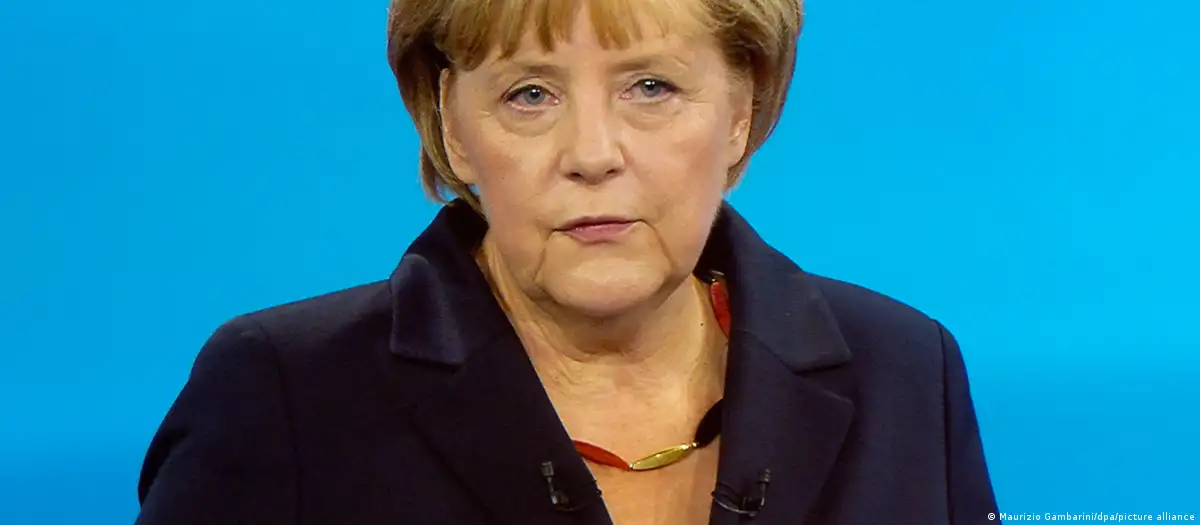
What you need to know
- Former Chancellor Merkel has criticized the government's asylum policy in a rare intervention
- A motion by the Social Democrats toward banning the far-right AfD has fueled debate on the issue
- Foreign Minister Johann Wadephul has reaffirmed German support for Ukraine as he visits Kyiv
- Many in Germany say they are prepared to work beyond retirement age
This blog is now closed, thank you for following along. Head over to our new blog for updates from Germany on Tuesday.
Below is a roundup of stories out of Germany from Sunday, June 29, and Monday, June 30:
Why Germany struggles to attract Africa's skilled workers
Germany is desperate for foreign skilled workers.
But despite its revamped consular services website and special visa program, few workers are relocating to Germany.
DW tries to explain why this is the case here.
To prioritize defense, Germany to cut development aid
Germany is ramping up defense spending — while cutting funds for development cooperation.
Aid organizations warn of the consequences for millions of people in a world beset by wars and crises.
DW looks at the changes reflected in Germany's draft budget and their impact on defense spending here.
WATCH: FM Wadephul reassures Ukrainians of German support
Germany's Foreign Minister Johann Wadephul is in Kyiv to meet with Ukrainian officials.
DW's Nick Connolly says the visit is calming frayed nerves in the face of escalating Russian attacks and waning US military support.
Top conservatives call for lower energy prices
The leaders of the conservative CDU and CSU parliamentary groups have urged the coalition government, led by their own parties, to do all it can to reduce energy prices, arguing that lowering them would benefit the economy, competitiveness, private households and the transition to renewables.
A statement seen by the German DPA news agency calls for "the rapid reduction of electricity tax to the European minimum level for all companies and all consumers."
It said the policies announced by the government to date "can only be a first step," saying more must come quickly "in this legislative period" as soon as economic conditions permit.
"The reduction in the electricity tax for everyone is a direct relief for mid-tier businesses and private households," the statement said.
It said lower taxes would "speed up" the energy transition in view of the ever greater contribution of renewable sources to the power mix and "support Germany in achieving its climate targets."
In a coalition agreement with junior partner the Social Democrats, the CDU/CSU bloc promised to reduce persistently high prices for energy.
However, Finance Minister Lars Klingbeil's draft 2025 budget, which was passed in the Cabinet last week, foresees only a partial cut to electricity taxes for major industries, as well as reductions to the gas storage levy.
Business leaders have also reacted with dismay to the budget's failure to cut electricity taxes across the board.
Police officers on trial charged with stealing cash taken from drug dealers
Two German police officers went on trial Monday for allegedly stealing cash seized from cocaine
dealers.
The pair, aged 34 and 50, are said to have obtained over €6,000 ($7,000) each by taking money from the dealers during police checks over several months, without recording the transfers.
The lawyer of the 34-year-old, who has been remanded in custody, said his client had wanted to establish a "kind of moral justice" through a "redistribution between drug dealers and often needy consumers."
The 50-year-old, who is not in custody though suspended from duty, has denied all the charges.
The offenses are alleged to have occurred between April 2024 and January 2025.
German government concerned at increasing disinformation about Merz
Social media platforms are becoming host to a growing number of deliberate lies about German Chancellor Friedrich Merz, government and disinformation analysts say.
A government spokesman told the German DPA news agency that "both disinformation and personal defamation as well as propaganda across many channels" are making their appearance, with the material seemingly intended to discredit Merz and his party, the center-right Christian Democrats (CDU).
The disinformation material has recently contained false claims that the CDU-led coalition government was planning to introduce a school tax, to increase weekly working hours and to mandate home visits to those off work sick.
Merz himself has been shown in a fake video — embedded in an equally fake newspaper article — allegedly promoting dubious financial products.
He was also the target of false online claims connected with a video claiming to show French President Emmanuel Macron hiding a bag of cocaine during a trip to Kyiv. Merz, who was sitting at the same table as Macron, was accused of hiding a spoon allegedly used for cocaine consumption.
The "bag" seen in the video was, in fact, a tissue, the Elysee Palace confirmed.
An analyst at the Institute for Strategic Dialogue (ISD), an organization devoted to the fight against disinformation, told DPA that one likely source was actors linked to the Kremlin who oppose Merz's strong support for Ukraine.
Pablo Maristany de las Casas, the analyst, said the material might also be posted by far-right users disappointed at Merz's migration policy and refusal to cooperate with the AfD.
Merz takes the disinformation "very seriously," according to the government spokesman.
Merkel criticizes Germany's asylum-seeker rejections
Former German Chancellor Angela Merkel criticized the rejection of asylum-seekers at Germany's borders, a policy being implemented by the current government led by Chancellor Friedrich Merz.
"If someone stands at the German border and says they need asylum, they must receive the proper due process," Merkel said in a conversation with five refugees in Berlin, a conversation published by public broadcaster WDR.
"As far as I'm concerned, the process can take place at the border itself, but a process must take place."
Merkel said that while there needs to be a system as a result of which people smugglers will not get to decide who comes to Germany, there needs to be a consideration regarding who needs asylum the most, also mentioning the role the job market's need for employees plays.
"We have to think about it in European terms," Merkel said.
This comes as the number of asylum-seekers in Germany rose by 4.1% in 2024 in comparison to 2023, from 3.18 million to 3.3 million, according to the German Central Register of Foreign Nationals.
DW takes a closer look at Germany's latest figures on asylum seekers here.
Fire breaks out on Berlin roof
Fire broke out at the construction site of a 20-storey building in Berlin Monday morning, with some 100 firefighters already being on site to put out the blaze.
According to the DPA news agency, black smoke could be seen on the roof of the building, with the fire's cause being still unclear. Explosions also took place on the roof.
"Fire appears to be out, but the operation is ongoing. More emergency service personnel continue to arrive on the scene. Firefighters can be seen on the roof of the building," said DW reporter Matthew Moore.
German Foreign Minister Wadephul visiting Kyiv
German Foreign Minister Johann Wadephul has arrived in the Ukrainian capital, Kyiv, to discuss support for
Ukraine as it continues its more than three-year fight against a full-scale invasion by Russia, the German Foreign Ministry said on Monday.
In a statement made upon arrival, Wadephul slammed Russia's President Vladimir Putin, saying the Russian leader wanted to conquer and subjugate Ukraine at any price.
"We will continue to stand firmly by Ukraine's side so that it can continue to defend itself successfully — with modern air defense and other weapons, with humanitarian and economic aid," Wadephul said.
Germany is Ukraine's second-biggest backer after the United States.
Wadephul's visit comes as Europe is struggling to fill the gap left by the Trump administration in the US, whose commitment to Kyiv has been called into question.
Washington has not announced any new help for Kyiv since early January.
Read more on Wadephul's visit to Kyiv here.
Many in Germany willing to work post-retirement age amid pension fears
Nearly three-quarters of people living in Germany believe their pensions will be insufficient to allow them to keep their current standard of living, with just over half of them prepared to keep working beyond the official retirement age for that reason, a survey released on Monday has shown.
In all, 54.3% of 1,163 respondents in the YouGov poll said they would be willing to keep on working beyond the legal retirement age, most of them part-time and up to the age of 70.
Of this group, one in five (19.8%) said they would keep working only if they received higher pay.
Altogether some 33% said they would not be willing to work beyond the retirement age.
The German government is planning to change rules so that older people can stay in the workforce if they so desire.
The standard retirement age in Germany is being gradually raised from 65 to 67 by 2029.
Interior Minister Dobrindt urges caution over AfD ban
German Interior Minister Alexander Dobrindt on Sunday threw cold water on a motion by the center-left Social Democratic Party (SPD) calling for the Alternative for Germany (AfD) party to be banned.
Dobrindt is a member of the conservative Christian Social Union (CSU), the Bavarian sister party of the Christian Democratic Union (CDU), which leads a coalition government with the SPD.
At the close of its three-day congress in Berlin, the SPD passed a motion calling for preparations to ban the far-right AfD, after the party was classified as a "right-wing extremist" group by Germany's domestic intelligence agency.
That designation has been suspended pending a legal challenge by the AfD.
Speaking to the "Table.Today" podcast on Sunday, Dobrindt said "decisions made at the SPD party conference are not yet a mandate for the interior minister."
Read more on the SPD's motion and Dobrindt's response here.
Deadly discovery on German trail days after attempted robbery
A woman and a young girl were found dead on a forest path in North Rhine-Westphalia, western Germany, on Sunday only days after a reported robbery on the same trail in Dorsten-Holsterhausen.
Police said the woman, believed to be between 25 and 30-years-old, had a head wound and may have been a victim a violent crime. The child, estimated to be between 2 and 3-years-old, was found nearby. Neither has been identified.
On Thursday a 40-year-old woman and her 1-year-old child were attacked on the same path by a man and a woman who tried to steal her handbag, before fleeing in a black BMW X6.
Leading CDU politician calls for German-European nuclear umbrella
Jens Spahn, leader of the CDU/CSU parliamentary group, has called for Germany to immediately gain access to nuclear weapons.
"Russian aggression is a completely new threat," Spahn told Welt am Sonntag. He added that US nuclear bombs stationed in Germany are no longer sufficient to deter nuclear weapons.
"Europe must become capable of deterrence," the conserative politician said. "We must talk about German or European participation in the nuclear arsenal of France and Great Britain, possibly also about our own participation with other European states."
He added, "Anyone who cannot deter nuclear weapons becomes a pawn in global politics."
Spahn's proposal was met with strong criticism from the Left Party and the SPD, a coalition partner.
SPD foreign policy expert Rolf Mützenich accused Spahn of playing with fire "when he calls for European, possibly even German, nuclear weapons." Mützenich explained that the SPD is clearly committed to the goal of nuclear non-proliferation.
The German Bundeswehr does not possess its own nuclear weapons. However, some nuclear weapons are stored in Germany under US control. In an emergency, the Bundeswehr could be called upon to deploy these weapons.
SPD party congress rejects commissioning of Nord Stream
At its party congress in Berlin, the Social Democratic Party (SPD) , which is part of the ruling coalition, voted against resuming any natural gas deliveries from Russia through the Nord Stream 1 and Nord Stream 2 pipelines.
The Nord Stream pipeline system consists of two double pipelines running across the Baltic Sea to Germany. Nord Stream 1 became operational in 2011, allowing Russia to deliver directly to its German clients without paying transit fees to eastern European countries. While traditional land pipelines continued to operate after 2011, the Nord Stream project and its expansion plans enraged multiple governments in the region, including Kyiv, that saw its leverage as a gas transit country diminish in any future disputes with Russia.
It also drew condemnation from US and EU officials, who warned that Germany was becoming too dependent on Russian gas. However, Berlin proceeded to work with Russia to build Nord Stream 2, which would run mostly parallel to the original one. German officials insisted the gas transit route was purely an economic project.
Nord Stream 2 was completed in 2021. However, it never became operational due to deteriorating relations between Russia and the West, and was eventually hit by unexplained explosions in September 2022. Additional explosions destroyed both pipelines of Nord Stream 1. Despite reports indicating Ukrainian operatives were involved in the blasts, the responsability was never officialy established.
Recently, speculation has mounted about a potential US takeover of the insolvent Nord Stream pipeline operator, which could facilitate commissioning. On Sunday, however, the delegates at the SPD party conference said they opposed such proposal that may come from their partners in the ruling coalition and "the US Republican Party."
Germany seeks to deepen coopertion with Israel on cyberdefense
During his visit to Israel, Interior Minister Alexander Dobrindt announced that Germany is aiming to establish a joint cyberresearch center and strengthen collaboration between the countries' intelligence and security agencies.
"Military defense alone is not sufficient for this turning point in security. A significant upgrade in civil defense is also essential to strengthen our overall defensive capabilities," Dobrindt said, according to Germany's Bild newspaper.
According to a report, Dobrindt also outlined a five-point plan to establish a "Cyber Dome" for Germany as part of its cyberdefense strategy.
Germany is one of Israel's closest allies in Europe. As it boosts its military capabilities and contributions to NATO in the face of perceived growing threats from Russia and China, Berlin has increasingly looked to draw upon Israel's defense expertise.