Iran war: JD Vance hoping for 'positive' talks in Pakistan
Published April 10, 2026last updated April 11, 2026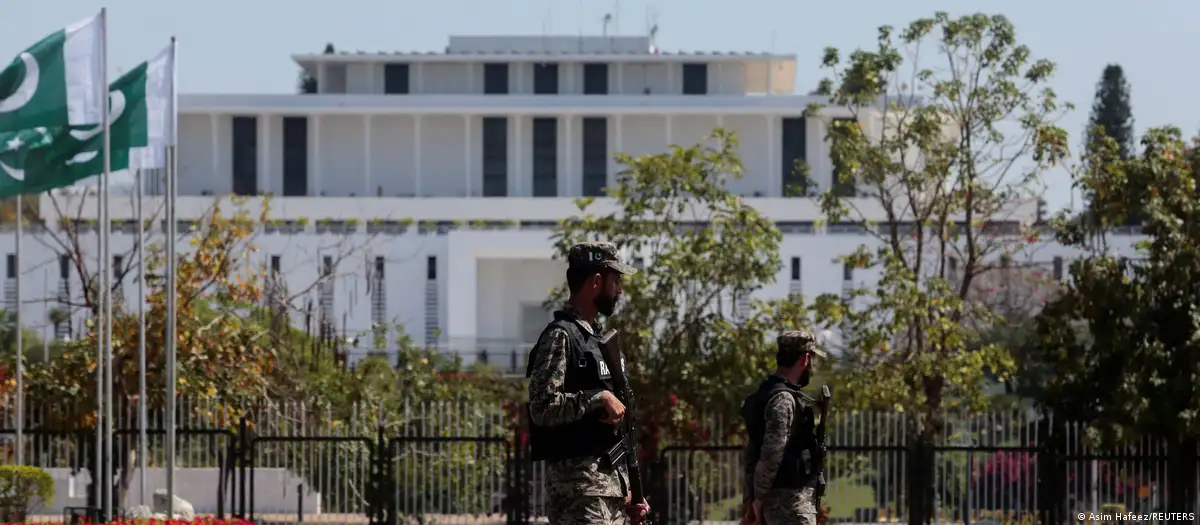
What you need to know
- Israel and Hezbollah continue exchanging attacks, despite the US and Iran agreeing to a ceasefire
- Iran says Lebanon should be part of the ceasefire, but Israel and the US disagree
- US Vice President JD Vance is heading to Pakistan for high-level talks with Iran
- Pakistani Prime Minister Shehbaz Sharif have called the talks 'make or break'
- US consumer inflation sees sharp rise to 3.3% amid rising energy costs
- Kuwait accuses Iran of targeting it with drones, which Tehran denies
- Washington is reportedly hosting Israel-Lebanon talks next week
Welcome to DW's coverage of the US-Israel war with Iran and the wider conflicts in the Middle East on Friday, April 10:
WATCH — 'No strategy, just panic,' Bolton says of Trump's Iran war
Former US National Security Adviser John Bolton criticizes US President Donald Trump's Iran strategy, saying that the US president "simply doesn't understand much about the wider world."
As US-Iran relations remains exgtremely tense and Vice President JD Vance heads into high-stakes talks, Bolton warns of escalation risks, unclear objectives and growing instability in the Middle East.
Israel rules out ceasefire with Hezbollah ahead of Lebanon talks
Israel said on Friday it will not discuss a ceasefire with the pro-Iran Hezbollah militant group as part of talks with Lebanon scheduled to begin next week.
Israeli Ambassador Yechiel Leiter said in a statement after a meeting with his Lebanese counterpart to set up the talks that he "refused to discuss a ceasefire with the Hezbollah terrorist organization."
Meanwhile, news website Axios reported on Friday that both Beirut and the Trump administration have asked Israel for a "pause" in its airstrikes on the country as a "gesture" ahead of the talks, citing two unnamed sources who added that the US supports Lebanon's request.
Israel claims its airstrikes on Lebanon target Hezbollah and its infrastructure.
Israeli airstrikes on Lebanon since the start of the war have killed at least 1,953 people, according to Lebanon's Health Ministry.
This includes at least 303 who were killed in 10 minutes on Wednesday during a rapid series of 100 strikes that hit the country, including dense residential and commercial areas in central Beirut.
Hezbollah is listed as a terrorist organization in the US, Germany and other countries, while the European Union considers its military wing a terrorist organization.
Trump says Strait of Hormuz to 'open fairly soon'
US President Donald Trump on Friday told reporters the US will have the Strait of Hormuz "open fairly soon."
Speaking to reporters before he got on Air Force One, Trump claimed Iran was now "militarily defeated," repeating his statement that the strait will be opened "with or without them."
"I think it's going to go pretty quickly, and if it doesn't, we'll be able to finish it off," Trump told reporters as he left Washington for a domestic trip.
"One way or the other, it's going well," he added.
Lebanon, Israel to hold US mediated talks next Tuesday, Beirut confirms
Lebanon and Israel will hold a first US-mediated meeting on Tuesday at the US State Department in Washington, DC, the Lebanese presidency said on Friday evening.
The two countries held their first contact via a telephone call between their ambassadors to Washington on Friday, the presidency said. The US ambassador to Lebanon also took part in the call.
The talks will look into "a ceasefire and a date to start US-sponsored negotiations between Lebanon and Israel," the presidency statement read.
On Thursday, after a day of intense Israeli bombardment of Lebanon that killed over 350 people, Israeli Prime Minister Benjamin Netanyahu said he had instructed his Cabinet to begin talks with Lebanon involving the disarmament of the pro-Iran Hezbollah militant group and "establishing peaceful relations" between the two countries.
Like many countries in the Middle East, Lebanon does not recognize Israel. In recent years, Israel has established ties with several countries in the region, under Trump's Abraham Accords.
Iranian delegation arrives in Islamabad for talks
A delegation of representatives from Iran, led by parliamentary speaker Mohammad Bagher Ghalibaf, has arrived in the Pakistani capital, Islamabad, ahead of in-person talks with the US delegation led by Vice President JD Vance, Iranian state TV reported.
Ghalibaf arrived with a delegation including Foreign Minister Abbas Araghchi and other security, political, military and economic officials, Iranian state media reported, reiterating Iran's position that talks would only begin if Washington accepts Tehran's preconditions.
Iran has suggested there are still stumbling blocks for a long-term peace after a shaky two-week ceasefire was agreed on Wednesday.
READ — Lebanon gripped by uncertainty over Iran-US ceasefire
Following the latest wave of Israeli attacks, Lebanon faces what the UN calls a "perfect storm."
Could the first direct talks between Lebanon and Israel address the humanitarian crisis?
Read more about the challenges faced by people in Lebanon after years of war with Israel.
Pakistan says US-Iran talks are 'make or break'
Pakistani Prime Minister Shehbaz Sharif commented on the importance of the talks between the US and Iran taking place in his country, saying they were decisive in whether or not a permanent ceasefire in the weeks-long Middle East conflict is achievable.
Sharif described the current stage as a "make-or-break moment." He thanked the leadership of Iran and the United States for agreeing to a ceasefire and holding peace talks at his request.
He also pledged that his government would do its best to ensure the success of the peace process.
Sharif urged citizens to pray for the talks to succeed and speaking directly to his people, he annoucned a set of measures to address the energy crisis, saying his government would cut prices of diesel to 385 rupees ($1.38) per liter and gasoline to 366 rupees per liter.
Death toll from Wednesday's Israeli strikes on Lebanon reaches 357
The death toll from the Israeli strikes which occurred in Lebanon on Wednesday has increased to 357, the Lebanese Ministry of Health said on Friday evening. Another 1,223 people were injured in the strikes.
"The toll is still not final, due to the ongoing removal of rubble and the presence of a large amount of human remains," which necessitate DNA testing, the ministry said.
Israel, meanwhile, has said it killed over 180 Hezbollah militants in Wednesday's attacks. Israel said it was continuing its attacks against Hezbollah despite the US ceasefire with Iran.
READ — Iran war: Islamabad on edge ahead of US–Iran peace talks
All eyes are on Islamabad, where US and Iranian delegations are set to start negotiations. Experts are cautiously optimistic, but also say a failure of the talks would spell more global chaos.
Read more in this analysis from DW's Haroon Janjua in Islamabad.
Trump: Iran has 'no cards' beyond Strait of Hormuz
US President Donald Trump sought to pressure Iran ahead of talks in Islamabad, pointing out what he saw as Tehran's weaknesses going into the talks.
He said Iran has "no cards" in upcoming talks, apart from its control over the crucial Strait of Hormuz shipping channel.
"The Iranians don't seem to realize they have no cards, other than a short-term extortion of the World by using International Waterways. The only reason they are alive today is to negotiate!" Trump wrote on his Truth Social network.
The closure of the Strait of Hormuz sent oil prices soaring and sent shockwaves through global markets, leading to warnings of recession.
An hour before the post, Trump also posted a short message taking a dig at Iran and presumably US media, saying the Iranians were "better at handling the Fake News Media, and "Public Relations," than they are at fighting!"
READ — Rifts in regime bigger threat to ceasefire
As the US and Iran gear up for high-stakes talks, the bigger question is whether Tehran can hold the line amid signs of fractures within the regime.
Trump threatens strikes if Iran talks fail — report
President Donald Trump said in an interview with US newspaper The New York Post that US warships were being reloaded with weaponry to strike Iran, in the event that talks in Pakistan fail to produce a deal.
Vice President JD Vance is on his way to Pakistan's capital of Islamabad to lead the US delegation in talks with Iran. The Trump administration has warned Tehran not to "play" Washington.
"We have a reset going. We're loading up the ships with the best ammunition, the best weapons ever made — even better than what we did previously and we blew them apart," the Post cited Trump as saying.
"And if we don't have a deal, we will be using them, and we will be using them very effectively," he added.
Trump told the newspaper that the US was dealing with people with whom it was not certain "whether or not they tell the truth."
The US president said that in regards to US demands that Iran hand over an estimated 1,000 pounds of deeply buried enriched uranium, it remains to be seen what Iran will do.
"To our face, they’re getting rid of all nuclear weapons, everything's gone. And then they go out to the press and say, 'No, we'd like to enrich.' So we'll find out," Trump reportedly said.
Over 100,000 Muslims worship at reopened Al-Aqsa Mosque in Jerusalem
Over 100,000 Muslims worshipped at Al-Aqsa Mosque on Friday in East Jerusalem amid the ongoing US-Iran ceasefire.
The Al-Aqsa Mosque reopened on Thursday following the announcement of the truce, along with other Jerusalem holy sites such as the Western Wall for Jews and the Church of the Holy Sepulchre for Christians. The ceasefire came into effect on Wednesday.
The Jerusalem holy sites had been closed since the beginning of the US-Israeli war against Iran that began on February 28.
According to French news agency AFP, one man stood by the entrance of the Al-Qibli prayer hall at Al-Aqsa and gave out tissues to emotional worshippers.
A Lebanon ceasefire and assets release are pre-conditions for talks, Iranian speaker
Iran's parliament speaker, Mohammad Bagher Ghalibaf, said that a ceasefire in Lebanon and the release of Iran's blocked assets were two mutually agreed-upon conditions that must be met before any negotiations can begin. He made the remarks in a post on X on Friday.
Ghalibaf's comments come ahead of planned talks between US and Iranian representatives in Pakistan's Islamabad.
The question over whether Lebanon is included in the deal or not have cast doubt on the stability of the ceasefire, with Iran threatening to withdraw if Israeli attacks on Lebanon continue.
Pope Leo: 'God does not bless any conflict'
Pope Leo XIV has called for "coexistence and dialogue among peoples" ahead of negotiations between the United States and Iran in Pakistan and a potential Orthodox Easter ceasefire between Ukraine and Russia.
"God does not bless any conflict," the American pontiff wrote on social media. "Anyone who is a disciple of Christ, the Prince of Peace, is never on the side of those who once wielded the sword and today drop bombs."
Although he didn't refer specifically to any particular conflict, whether in the Middle East, Ukraine or elsewhere, the head of the Catholic church said: "Military action will not create space for freedom or times of peace."