How the cocoa price crash is crushing West African farmers
July 1, 2026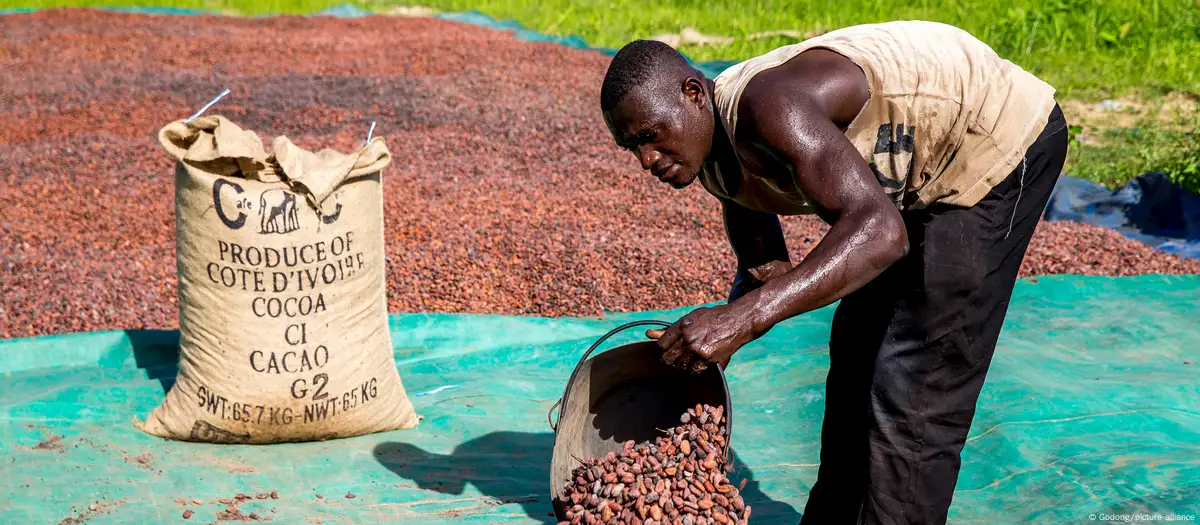
It's a tough choice. "If I send my children to school and can't bring in part of the harvest, we won't have enough money for food. Or do I take them out of school so we can harvest more cocoaand have three meals a day?" a cocoa farmer from Cote d'Ivoire told DW.
Cocoa prices have recently plunged after the historic surge to nearly $13,000 (€11,000) per metric ton in 2024. In early April 2026, the world market price temporarily fell to $3,000, a decline of more than 75% in just over a year.
The low prices have had a massive impact on the approximately 2.5 million smallholder farmers who grow cocoa in West Africa.
Farmers like Firmin Coulibaly from Cote d'Ivoire are forced to sell their cocoa beans at very low prices. "Producers are dying in poverty even though they have crops. They have no money for medicine or food," he told DW.
In Ghana, too, many farmers are suffering from delayed payments because middlemen are no longer buying their cocoa. "Because of the delayed payment, I don't have money to pay the workers who harvest the crop," said farmer Emmanuel Nojor. "That's why the harvest has gone bad."
He added that the middlemen have been withholding his payments for around five months.
Whether it's for medicine, pesticides, or paying day laborers, there's a shortage of everything. "I would use part of the money for my child's school fees, which I haven't been able to pay so far. He's sitting at home and wasn't able to take the exams," said Nojor.
What led to the drop in cocoa prices?
According to the International Cocoa Organization (ICCO), the high prices in 2024 were initially driven by poor harvests in West Africa, resulting in a supply shortage.
"Climate change is taking its toll on countries in the tropical belt," Agricultural economist Tancrede Voituriez said. "There are periods of drought followed by heavy rainfall. This causes production to drop," Voituriez explained, adding that plant diseases such as the cocoa swollen shoot virus and speculation also reduced supply in the markets and drove prices up.
Then came the crash. As better harvests were forecast, many traders sold their cocoa contracts early to lock in profits. At the same time, the World Bank reported that the very high prices had dampened demand from the chocolate industry, as companies used less cocoa and turned to substitute products. Combined with a stronger US dollar, this led to a significant drop in prices.
Cote d'Ivoire and Ghana produce about two-thirds of the world's cocoa, but exports are concentrated in the hands of a few large corporations. Due to low world market prices, these companies have significantly reduced their purchases.
As a result, cocoa is piling up in the ports, while many farmers are left stuck with their harvests. Industry observers suspect this is a deliberate strategy to put pressure on government pricing systems and force lower prices.
In Cote d'Ivoire alone, cocoa worth over $487 million remains unsold because traders and exporters are hesitant to buy at the set terms in light of the price drop.
Wisdom Dogbey, the executive director of the Ghana Cocoa Board (COCOBOD), defends the agency's marketing strategy. COCOBOD is the government agency in Ghana that regulates the cultivation, purchase and export of cocoa. It works in collaboration with the Ghana Cocoa Marketing Company (CMC), which acts as an intermediary between cocoa farmers in Ghana and international buyers.
"The sales system enabled CMC to lock in prices early and hedge against the recent market crash," Dogbey said. "Between 85 and 90 % of the 2025/26 harvest had already been sold before the crisis."
Intervention by West African cocoa-producing nations
In early February, the Ghanaian government responded by lowering the government-set producer price. The Ivorian Conseil du Cafe-Cacao (CCC) also regulates prices; in early October, it set the producer price at $4.87 per kilogram to protect farmers.
Shortly thereafter, however, world market prices plummeted. Moussa Kone, president of a cocoa farmers' union in Cote d'Ivoire, accuses the regulatory authority of strategic missteps. "They failed to sell enough cocoa in advance. Today, more than 700,000 metric tons of cocoa are stuck with the farmers, who don't know what to do with it," Kone added.
The crisis highlights a structural problem. African countries primarily export raw cocoa, while value is added abroad. "The profit margins of chocolate manufacturers are significantly higher than those of traders," Voituriez said. "Traders only make about 1% [of the profit.]"
At the same time, the drop in prices could open new opportunities, according to the Ecofin Agency, a Swiss-based media outlet that covers African economic issues.
However, Friedel Hütz-Adams of the Südwind Institute for Economics and Ecumenism, which conducts action-oriented research on global economic issues, said there were still several structural hurdles to overcome. International markets demand a standardized flavor, "which can only be achieved by blending cocoa from different regions, making local processing more difficult."
Calls grow for more regulation
Political pressure is mounting to regulate the sector more strictly. Regulations such as the EU Deforestation Regulation (EUDR) and the planned EU Corporate Due Diligence Directive (CSDDD) require companies to provide greater protection for the environment and human rights.
"All countries supplying the European market must stop sourcing cocoa from illegally deforested forests," Voituriez said. Chocolate companies are under pressure to change their sourcing practices. Certifications such as the Fairtrade seal, which require higher social and environmental standards, are gaining importance.
One approach is the so-called Chocolate Scorecard from the "Be Slavery Free" initiative, which assesses chocolate companies' sustainability practices annually. On average, German companies score below the international benchmark, particularly in gender equality, child labor and living wages.
The latter, in particular, remains a widespread problem—more than half of the cocoa farmers surveyed do not earn a living wage. Yet the scorecard also shows that things can improve: Pioneers such as the brands Tony's Chocolonely, Ritter Sport, and Original Beans are committed to paying higher cocoa prices designed to ensure a decent living wage.
According to Hütz-Adams, the situation facing producers highlights just how urgently reforms are needed: Over the years, "a price has become established that has inevitably led to massive human rights violations."
Hütz-Adams suggested that prices must rise to at least "around $4,000" per metric ton and, above all, be "protected against falling prices" so that families can survive without resorting to child labor. Otherwise, chocolate will never become a treat for everyone along the value chain.
Julien Adaye in Cote d'Ivoire and Claudia Lacave in Ghana contributed to this article.
Edited by: Chrispin Mwakideu