Germany updates: Russian imports fell 95% since Ukraine war
Published June 11, 2025last updated June 11, 2025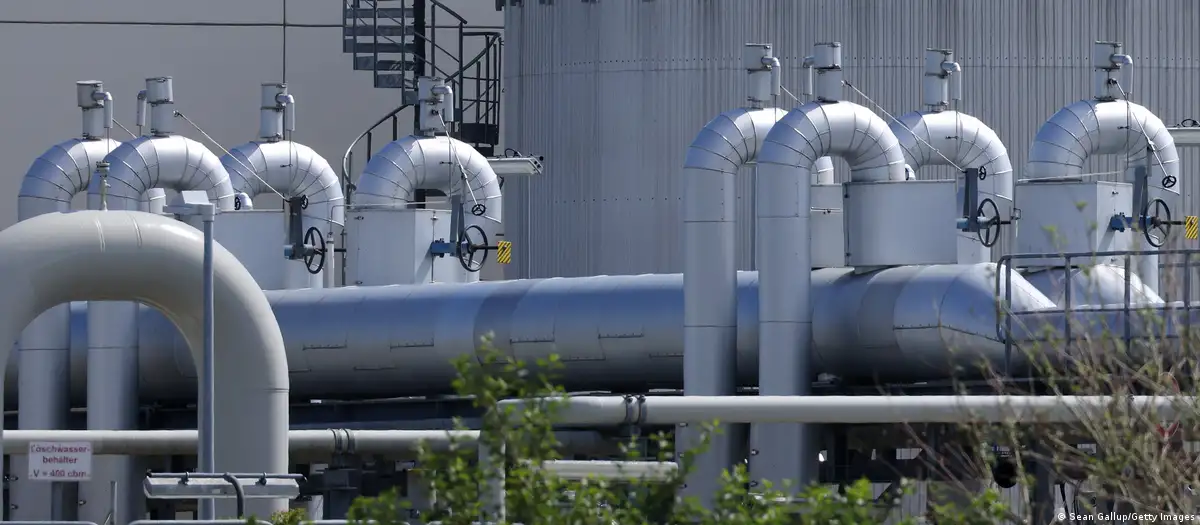
What you need to know
- German imports from Russia have decreased by 95% since the war in Ukraine started
- Tributes flow for German "nail artist" Günther Uecker, died at the age of 95
- Former IS leader in Germany loses his deportation lawsuit Abu Walaa
- Some Social Democrat politicians call for diplomatic talks with Russia
- General Ingo Gerhartz becomes new commander of NATO's Joint Force Command
This blog is now closed. Thank you for reading.
Below you can read a roundup of the news stories from Germany from Wednesday, June 11, 2025:
German court allows puzzle maker use Da Vinci image
In a setback for the Italian state and a Venetian gallery, a German court ruled that the toy company Ravensburger can use Leonardo da Vinci's drawing "Vitruvian Man" for its puzzles.
The Stuttgart Higher Regional Court dismissed a claim filed by Italy's Ministry of Culture and the Gallerie dell'Accademia in Venice, upholding an earlier ruling that favored Ravensburger.
Despite the fact that da Vinci died more than 500 years ago, placing his works in the public domain under international copyright law, the Italian plaintiffs had demanded a licensing agreement for the commercial use of one of the Renaissance master's most famous drawings.
The plaintiffs argued that a domestic law aimed at protecting Italy's cultural heritage gave them the authority to demand agreements from those who profit from culturally significant artworks, even if those individuals are based abroad.
After failed negotiations, the Italians obtained a preliminary injunction from a Venice court that barred Ravensburger from selling the puzzle worldwide. However, Ravensburger successfully challenged the injunction in Germany.
The judgment is not yet final. The Italian plaintiffs may request permission from the German Federal Court of Justice to appeal the ruling.
Suspected left-wing extremists associated with Lina E. charged
The Federal Prosecutor's Office in Karlsruhe has indicted six suspected members and one suspected supporter of a left-wing extremist group, including the alleged leader of the group, Johann G.
They are accused of membership in a criminal organization or supporting such a group. The extremists are also facing charges of grievous bodily harm or aiding and abetting such harm. The group is alleged to have attacked actual or suspected neo-Nazis.
According to prosecutors, Johann G. held a "prominent position" within the group alongside Lina E., who has already been sentenced to prison.
Four of the accused are currently in custody. They were arrested between October and January. The other three, two men and a woman, are still at large.
The Dresden Higher Regional Court must now decide if and when a trial will take place.
In addition to several attacks in Thuringia and Saxony, Johann G. and another defendant are accused of attacking people in Budapest, Hungary's capital, in February 2023. The alleged perpetrators believed their victims were on the right-wing of the political spectrum.
One in four migrants is considering leaving Germany — survey
The results of an online survey by the Institute for Employment Research (IAB) showed that a quarter of immigrants living in Germany are considering leaving the country again.
Of the 50,000 immigrants aged 18 to 65 who were questioned for the survey, 26% are considering emigrating again, and 3% have concrete plans to do so.
The survey found that social factors, including partners, relatives, and friends back home, played a particularly important role in a potential return.
Those considering moving to another country also cited professional goals and the destination country's economic situation as motivators. Among refugees, discrimination experienced in Germany also played a role.
According to the study, respondents who came to Germany for work or professional training, have a high level of education, and possess better German language skills and greater economic success are more likely to consider leaving the country.
In other words, Germany aims to attract individuals to address its skilled labor shortage, but these individuals are most likely to leave, according to the IAB, which is affiliated with the federal employment agency.
15% of German firms affected by cyberattack in last 12 months — survey
According to a survey conducted on behalf of the technical inspection authority TÜV, approximately 15% of German companies with at least 10 employees has been affected by a cyberattack in the past 12 months.
However, most affected companies reported no damage resulting from the cyberattacks. Some reported minor damage, and only a few reported serious, existential damage.
"The German economy is in the crosshairs of state and criminal hackers who want to steal sensitive data, extort money, or sabotage important supply structures," said TÜV president Michael Fübi. One criminal tactic, he said, is to encrypt or steal company data and then blackmail the company.
The survey found that most common method used by hackers targeting German companies is phishing. This tactic involves sending emails to employees to trick them into clicking on a link, which allows the attackers to infect the company network with malware.
84% percent of affected companies report having experienced phishing attacks, which is a 12-percentage-point increase from two years ago.
In second place are "other malware attacks" at 26%. This refers to malware, which is used to steal sensitive data, for example. It is not always clear how the malware gets into a company's IT system.
Meanwhile, ransomware attacks (12%) and other methods, such as password attacks (12%), are declining, according to the survey.
VW says most of job cuts will be through partial retirement
The German car manufacturer Volkswagen is relying primarily on partial retirement to reduce its workforce.
According to a work council document seen by the Reuters news agency, around 14,000 employees will leave the company through this program by 2030.
Additionally, nearly 5,000 employees are expected to retire by then. Another 1,300 employees have accepted severance offers.
Volkswagen plans to eliminate 35,000 jobs in Germany by 2030. Thirty thousand of these jobs are to be eliminated at its western German locations, excluding Osnabrück. Volkswagen currently employs around 130,000 people in Germany.
Due to job security measures in place until the end of 2030, there will be no compulsory layoffs.
Former Islamic State leader in Germany loses his deportation lawsuit
A radical Islamist preacher Abu Walaa, who is considered the de facto leader of the so-called "Islamic State" group (IS) in Germany and was sentenced to ten and a half years in prison, has lost his case against his deportation from Germany.
The Düsseldorf Administrative Court dismissed the 41-year-old's lawsuit, as the judge ruled that the interest in deportation outweighed compelling reasons of national security.
The judge said that credible renunciation of his former stance as an IS terrorist and deradicalization was not evident, and there was a risk of reoffending.
Separate proceedings must decide his deportation. Currently, the decision would likely fail due to Iraq's refusal to provide diplomatic assurances that Abu Walaa will not be executed.
A decision must also be made regarding his subsequent asylum application. He must serve his sentence until May 2027.
In 2021, a court in the northern German city of Celle convicted Abu Walaa and three co-defendants for recruiting and radicalizing young people in Germany for the "Islamic State" terrorist group.
Many young people trust social media more than traditional news sites
A new study has found that many young people in Germany trust videos and posts on social media more than content from traditional news sites.
According to the Social Media Atlas 2025, 57% of 20- to 29-year-olds trust social media more than traditional news sources.
This is 20 percentage points higher than the average and a 14-percentage-point increase in this age group compared to the previous year.
Among the 30- to 39-year-old population, 51% prefer social media, which is a 6% increase compared to the previous year.
Among 16- to 19-year-olds, 44% prefer social media, which is a 10% increase compared to the previous year.
For the representative study, polling institute Toluna surveyed over 3,500 internet users aged 16 and older in December 2024 and January 2025. The Social Media Atlas has recorded social media usage in Germany annually since 2011.
13-year-old escapes from hospital for pizza and cola
A 13-year-old patient escaped from a clinic in Ansbach, in the southern German state of Bavaria.
According to police, the boy left the hospital without permission and took a taxi. The hospital staff contacted the police, as the boy's mother was also unaware of her child's whereabouts.
A few hours later, the boy solved the mystery himself when he called his mother from a pizzeria. He had eaten a pizza and drunk a Coke there. He had paid for both the pizza and the taxi ride with his own pocket money.
A police patrol took the 13-year-old back to the hospital, where he had an "educational conversation" with his mother.
Renowned German 'nail artist' Günther Uecker died at 95
The German artist Günther Uecker, a preeminent figure in post-war German art and the master of large-format nail reliefs, has passed away at the age of 95.
Often dubbed "the nail artist," Uecker created art by hammering nails into chairs, pianos, sewing machines, and canvases. Museums and collections across the globe exhibit his works.
For Uecker, his nail paintings were diary-like soul landscapes that he called "emotional values from the time." His reliefs, with their closely hewn nails, resemble swaying grasses or ears of corn. Uecker also considered them "an expression of the poetic power of man."
The artist was born on March 13, 1930, in the village of Wendorf on the Baltic Sea. He moved to Düsseldorf in the mid-1950s, where he studied and later taught at the city's prestigious art academy.
Uecker trained as an advertising designer in East Germany, where he was once forced to paint a 20-meter-high portrait of Stalin. "I was brainwashed in dialectical materialism," he said.
However, Uecker wanted to study under his artistic idol, Otto Pankok. In 1953, he fled East Germany and transferred to the University of Düsseldorf.
In 1957, Uecker picked up a nail for the first time. From then on, nailing became a way for him to draw attention to human violence.
Read more about Günther Uecker here: Avant-garde nail art creator, Günther Uecker, dies aged 95
Number of balcony solar power plants in Germany reached 1 million
According to the German Solar Association (BSW), the number of "balcony power plants" in Germany has doubled over the past year to nearly one million.
The term refers to small solar panels that are often, though not always, mounted on a balcony and limited to an output of 800 watts. These mini-power stations feed power into their owners' networks, reducing their need for power from the grid. If they generate more electricity than the owner uses, the surplus enters the grid without compensating the owner.
"We are working on the assumption that the millionth plug-in solar plant is in operation, as late registrations are still coming in to the Federal Network Agency," BSW chief executive Carsten König said.
On Tuesday, the Federal Network Agency's market data register showed 975,583 balcony power plants in operation. However, the figures are usually slightly out of date because a one-month deadline applies to officially registering the solar panels.
The number of balcony power plants across Germany surpassed 500,000 at the beginning of June last year.
According to an analysis by the Verivox comparison website, "the acquisition of a balcony power plant could pay for itself in between two and a half and five years."
Some SPD politicians call for diplomatic talks with Russia
Several prominent Social Democratic Party (SPD) politicians are speaking out against the security and defense policy of the current government, which is made up of the center-left SPD and conservative CDU/CSU bloc, as well as their own party leadership.
In a "manifesto" made available to the dpa news agency and reported on by several media outlets, the politicians call for direct diplomatic talks with Russia, among other things.
More than 100 people signed the policy paper, including former parliamentary group leader Rolf Mützenich, former party leader Norbert Walter-Borjans, foreign policy expert Ralf Stegner, and several members of the Bundestag and state parliaments.
In their "manifesto," the SPD politicians criticize the "compulsion to increase armaments and prepare for an allegedly imminent war."
They warn: "Military alarm rhetoric and huge armament programs do not create more security for Germany and Europe. Rather, they lead to destabilization and a strengthening of the mutual threat perception between NATO and Russia."
The signatories call for "a return to talks with Russia after the silence of the weapons," including discussions about a peace and security order for Europe that is supported and respected by all.
They also oppose the deployment of new American medium-range missiles in Germany and an increase in the defense budget to 3.5% or 5% of gross domestic product.
Meanwhile, Adis Ahmetovic, the foreign policy spokesman for the SPD parliamentary group in the Bundestag, distanced himself from the "manifesto." In an interview with the AFP news agency, Ahmetovic described the manifesto as "questionable in terms of content" and emphasized that it was "not a decision of the parliamentary group or party."
The document was released ahead of the party conference at the end of the month. At the conference, the SPD will elect a new leader and start developing a new party program.
Germany is already the second-largest provider of armaments and financial support to Ukraine as it fends off a full-scale Russian invasion. Under the new government led by Chancellor Friedrich Merz, Germany has pledged to increase its support.
German general Ingo Gerhartz becomes new commander of NATO's Joint Force Command
From today, German Air Force General Ingo Gerhartz will oversee the operational protection of NATO's eastern flank. The 59-year-old will assume command of the relevant NATO headquarters, the "Allied Joint Force Command," in Brunssum, the Netherlands, from Italian General Guglielmo Luigi Miglietta at noon.
Following Russia's full-scale invasion of Ukraine, deterring and defending the eastern part of the alliance area has once again become a core task for NATO states.
Recently, warnings that Russia could test NATO's commitment to mutual defense have become more forceful.
One of the three operational NATO headquarters is located in Brunssum. The other two are in Naples and Norfolk, Virginia, and are led by Americans. Gerhartz was promoted to four-star general before assuming his new position.
German imports from Russia have fallen by 95% since war in Ukraine
Last year, Germany imported nearly 94.6% fewer goods from Russia than before the war in Ukraine began. On Wednesday, the Federal Statistical Office, Destatis, reported that goods worth €1.8 billion (around $2 billion) were imported from Russia in 2024. In 2021, before the EU's 17 sanctions packages against Russia, imports amounted to €33.1 billion.
Exports to Russia also fell significantly, by 71.6%. In 2024, Germany supplied Russia with goods worth €7.6 billion, compared to €26.6 billion in 2021. Russia's share of total imports to Germany fell to just over 0.1% in 2024, compared to 2.8% before the Moscow's full-scale invasion of Ukraine began.
Last year, Germany achieved its largest export surplus with Russia since the collapse of the Soviet Union in 1991. Exports exceeded imports by €5.8 billion — the fourth time since 1993 that there was an export surplus, after 2023, 2020, and 1993.
In 2022, the year the war began, Germany's foreign trade deficit with Russia reached a record high of €21.8 billion. Since 2021, exports had nearly halved, partly due to sanctions packages, while the value of remaining imports increased, primarily due to sharp energy price hikes.
Until the second half of 2022, Russia was an important energy supplier for Germany. Last year, Germany primarily imported metals, chemicals, food, and animal feed from Russia. Conversely, Germany primarily supplied pharmaceuticals, chemicals, and machinery.
Welcome to our Germany coverage
Guten Tag! DW brings you up-to-date information from across Germany, where the latest statistical data shows that the country's trade with Russia has become insignificant.
Last year, Germany imported nearly 95% fewer goods from Russia than before the war in Ukraine began. Exports to Russia also fell significantly, by 71.6%.
Meanwhile, the Federal Administrative Court in Leipzig continues to hear the case concerning the ban on the right-wing extremist magazine Compact.
We'll have the latest headlines, analyses, multimedia content, and DW's on-the-ground reporting on all things Germany.