US-Iran news: '10 to 15 days' to reach a deal, Trump says
Published February 19, 2026last updated February 21, 2026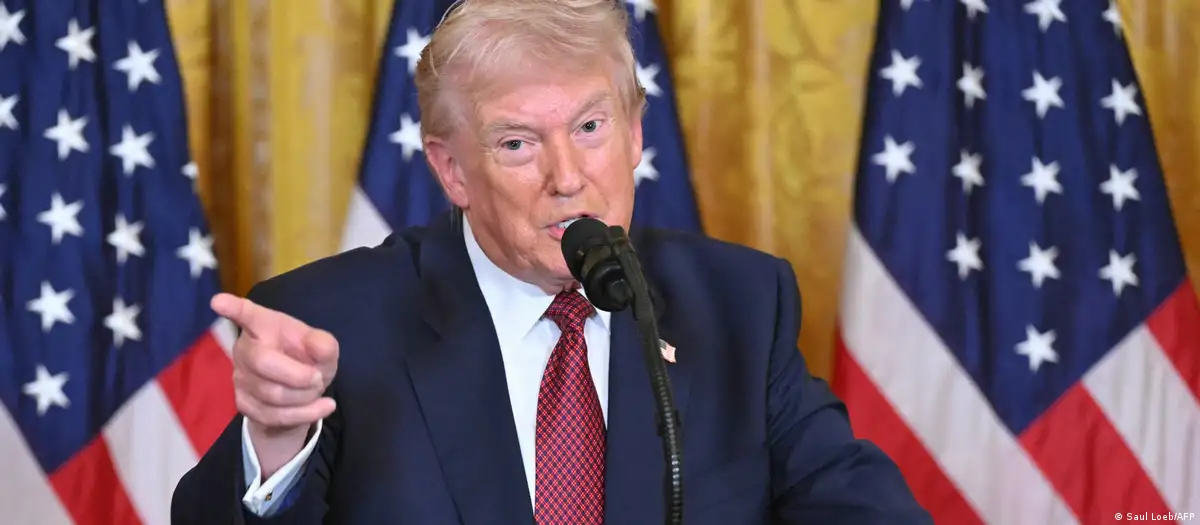
What you need to know
-
Trump said the 'maximum' he would give Iran to make a deal is 10-15 days
-
Iran can't continue to threaten the stability of the region, Trump said
-
US first began building up military presence in region several weeks ago in response to repression by Iranian authorities
- Iran holds annual military drills with Russia amid US fleet movements
We're rounding up some of the major developments on US-Iran news here:
We've paused the blog
We've paused the blog for now. Thank you for joining us.
Iran says draft nuclear deal could be ready within days
Iran's foreign minister says a draft nuclear agreement could be ready in the next few days.
Abbas Araghchi told the US television network MS Now that Tehran expects to present its proposal to Washington "in the next two or three days," once it is approved by senior Iranian officials. The draft would then go to US negotiator Steve Witkoff.
The talks center on curbing Iran's nuclear program in exchange for sanctions relief.
Araghchi said Iran has not offered to suspend uranium enrichment and that the US has not demanded "zero enrichment."
"We have not offered any suspension, and the US side has not asked for zero enrichment," Araghchi said in an interview on the Morning Joe show.
Earlier, US President Donald Trump said the world would likely know "over the next, probably, 10 days" whether the US will reach a deal with Iran or take military action.
Welcome back to our coverage
We will keep you updated on developments in tensions between the United States and Iran into Friday afternoon.
What military assets does the US have in the Middle East?
The United States is sending its largest force of warships and aircraft to the Middle East in decades.
One aircraft carrier already in the Middle East, another on the way
The US directed the aircraft carrier USS Abraham Lincoln and three guided-missile destroyers to the Middle East in January. The strike group, with some 5,700 service members, has been seen in satellite images off the coast of Oman in the Arabian Sea.
The USS Gerald R. Ford, the world’s largest aircraft carrier, started moving to the region last week. It briefly broadcast its location as being in the Atlantic off Morocco's coast on Wednesday. It appeared to be heading for the Mediterranean through the Straits of Gibraltar, according to Marine Insights, a maritime news site.
The USS Gerald R. Ford strike group is also accompanied by three more destroyers and has more than 5,000 service members.
This will bring the Navy's presence in the region to 14 ships, according to the AP news agency.
US moves significant airpower to Middle East
Numerous aircraft have been moved to bases in Europe and the Middle East.
The US dispatched F-15 Strike Eagles and F-16 Fighting Falcons normally based in Europe to the Middle East, Air and Space Forces magazine report.
It also reported that F-22 Raptors had moved from the US to the UK, presumably on their way to the Middle East, it said.
The US already has "multiple squadrons" of F-35 fighter jets in the Middle East as well as F-15s.
On top of the fighter planes, fuel tankers and cargo planes are continuing to head into the region, according to the Military Air Tracking Alliance (MATA), which uses open-source intelligence to track flights.
In their latest update from Wednesday evening, the account Defense Geek, who founded MATA, says they counted 109 aerial refueling tankers.
Iran warns it will respond 'decisively' to military aggression
Iran has told the United Nations it will consider bases, facilities and assets of the "hostile force" in the region as legitimate targets if it faces military aggression.
US President Donald Trump's rhetoric towards Iran "signals a real risk of military aggression," Iran's permanent mission to the United Nations said in a letter to UN Secretary-General Antonio Guterres.
The letter added that while Iran did not want a war, the country's military would respond "decisively" if subjected to military aggression.
Trump gives Iran new ultimatum
US President Donald Trump has said 10 to 15 days would be enough to make a decision whether to strike Iran.
That is "pretty much the maximum" he would give Iran to make a deal over its nuclear program, Trump said.
"We're either going to get a deal, or it's going to be unfortunate for them," he told journalists on an Air Force One flight on Thursday.
Earlier in the day in Washington, Trump had given Iran a similar timeframe.
"Maybe we're going to make a deal [with Iran]. You are going to be finding out over the next, probably, 10 days," he said during his speech at the first meeting of his controversial Board of Peace.
Iran "cannot continue to threaten the stability of the entire region, and they must make a deal," Trump said.
He repeated that Iran must be prevented from having nuclear weapons. Iran has maintained that its nuclear program serves purely civilian purposes.
"Bad things" would happen without a meaningful nuclear agreement, Trump said.
US military buildup in Middle East 'not for show'
Matthew Hoh, a former captain in the US Marines and State Department official and now at the Center for International Policy, a US think tank, spoke with DW about President Donald Trump's military buildup in the Middle East and the likelihood of a US attack on Iran.
"I think this is serious, that this is not bluffing. This is not for show. This is not a stunt," he said. "The type of force the United States is putting into the Middle East is one that is capable of carrying out the operations that those in Washington, DC, want to carry out."
He said the US was spending an impressive number of Navy vessels, fighter jets and other aircraft to the region.
"We see the aircraft carriers, we see the destroyers, we see the fighter squadrons. But, more importantly, you're seeing the specialized aircraft," Hoh said. "The electronic warfare aircraft and the command and control aircraft that the US Air Force is only going to put into the region in the numbers that they're putting them into the region, if they're serious about using them."
Hoh also said the massive US military buildup would likely complicate diplomatic efforts to reach a new deal to limit Iran's nuclear program.
"First and foremost in the Iranians' minds has to be whether or not they can trust the Americans. Certainly, a deal was made with the Iranians more than a decade ago which limited Iran's nuclear activities, which the Trump administration in 2018 pulled out of unilaterally, as well as the history of US-Iranian military conflict," Hoh said. "The last decade or so of US and Israeli sabotage, assassinations of scientists, cyberattacks on Iran. All of these things have to add up for the Iranians to bring them to a place where how could they trust the Americans."
Oil prices rise amid tension
Oil prices continued Wednesday's fairly sharp increase on Thursday in trading in Asia, Europe and as the US markets started to open.
Brent crude moved back above $70 (just under €60) per barrel for the first time since last July, hitting $71.57 by 1630 GMT/UTC on Thursday, a daily increase of 1.7%.
West Texas Intermediate, meanwhile, rose by 2% to $66.37 by the same time. That's a six-month high for the US benchmark oil product.
Since a spike in early 2022 — in the weeks following Russia's full-scale invasion of Ukraine, when prices peaked at around $120 per barrel — the price of the black stuff has been relatively stable and typically on a gradual downward trajectory.
The last time it was above current levels was during a brief and fairly sharp rise in the summer of 2025, amid the conflict between Israel and Iran in which the US also struck Iranian nuclear program targets.
Polish PM calls on citizens to leave Iran and refrain from travel
Polish Prime Minister Donald Tusk called on Poles on Thursday to leave Iran as quickly as possible and to refrain from travel to the country.
"Please leave Iran immediately and do not travel to this country under any circumstances," Tusk was quoted as saying by Poland's PAP news agency.
He said the possibility of a conflict was "very real" and that if people delayed a point might come when it was difficult of impossible to get out of the country.
Travel warnings for Iran are not uncommon in Western countries and several issued such alerts amid January's protests and crackdown.
Germany, for instance, has had a warning in place advising citizens against travel to Iran since January 21 this year. However, this advisory warns primarily of risks like the possibility of arbitrary detention and limited consular assistance, though it also says that "military clashes cannot be ruled out" and that restrictions to commercial air travel are possible "at any time."
Iran holds annual military drills with Russia amid US fleet movements
Iran held annual military drills with Russia on Thursday, including live-fire exercises in the Gulf of Oman and Strait of Hormuz that state news agency IRNA said were aimed at "upgrading operational coordination as well as exchange of military experiences."
The waters in question are crucial shipping lanes for access to Iran, Iraq and the Gulf region.
The annual exercises were first launched in 2019 and have been conducted seven times since.
This year the drills coincide with the US moving more naval assets into waters relatively close to Iran's coastline. A second aircraft carrier, the USS Gerald R Ford, was this week reported to be headed for the region. Its journey would be liable to take around three weeks.
Although neither sides' actions make conflict inevitable, both appear to be trying to project strength and the ability to deploy if necessary in the event of negotiations failing.
Iran's theocracy has come under severe strain in the past 12 months, firstly amid a brief period of conflict with Israel last summer, punctuated by advanced US strikes on key sites for its nuclear program. More recently, in January this year, widespread public protests broke out and were violently repressed by authorities.
Trump calls for 'meaningul deal' at 'Board of Peace' meeting
US President Donald Trump said in Washington on Thursday that "interesting" nuclear talks with Iran were underway in Geneva, brokered by Oman, and said he thought there could be progress by the end of next week.
"It's proven to be over the years not easy to make a meaningful deal with Iran," Trump told the inaugural meeting of his 'Board of Peace' body. "We have to make a meaningful deal otherwise bad things happen."
He was speaking as the US moves military assets including an aircraft carrier into waters relatively close to Iran.
Trump referred to the negotiations as "good talks" and spoke of "very interesting" meeting with Iranian officials as they entered their second day. But he also warned that Washington "may have to take it a step further" in the case of no agreement, saying "You're going to be finding out over the next probably 10 days."
His comments came shortly after a warning to Iran from Israeli Prime Minister Benjamin Netanyahu, who on Thursday said: "If the ayatollahs make a mistake and attack us, they will receive a response they cannot even imagine."
Iran says no country can deprive it of right to 'peaceful' enrichment
The head of Iran's atomic energy agency on Thursday said that no country could deprive Tehran of its right to enrich nuclear fuel, after US President Donald Trump's latest hint of military action.
"The basis of the nuclear industry is enrichtment. Whatever you want to do in the nuclear process, you need nuclear fuel," Mohammad Eslami said in a video published in Iranian media.
"Iran's nuclear program is proceeding according to the rules of the International Atomic Energy Agency, and no country can depirve Iran of the right to peacefully benefit from this technology," Eslami said.
Iran has long insisted that its enrichment of uranium is for peaceful power-generating and other civilian purposes, a position met with severe sketpicism by Israel, the US and Europe.
Trump had previously boasted that the country's nuclear weapons program had been "completely and totally obliterated" in strikes last summer by Israel and the US.
However, US and Israeli intelligence agencies and militaries and other sources less prone to exaggeration suggested far less long-lasting damage had in fact been done.
US military prepared for Iran strike this weekend but no final decision from Trump yet, US media report
The US military has informed President Donald Trump that it is ready to strike Iran as soon as this weekend, US outlets CNN and CBS report.
However, the US media reports say that Trump has not made a final decision on whether to attack Iran.
The USS Abraham Lincoln aircraft carrier, along with nearly 80 aircraft, was around 700 kilometers (435 miles) off Iranian shores as of Sunday. A second aircraft carrier group, the USS Gerald Ford, is also moving towards the region.
CBS reported that the Pentagon has also ordered some US troops out of the Middle East in case Iran launches a counterattack. The US military has multiple bases in the region such as Al Udeid Air Base in Qatar and Camp Arifjan in Kuwait.
US outlet Axios reported that a US military operation against Iran could last for weeks. Israel would also take part in the operation, Axios said.
US Secretary of State Marco Rubio is expected to visit Israel and meet with Israeli Prime Minister Benjamin Netanyahu in the coming weeks to discuss the negotiations regarding Iran's nuclear program. As of now, no concrete deal on Iran's nuclear ambitions has been achieved.
Welcome to our coverage
DW is bringing you the latest coverage on the current standoff between Iran and the United States over Tehran's nuclear program.
US President Donald Trump has repeatedly insisted that Iran cease its atomic program, which Washington sees as aimed at obtaining nuclear weapons.
Iran, which is adamant that its nuclear activities are and have always been civilian in nature, has expressed determination to continue them.
Talks in Geneva on Tuesday between US and Iranian negotiators appear to have borne little fruit, with the White House saying: "We're still very far apart on some issues."
Amid the tensions, the US has significantly built up a military presence near Iran, with multiple media reports on Wednesday suggesting that it could be ready to carry out strikes on Iran as soon as this weekend.
Follow this blog throughout the day for more.