Ukraine updates: G7 rules out easing sanctions on Russia
Published March 11, 2026last updated March 11, 2026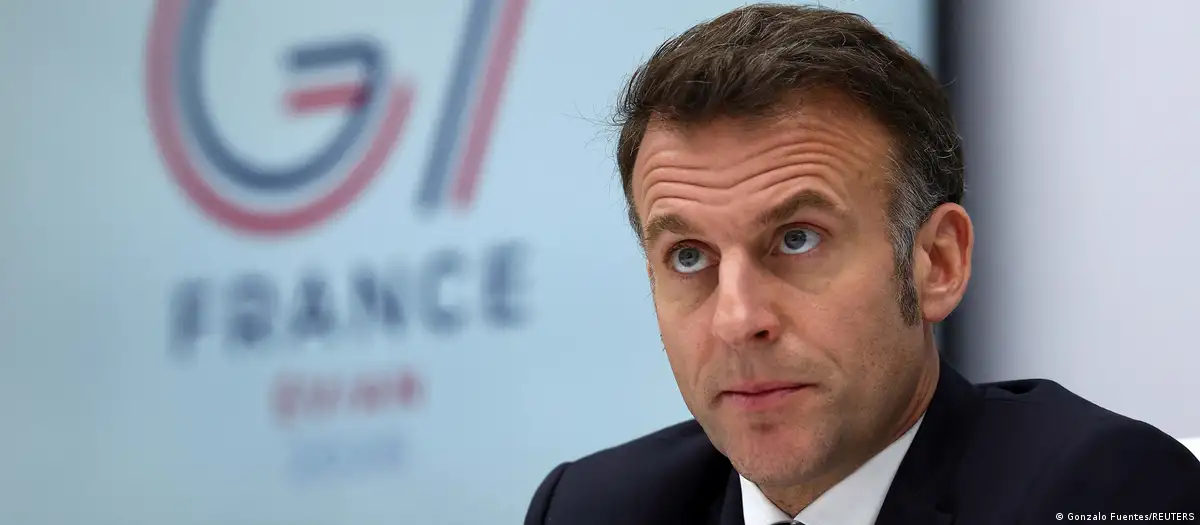
What you need to know
- G7 leaders agree to keep Russia sanctions
- Russian and Ukrainian drone strikes kill four in the Kharkiv region
- Bundestag president Julia Klöckner is in Kyiv, expected to address Ukraine's parliament
This blog with headlines, background and analysis from Russia's war in Ukraine on Wednesday, March 11, is now closed. Thank you for reading along.
Ukraine anti-drone teams working in Gulf region
Ukrainian said its anti-drone experts have begun working in three Gulf states targeted by Iranian attacks.
"Three of our teams have gone — strong teams of experts, military personnel, engineers, different people. Today the military are already communicating and already working," President Volodymyr Zelenskyy told reporters.
A Ukrainian government spokesman confirmed separately that the three countries were Qatar, the United Arab Emirates and Saudi Arabia.
To destroy Russian drones, Kyiv uses a mix of cheap drone interceptors and electronic jamming tools. In exchange for its anti-drone expertise, Ukraine has proposed swapping its interceptors for the expensive air-defence missiles that the Gulf is currently using to down Iranian drones.
G7 leaders agree to keep up Russia sanctions
France's President Emmanuel Macron said that the G7 had rejected easing sanctions measures against Russia, in lieu of the Middle East war that has wreaked havoc on global oil markets.
The strategic Strait of Hormuz has been brought to a standstill, threatening the world's energy markets.
"We also stated at this G7 meeting that this situation in no way justifies lifting the sanctions that exist against Russia," Macron said after a video call with other G7 leaders.
The meeting was centered around the economic fallout from the US-Israeli war with Iran.
EU Commission president Ursula von der Leyen, who also joined the G7 call, echoed Macron's remarks, saying that relaxing sanctions on Russia was not appropriate at this time.
"I recalled that the immediate priority is to keep energy flows moving, especially navigation through the Strait of Hormuz — critical for the global economy. Enforcing the oil price cap will help stabilise markets and limit Russia’s revenues. This is not the moment to relax sanctions on Russia," von der Leyen said.
Von der Leyen said she and European Council President Antonio Costa backed the International Energy Agency's decision to release 400 million barrels of oil.
Bundestag president Klöckner reaffirms support for Ukraine
Bundestag President Julia Klöckner reaffirmed Germany's continued solidarity with Ukraine amid Russia's ongoing invasion.
"We will remain at your side," Klöckner, the first German representative to address the Ukrainian parliament, told lawmakers in the Verkhovna Rada in Kyiv.
"We are not losing sight of you in Ukraine — on the contrary," Klöckner said.
"No democracy should become accustomed to a neighbouring state denying its right to exist. That is why we are offering Ukraine political, financial, humanitarian and military support."
She praised Ukraine for remaining "capable of acting even under attack" and called for Russian war crimes to be documented and punished.
"We owe this to the victims. And we also owe it to the future, to a good future. Because where crimes go unpunished, the next injustice grows," she added.
Klöckner arrived in Kyiv by train on Wednesday morning on a visit that had been unannounced due to security reasons.
She is scheduled to hold talks with President Volodymyr Zelensky later in the day.
Klöckner told parliament that Europe was learning from Ukraine, from its technological and organizational capabilities to its ability to build while under attack.
"You are so brave," she said.
Russia attacks oil pipeline in Odesa
Russian forces have reportedly attacked an oil pumping station in Ukraine's southern Odesa region. It was the second day of attacks in a row inolving drones, the CEO of Ukrainian state oil and gas firm Naftogaz said on Wednesday.
The exact location of the attack was not clear, but it could be related to the Odesa-Brody oil pipeline which was previously used to pump oil from the Black Sea to Europe.
Serhiy Koretskyi said in a statement that the attacks were aimed at preventing the alternative supply of non-Russian oil to Europe.
Koretskyi added that Russia has attacked Naftogaz infrastructure more than 30 times this year.
Hungary to send team to look into Druzhba pipeline suspension
Hungaryhas sent a mission to Ukraineto look into the transit suspension of oil through the Druzhba pipeline, a deputy minister said.
Budapest would like to see the flow resume while oil prices rise due to the war between Iran, the US and Israel.
The oil flowing through the pipeline makes its way from Russiato Hungary and Slovakia, but the flow stopped in late January due to damage to the pipeline. Ukraine has said it takes time to repair, resulting in a diplomatic disagreement between Kyiv and Budapest.
Both Hungary and Slovakia accuse Ukraine of delaying the pipeline's reopening.
According to Hungary's Energy Minister Gabor Czepek, the mission's goal would be to "engage in substantive dialogue" about reopening the pipeline.
However, Ukraine said the delegation does not have any planned meetings with its officials.
"This group does not have any official status or any scheduled official meetings," Ukrainian Foreign Ministry spokesman Georgiy Tykhy told reporters, adding it would be "clearly incorrect to call it a delegation."
Messaging app access limited in parts of Russia
Mobile internet limitations in Russia will last as long as "necessary," the Kremlin said, after Moscow and other cities saw internet outages.
Among the popular internet services affected by the measures are messaging apps WhatsApp and Telegram.
According to Russia, the restrictions are in a bid to fight criminal activity, with the authorities pushing Max, a messaging app backed by the Russian state.
Kremlin spokesman Dmitry Peskov said the outages will take "as long as additional measures are necessary to ensure the safety of our citizens."
Russia has repeatedly blamed Ukraine for using Telegram for the purpose of recruiting people or attempting acts of sabotage in Russia.
Kremlin spokesperson Peskov argued Ukraine was using "increasingly sophisticated attack methods," adding that "more technologically advanced countermeasures" are needed in Russia to act against them.
Russia blames the UK for strike involvement
Russia has accused the UK of being involvedin a Ukrainian strike on the Russian city of Bryansk, which local authorities said killed at least six people.
According to the Kremlin, the Ukrainian army used British Storm Shadow missiles.
"It is obvious that the launch of these missiles was impossible without British specialists," Kremlin spokesman Dmitry Peskov told reporters.
"We are aware of this, we know it well, and we naturally take it into account."
Ukrainian President Volodymyr Zelenskyy said that the country's army hit one of the most important military factories in Bryansk, a factory that produced electronics for Russian missiles.
Parliament President Klöckner in Kyiv for meetings
Bundestag President Julia Klöckner arrived in Kyiv for her first visit since taking office in March 2025.
During her visit, Klöckner is expected hold meetings about supporting the country's energy supplies and air defenses against drones, as well as show solidarity with Ukraine as Russia's full-scale invasion in the country continues to rage on.
She will also speak in the Ukrainian parliament, describing the invitation as a great honor.
The Bundestag is Germany's lower house of parliament.
Four killed in Russian, Ukrainian drone strikes
Drone strikes in Ukraine have resulted in several deaths.
A Russian attack on Ukraine's second-largest city Kharkiv resulted in two fatalities and seven injuries, local authorities said on Wednesday.
Meanwhile, two people were killed in a Ukrainian drone strike on the Russian-occupied part of the southern Zaporizhzhia region.
Regional governor Oleg Synegubov said the two people were killed in the attack on the Shevchenkivsky district. "A civilian enterprise caught fire as a result of the enemy strike," he said, adding that three women and four men had been hospitalised.
This comes as the US is pushing the two countries to agree to a peace deal, while the country's efforts to mediate between the sides have been interrupted by the joint US-Israeli war in Iran.
Welcome to our coverage
We will be bringing you the latest news from Russia's invasion of Ukraine, even with everything else going on in Iran and elsewhere.
Russian strikes have not let up as Ukraine is still struggling with Hungary blocking EU support.
Thank you for following our coverage!