Iran war: New head Khamenei vows to avenge Larijani killing
Published March 18, 2026last updated March 18, 2026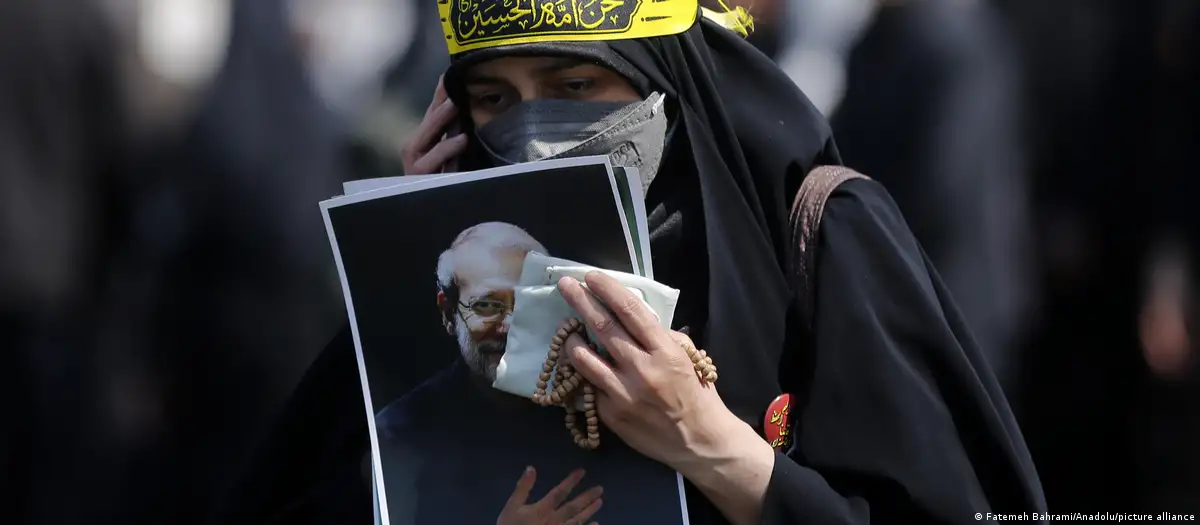
What you need to know
- New Iranian Supreme Leader Mojtaba Khamenei vows revenge for Ali Larijani killing
- Iran confirms Iranian Intelligence Minister Esmaeil Khatib has been 'eliminated'
- Israel launches more strikes on Beirut, killing at least 12 people
- The US says it used 'bunker-buster' bombs against Iranian missile sites along the strategic Strait of Hormuz
- Iran launches missiles with multiple warheads at Israel in retaliation for the killing of security chief Ali Larijani
- The Iranian missile attacks kill at least two people in central Israel
It was a roundup of the main developments from the US-Israel war with Iran on Wednesday, March 18. This blog is now closed.
One killed in central Israel after Iran missile launch
Israeli medics said a "foreign worker" was killed in central Israel after the latest round of Iranian missile fire.
The Magen David Adom emergency services said they responded to an area where "metal shrapnel was scattered across the scene."
The medics said they found a man "unconscious and suffering," who they later pronounced dead.
At least 15 people have been killed in Israel since the start of the Iran war.
At least 3 Palestinians killed in West Bank after Iran missile launch
At least three Palestinians were killed when falling shrapnel from incoming missiles struck the community of Beit Awa, near Hebron in the occupied West Bank.
The Palestinian Red Crescent says five others were wounded, one critically.
The missiles struck a hair salon, the Palestinian Authority's official news agency WAFA reported.
These are the first reported Palestinian deaths linked to the US-Israel war on Iran.
The incident came moments after Israel reported another missile barrage launched from Iran, as the regional conflict continues to widen.
Qatar expels Iran's military and security attaches
Qatar has ordered Iran's military and security attaches to leave the country within 24 hours, following a missile strike on its Ras Laffan gas hub (see entries below).
Doha declared the officials persona non grata, citing what it called repeated Iranian attacks, the latest hitting the heart of Qatar's energy sector.
"Both the military attache and the security attache in the embassy, in addition to those working in the two attache offices, persona non grata, and requests that they leave the state's territories within a maximum period of 24 hours," Qatar's Foreign Ministry said.
Earlier, authorities say they intercepted four of five ballistic missiles fired from, but the fifth struck Ras Laffan Industrial City, causing what officials describe as "extensive damage."
Ras Laffan is the center of Qatar Energy's LNG processing and one of the world's most critical natural gas facilities.
WATCH: What brought the US and Iran from friendship to war?
How did the US and Iran go from close allies to bitter enemies locked in decades of crises, coups, sanctions and war? With insights from Negin Shiraghaei and Ian Lesser, DW traces the crises shaping today's conflict.
Iran warns of 'uncontrollable consequences' after strike on South Pars gas field
Iranian President Masoud Pezeshkian warned of the risk of "uncontrollable consequences" from attacks on energy infrastructure after facilities in the giant Iranian South Pars gas field were targeted in a strike.
"This will complicate the situation and could have uncontrollable consequences, the scope of which could engulf the entire world," he wrote in a post on social media.
He said such attacks would not help Israel and the United States.
The South Pars gas field in the Gulf, which Iran shares with Qatar, supplies about 70% of Iran's gas.
Earlier, Iran listed an array of prominent regional oil and gas sites belonging to Saudi Arabia, the UAE and Qatar, which it said were now "direct and legitimate targets" and should be evacuated before it struck them in the coming hours.
Later, Qatar Energy said a missile hit its Ras Laffan liquefied natural gas facility.
Israel strikes Iranian navy in Caspian Sea — reports
The Israeli military carried out strikes against more than five Iranian navy missile boats in the Caspian Sea, according to Israeli media reports citing officials.
The Caspian Sea is located between Iran to the south, Azerbaijan to the west and Turkmenistan and Kazakhstan to the east.
The Israeli military later said it had begun striking targets in northern Iran for the first time, but it did not specify if those targets were in the Caspian Sea.
EU's Kallas urges Iran to ensure safe passage in Strait of Hormuz
The European Union's top diplomat, Kaja Kallas, has urged Iran to guarantee safe passage through the Strait of Hormuz, calling it a top priority for Europe.
An EU official told the Reuters news agency that Kallas delivered the message in a phone call with Iranian Foreign Minister Abbas Araqchi.
Kallas "called on Iran to cease all attacks on critical infrastructure in the region," according to the unnamed official.
She also "stressed that the EU supports de-escalation and a diplomatic solution to the war."
The conversation took place before Iran executed a European citizen, an act the EU condemned.
Qatar calls attack on Ras Laffan gas facility a 'direct threat' to its national security
Qatar Energy, the state-owned oil and gas company, said on social media that its Ras Laffan energy hub sustained "extensive damage" in missile attacks on Wednesday.
"Emergency response teams were deployed immediately to contain the resulting fires, as extensive damage has been caused," the firm said in a statement.
Meanwhile, Qatar called the attack on the gas facility on its north coast a "direct threat to its national security."
"Qatar expresses its strong condemnation and denunciation of the brutal Iranian attack targeting Ras Laffan Industrial City... Qatar considers this assault a dangerous escalation, a flagrant violation of its sovereignty, and a direct threat to its national security," the Gulf state's foreign ministry said in a statement.
Earlier in the day, Iran's massive offshore South Pars natural gas field also came under attack, sending Brent crude futures surging to nearly $110 a barrel.
Hezbollah shoots rockets into Israel's south
Iran-backed militant group Hezbollah shot a rocket from Lebanon towards Israel's south, Israeli media reported.
It was the first time the group fired a projectile more than 200 kilometers (about 125 miles) into Israel's borders, triggering sirens in the northern Negev area, a region that has usually seen rocket attacks from the Gaza Strip over the past 25 years.
The Israeli military confirmed that Hezbollah was responsible for firing the rocket.
The rocket had been intercepted with no injuries reported, according to Israeli media.
Hezbollah has also launched rockets at northern Israel, which borders Lebanon.
Israeli army spokesperson vows to continue killing Iranian regime's heads
Israel will continue hitting the Iranian regime's top officials, Israeli military spokesperson Effi Defrin said.
"In the past 24 hours we have continued to hunt down the regime's bosses," Defrin told Israeli media, citing the killings of security head Ali Larijani and Intelligence Minister Esmail Khatib.
"We will continue to hunt down the regime's heads, the eliminations are not going to stop," Defrin added.
The spokesperson also said Israel will continue targeting infrastructure used by the Iran-backed militant group Hezbollah.
What happened so far today
-
Israel killed Iran's intelligence minister, Esmail Khatib, a day after killing influential security chief Ali Larijani. Iranian President Masoud Pezeshkian called Khatib's killing "an unfair assassination."
-
In a rare written message, Iran's new supreme leader, Ayatollah Mojtaba Khamenei, vowed to retaliate for the killing of senior security official Ali Larijani, saying, "All blood has its price that the criminal murderers of the martyrs must pay soon."
-
Iran's Pars gas field was hit, prompting Tehran to announce it would respond with attacks on oil and gas targets throughout the Gulf. That sent oil prices rallying, with Brent spiking above $108 a barrel.
-
German Chancellor Friedrich Merz told the Bundestag his government still had "many questions" about the US-Israel war on Iran, saying there was "no convincing plan," that "Washington did not consult us," and that "we would have advised against taking this course of action."
-
Israel hit central Beirut, destroying apartment buildings in some of the heaviest airstrikes in decades, and also targeted bridges in southern Lebanon that Defense Minister Israel Katz said Hezbollah used to smuggle weapons. Iran-backed Hezbollah claimed new rocket attacks on Israeli positions, and Lebanon's Health Ministry reported 968 people killed since the escalation earlier this month.
READ: No more big spenders: Iran war to dent Gulf state investment
Gulf states like Saudi Arabia, Qatar and the UAE have invested, or promised to invest, trillions around the world, everywhere from America to Africa. The Iran war may see their money spent closer to home.
Iran leader Mojtaba Khamenei vows revenge for Larijani killing
Iranian Supreme Leader Mojtaba Khamenei voiced condolences for the family of security head Ali Larijani, who was killed in an Israeli strike.
"Undoubtedly, the assassination of such a person shows the extent of his importance and the hatred of the enemies of Islam towards him," Khamenei said in a written statement published in Iranian media, while also vowing revenge.
"All blood has its price that the criminal murderers of the martyrs must pay soon," the statement said.
Bushehr nuclear facility targeted: IAEA head
International Atomic Energy Agency (IAEA) head Rafael Grossi said the organization received information from Iran and Russia that the Bushehr nuclear site had been hit by a drone.
"The reactors have not been affected and there are no casualties," Grossi told reporters, adding that the IAEA was not able to independently confirm the damage.
"We are looking at images but it doesn’t seem to be very significant," he said, adding that attacks on nuclear facilities should always be avoided.
US suspends Jones Act for 60 days to ease energy price surge
The US government is temporarily easing shipping rules to counter rising energy prices.
The White House says the Jones Act, which limits shipping between US ports to American‑made ships, will be suspended for 60 days. US-flagged ships are generally more expensive to operate than foreign ones.
White House spokesperson Karoline Leavitt says the move will help oil, gas, fertilizer, and coal move more freely as the war in Iran disrupts global markets and slows traffic through the Strait of Hormuz.
The move is "just another step to mitigate the short-term disruptions to the oil market as the US military continues meeting the objectives of Operation Epic Fury," Leavitt said.
The US is a net exporter of oil, but fuel prices have risen significantly in the country, and the rest of the world, since the start of the war.