Iran war: Trump mulls 'winding down' Middle East operation
Published March 20, 2026last updated March 21, 2026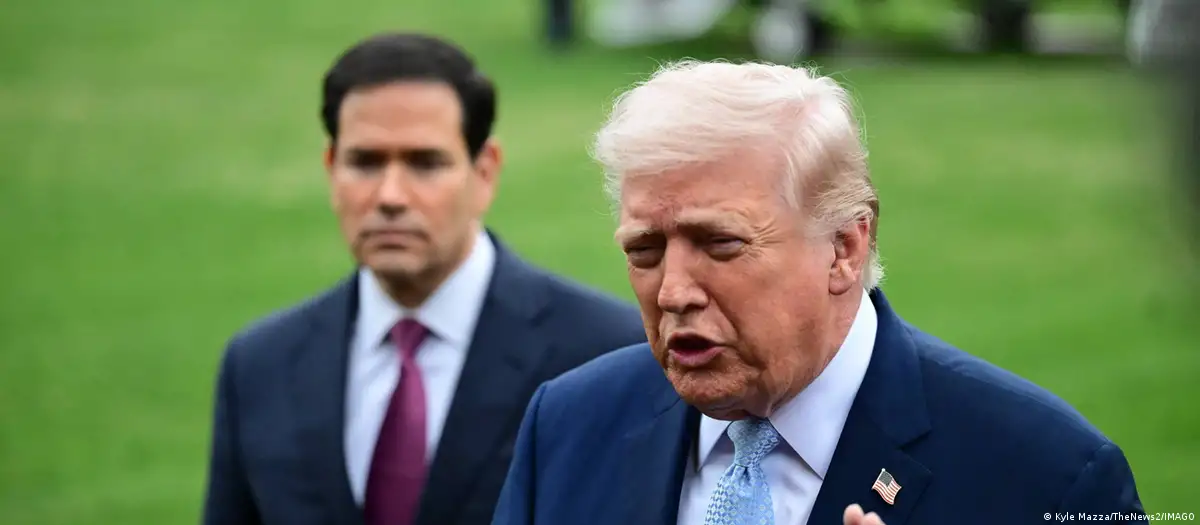
What you need to know
- US President Donald Trump says he is considering 'winding down' the campaign against Iran
- US says it will temporarily lift sanctions on Iranian oil already at sea
- UK greenlights US use of its bases to hit Iranian missile sites in U-turn
- US deploys 2,500 marines, 3 more warships to Middle East
- Trump calls NATO allies 'cowards' for not helping secure Strait of Hormuz
- Iran's Revolutionary Guards report their spokesman has been killed in an air strike
This blog has been closed. Thank you for reading. For the latest on Saturday, follow our live blog.
Below DW's coverage of the war in the Middle East on Friday, March 20, 2026. You can catch up on Thursday's developments here.
WATCH — No deescalation of the Iran war in sight
Israel continues its airstrikes on Tehran as Iranians mark THE Persian New Year, and the United States has sent more ships to the Middle East. Meanwhile, Iran continues to retaliate with strikes against Israel and neighbouring Gulf States.
US temporarily eases sanctions on some Iranian oil
The United States has said that it will temporarily lift sanctions on Iranian oil that is already on tankers at sea.
The move comes as global oil prices soar due to the conflict in the Middle East.
Maritime traffic through the strategic Strait of Hormuz, a vital shipping lane through which a fifth of the world's oil normally passes, has largely ground to a halt due to Iran's attacks on tankers in response to the joint US-Israeli operation.
The US Treasury said "the sale, delivery, or offloading of crude oil or petroleum products of Iranian origin loaded on any vessel" on or before March 20 would be "authorized" through 12:01 am (0401 GMT) on April 19.
US Treasury Secretary Scott Bessent had hinted at the move on Thursday when he told US broadcaster Fox that Washington might "unsanction the Iranian oil that's on the water."
"In essence, we will be using the Iranian barrels against the Iranians to keep the price down for the next 10 or 14 days as we continue this campaign," he said.
The US has already temporarily lifted bans on purchases of Russian oil in a bid to curb rising energy prices.
Trump weighs 'winding down' Middle East operation
US President Donald Trump has said his administration is considering "winding down our great Military efforts in the Middle East."
"We are getting very close to meeting our objectives as we consider winding down our great Military efforts in the Middle East with respect to the Terrorist Regime of Iran," Trump said on his Truth Social platform.
The remarks came just an hour after he told journalists that he had ruled out a ceasefire with the Islamic Republic.
"I think we have won," Trump said at the White House alongside Secretary of State Marco Rubio. "I don't want to do a ceasefire. You know, you don't do a ceasefire when you're literally obliterating the other side," he added.
In the Truth Social post, Trump laid out US objectives as "degrading Iranian Missile Capability ... Destroying Iran's Defense Industrial Base ... Eliminating their Navy and Air Force ... Never allowing Iran to get even close to Nuclear Capability" and protecting the United States' Middle Eastern allies, specifically mentioning "Israel, Saudi Arabia, Qatar, the United Arab Emirates, Bahrain, Kuwait, and others."
The five Gulf countries he listed have all come under attack from Iran as part of its retaliation against the joint US-Israeli operation.
The US president also addressed the issue of the shuttered Strait of Hormuz, which has sent oil prices soaring and put pressure on Trump to bring the war to an end. Around a fifth of the world's oil normally flows through the waterway.
"The Hormuz Strait will have to be guarded and policed, as necessary, by other Nations who use it — the United States does not!" Trump said.
"If asked, we will help these Countries in their Hormuz efforts, but it shouldn't be necessary once Iran's threat is eradicated," he added.
WATCH — Iran strikes Kuwait refinery after Israel hits gas field
US President Donald Trump said the US was not involved in the Israeli strikes on an Iranian gas field.
Trump said he urged Israel's leader to stop hitting the world's largest gas field.
Israeli Iron Dome reservist arrested for alleged spying for Iran, media reports
Israeli authorities said they have arrested a Jerusalem-based reservist on suspicion of spying for Iran, The Times of Israel and other outlets reported.
According to the allegations, the reservist provided its operators with sensitive information about the Iron Dome missile defense system, with which he had worked as part of his army service, through the messaging app Telegram.
Among the information provided to Iran were details about the system's technical aspects, the locations of Iron Dome batteries across Israel and contact details of other potential sources in Israel. Investigators say he knew he was working for Iran.
The reservist allegedly received the equivalent of $1,000 (€865) in cryptocurrency from his operator, with the contact between them lasting several months and ending ten days ahead ofthe joint US-Israeli waragainst Iran that started on February 28.
Several Israelis have been arrested in recent months on suspicion of espionage for Iran.
UK to let US use bases to strike Iranian missile sites
The UK authorized the use of its military bases for use by the US to strike Iranianmissile sites that are targeting ships in the Strait of Hormuz.
According to a statement released by Downing Street, British ministers gave a green light to the agreement, which includes "US defensive operations to degrade the missile sites and capabilities being used to attack ships" going through the strait.
British Prime Minister Keir Starmer previously said London would not be drawn into the war and rejected calls from Washington to allow US forces to use the Fairford and Diego Garcia air bases. The latter is a joint US-UK base located in the Indian Ocean.
US President Trump has repeatedly attacked Starmer and expressed his irritation at the lack of authorization for the bases. The president also posted an angry message on his Truth Social account earlier, calling NATO allies "cowards" for not heeding his call for military support in allowing tankers to pass through the Strait of Hormuz.
Starmer changed his position after Iran hit UK allies across the Middle East. A statement from Downing Street on Friday called for "urgent de-escalation and a swift resolution to the war."
Switzerland will not export arms to US during Iran war
Switzerland will halt all arms exports to the US for as long as the war with Iran continues on grounds of neutrality.
"The export of war materiel to countries involved in the international armed conflict with Iran cannot be authorised for the duration of the conflict," the government said in a statement.
The move will affect potential future deals, with arms already provided as part of the existing agreements not being used as part of the war in Iran, the Swiss government said.
This comes while Switzerland and the US are still negotiating the final details of the deal that would see tariffs applied to Swiss goods come down from 39 to 15%, a deal the US hoped to seal by the end of March, Reuters reported in February.
According to Swiss public broadcaster SRF, the local government's stance could stem from the fact that any new dispute could result in conflict with US President Donald Trump and a possible change of stance in the US.
The Swiss policy has been dictated by the principle of neutrality, which affects countries involved in armed conflicts regardless of the circumstances.
The country has not exported war material to Israel and Iran for several years. Countries in possession of Swiss weapons were also not permitted to send them to Ukraine due to Russia's full-scale invasion.
Bern exported some 95 million Swiss Francs ($120 million, €104 million) to the US in 2025, making it Switzerland's second-largest customer of arms and military components after Germany.
US deploys 2,500 Marines to Middle East
US military forces are reinforcing their presence in the Middle East, with three additional warships and about 2,500 Marines ordered to the region amid speculation that operations could expand to include ground assaults.
The move comes as US defense officials ask Congress for an extra $200 billion (€173 billion) to sustain the war effort.
The USS Boxer has reportedly set off for the Middle East along with two other amphibious assault ships.
The US military says it has around 50,000 troops already in the region.
NATO withdraws advisory force from Iraq
The NATO military alliance said that it had withdrawn its security advisory mission from Iraq.
It said that it had relocated all of its personnel to its facilities in Naples in southern Italy.
"I would like to thank the Republic of Iraq and all the Allies who assisted in the safe relocation of NATO personnel from Iraq," US general Alexus Grynkewich said.
The mission is a non-combat force that was established in 2018 to advise Iraqi authorities.
Pro-Tehran militia groups have attacked US targets in Iraq since the start of the US and Israel's war with Iran, including Washington's embassy in Baghdad.
Israeli Foreign Ministry slams 'madness' after missile hits Jerusalem
Israel's Foreign Ministry condemned Iran after Israeli media reported that a missile strike had hit an area near the wall of the Old City of Jerusalem.
"The Iranian 'gift' for Eid al-Fitr: Missiles on Al-Aqsa," the ministry said in a statement on X, referring to the Al-Aqsa Mosque in the Old City of Jerusalem, one of the holiest sites in Islam.
The X post contained an image showing a plume of smoke over the city.
"The Iranian attack on the holy sites sacred to all three religions reveals the madness of the Iranian regime, which claims to be religious," it said, making reference to the fact that the city carries religious significance to adherents of Judaism, Christianity and Islam.
Khamenei hails Iranian 'Resistance Economy' in Nowruz speech
Iran's new supreme leader, Mojtaba Khamenei, gave a speech to the nation to mark the start of the Persian New Year, known as Nowruz.
The Iranian leader said that he extended his condolences to the families of those killed in the war with the Israel and the United States as well as a briefer conflict that occurred in June of last year.
He declared the year's slogan to be "Resistance Economy in the Shadow of National Unity and National Security," in an apparent reference to Iran's economic woes and the ongoing war.
Khamenei is the son of former Supreme Leader Ali Khamenei, who was killed in an Israeli air strike on February 28.
Iranian missile hits Old City of Jerusalem — Israeli media reports
An Iranian missile hit an area near the wall of the Old City of Jerusalem, Israeli media reported.
The Times of Israel cited medics as saying that no injuries had been reported.
Israeli media posted video footage appearing to show damage to a fence near the wall.
Trump calls NATO allies 'cowards' for not helping against Iran
US President Donald Trump criticized NATO member states over their lack of support for the United States' war with Iran, calling them "cowards."
"They didn't want to join the fight to stop a Nuclear Powered Iran," he said in a post on his Truth Social platform, referring to Washington's NATO allies.
"Now that fight is Militarily WON, with very little danger for them, they complain about the high oil prices they are forced to pay, but don’t want to help open the Strait of Hormuz, a simple military maneuver that is the single reason for the high oil prices," he said.
"So easy for them to do, with so little risk," he said.
He said that the alliance would be a "PAPER TIGER" without the United States.
Trump had previously requested help from NATO allies and from China to secure the Strait of Hormuz, a major passage for energy deliveries in the oil-rich Persian Gulf region.
Several top European officials have ruled out helping secure the strait while hostilities are ongoing.
IDF confirms Basij intelligence chief killed in Tuesday strike
Israel's military, known as the Israel Defense Forces (IDF), said on Friday it killed the head of intelligence for Iran's Basij paramilitary, Esmail Ahmadi, in a strike earlier in the week.
The IDF said in a statement on X that Ahmadi died in a Tuesday strike on Tehran that also killed commander Gholam Reza Soleimani and other senior Basij members.
It said that Ahmadi had a "central role" in the application of repressive mechanisms in Iran.
Iran says it will target US, Israeli officials in 'recreational areas'
The spokesperson of Iran's armed forces said Tehran could target US and Israeli officials and military personnel in recreational and tourist areas.
Armed forces spokesman Abolfazl Shekarchi was cited by semi-official news agency Mehr as saying that Iran was monitoring "enemy officials, commanders, pilots and soldiers," adding that "recreational areas, tourist destinations and leisure centers" would "no longer be safe for them."
The United States and Israel have killed multiple high-ranking Iranian officials in their aerial campaign, including Supreme Leader Ali Khamenei and more recently security chief Ali Larijani.
On Friday, Iran's Islamic Revolutionary Guard Corps (IRGC) said their spokesman, Ali Mohammad Naini, was killed in US and Israeli strikes.