Nigeria tightens security in Maiduguri after suicide attacks
March 17, 2026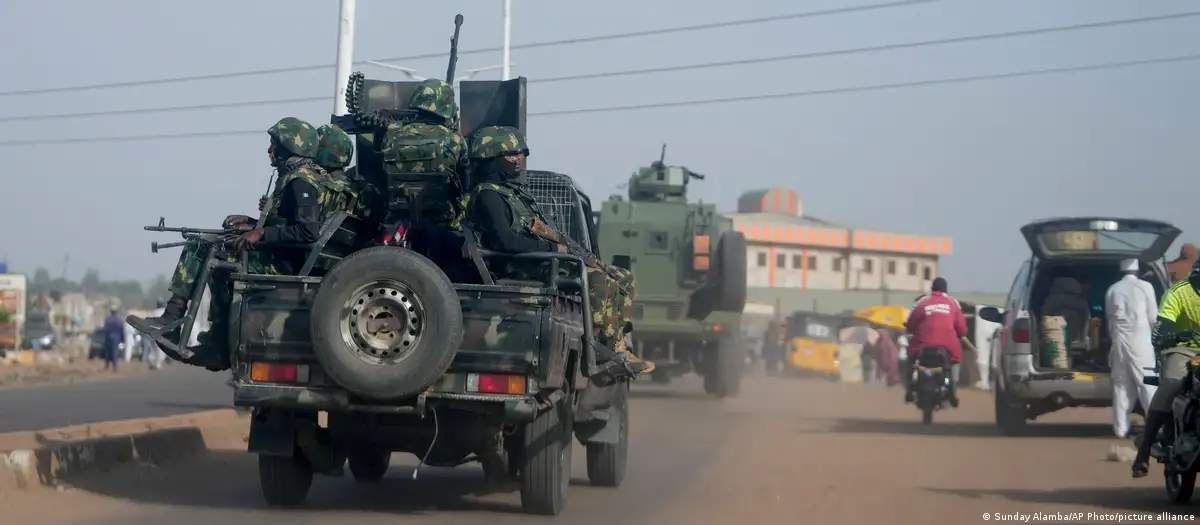
On Tuesday, President Bola Tinubu expressed grief over the multiple suicide blasts that occurred on Monday, offering condolences to the families of the victims. The blasts happened less than 24 hours after the Nigerian military repelled a separate militant attack on the outskirts of Maiduguri, capital of Borno state in northeastern Nigeria.
Tinubu also directed his top security chiefs to deploy to Maiduguri and take control of the situation following Monday's incident.
Despite Maiduguri's recent calm—the city had not seen a major attack since 2021—the twin threat from Boko Haram andIslamic State West Africa Province (ISWAP) continues. Their insurgency has spanned nearly two decades, claiming tens of thousands of lives and displacing millions across the northeast. Maiduguri is widely considered the birthplace of the Boko Haram insurgency.
For new arrivals like businessman Mohammadu Adam, the timing could not be worse.
"I haven't stayed long here in Maiduguri. It's been three days since I arrived, and I already regret coming… I feel stranded and unsure of where to go because of what has happened.”
The attacks, the most severe the city has seen in years, have revived fears of a resurgence of extremist violence.
"This is unfortunate for everyone, whether you're a Christian or a Muslim. We were really scared. We pray that God will protect us," said eyewitness Adamu Abdullahi.
Residents were thrown into panic on Monday night as explosions hit three busy locations across Maiduguri. According to state police, one blast struck the bustling Monday Market, another occurred at the gate of the University of Maiduguri Teaching Hospital (UMTH), and a third detonated near the post office.
The Nigerian army said the attacks were carried out by suspected Boko Haram militants who aimed to cause "mass casualties and widespread panic."
Symbolic timing raises concerns
Security analysts believe the timing of the attacks may have been deliberate. Malik Samuel, a senior researcher at Good Governance Africa-Nigeria, told DW that the blasts could be linked to the festive season.
"One thing I think people also need to understand is that usually during a festive period, there are threats of attack… I think this attack happening yesterday [Monday] was deliberate to take security agents unaware," he said.
For residents like Abdullahi, the fear of a return to past violence is concerning.
"We thought these kinds of attacks have become history," he said. "But it's becoming fresh again. We don't know what the terrorists are planning. We can only pray against that."
Many residents doubt whether increased military presence will translate into real safety.
"[I am] not very confident… the security forces have not been able to really establish security to a very large extent. They have not been able to prevent cases like this from happening," said Khairah, a university student.
Samuel agrees that authorities appear reactive rather than proactive.
"It is clearly reactionary. It's clearly been on the back foot… the security agents have ceded the initiative to the groups, [and are] rather defensive," he said.
However, President Tinubu insisted the attacks reflect mounting pressure on insurgents.
"These acts of terror are the final desperate and frantic attempts by criminals and terrorist elements… under constant pressure from our brave armed forces," he said.
He has since ordered an intensification of operations across Borno State to strengthen surveillance and security presence.
Regional implications and international support
Boko Haram and affiliated militants continue to operate across the Lake Chad Basin, affecting Nigeria, Chad, Cameroon, and Niger. Samuel warns that the resurgence is troubling not just for Borno State, but for the entire nation.
"It's a big problem for Nigeria, not just around the Lake Chad Basin region… it is a big, big concern for Nigeria, especially heading into an election year," he said.
Meanwhile, the United States recently began deploying troops to Nigeria to support the fight against jihadist groups. According to the US Africa Command, about 200 troops will be part of the broader deployment.
Samuel believes Nigeria must use this support effectively.
"We need to sort out the problem of a lack of synergy between the different government agencies," he said. "But secondly, you need to find ways to cut out the finances of these groups. If you're able to [do that] then it makes it difficult for them to operate."
Malam Husaini Garba Sawaba, a security expert, called on people to be vigilant. "Everyone is busy and has forgotten something," Garba Sawaba told DW. "Everyone has gone back to their own business; you must take care of those close to you and what they bring."
For residents of Maiduguri, the uncertainty is overwhelming.
Abdullahi agrees people must remain vigilant: "If you're from this place, you move around while being vigilant… You also try to avoid crowds because of attacks like these."
Adam, still shaken, can only hope for a return to the peace the city has enjoyed in recent years: "I feel deeply saddened by the situation. I pray that God protects us and brings more peace. May this be the last incident."
Jamiu Abiodun Sulaiman contributed to this article
Edited by: Chrispin Mwakideu