Iran war: Trump says deal to be signed on Sunday
Published June 13, 2026last updated June 13, 2026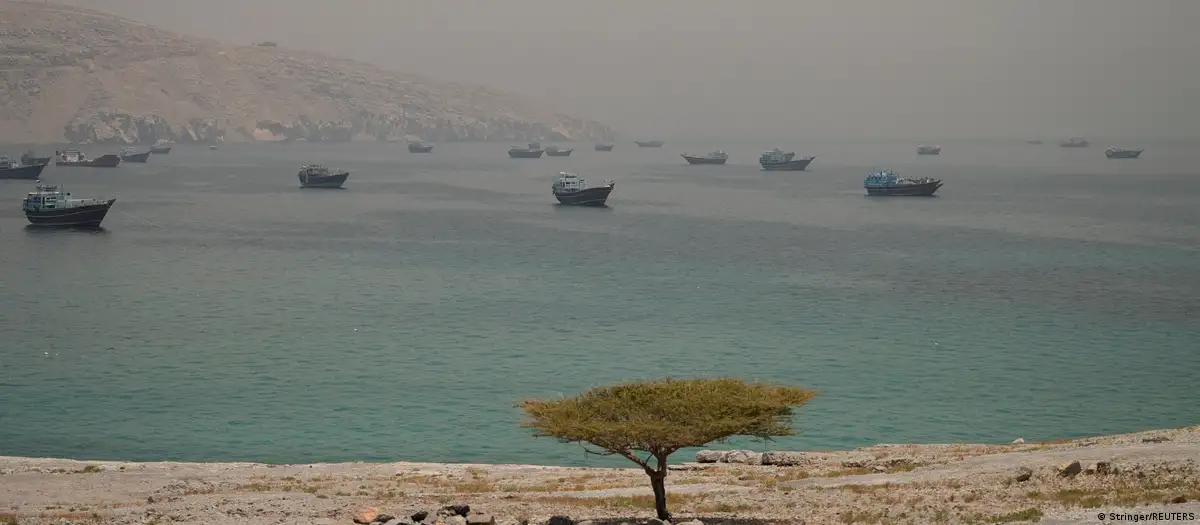
What you need to know
- US President Donald Trump says a deal with Iran will be signed Sunday
- The Strait of Hormuz will reopen immediately after the signing, Trump suggests
- Iran, however, says a deal won't be signed on Sunday
- The potential deal would likely see economic relief for Iran in exchange for the reopening of the Strait of Hormuz
- Despite the optimistic signals coming from Washington and Tehran, fighting continues in the region, with the US claiming to have shot down several Iranian drones overnight
- Israel and Iran-backed militia Hezbollah continue to trade fire in Lebanon, where Israeli troops have been advancing
This blog has been closed. Thank you for reading.
Below are the latest updates on the Iran war and the wider Middle East on Saturday, June 13:
Tired of missing our real-time updates? Click here to add us as a Preferred Source on Google. Then tap the "Star" or "Preferred" to keep DW News at the top of your feed.
WATCH: Initial US-Iran deal should not be overestimated, analyst says
The United States and Iran appear once again to be on the brink of an agreement to end their months-long conflict with mediators and officials pointing to tangible progress. Experts say what is currently on the table is not a comprehensive peace deal but a short memorandum of understanding — a first step designed to halt escalation and reopen negotiations.
Speaking with DW, former Middle East advisor and negotiator for the US State Department, Aaron David Miller, said: "What you've done is buy yourself a ticket, on both sides, to a negotiation that is going to be long and tedious."
At the heart of the talks are deeply complex issues: Iran's stockpile of highly enriched uranium, sanctions relief, control over the Strait of Hormuz, and broader questions of regional security. "All of these issues contain a universe of complexity and detail that will have to be ironed out," Miller said.
UK Prime Minister Starmer welcomes progress toward Iran deal
UK Prime Minister Keir Starmer on Saturday expressed support for US President Donald Trump, who said a deal with Iran ending the conflict was due to be signed on Sunday.
In a phone call with Trump, a spokesperson for Starmer said the British prime minister welcomed the progress made and underlined "the importance of ensuring any deal delivers a durable and lasting peace."
"Both leaders agreed that freedom of navigation must be restored to ease the economic impacts felt globally," Starmer's spokesperson said, adding that he reiterated that the UK was ready to support "the implementation of any peace agreement and to work with international partners to ensure its success."
Iran says deal will not be signed Sunday
Contrary to statements made by US President Donald Trump and Pakistani Prime Minister Shehbaz Sharif, Tehran has insisted a deal ending the war will not be signed on Sunday.
"We have to wait and see about the exact time of signing; although it will not be tomorrow," Iranian Foreign Ministry spokesman Esmaeil Baghaei said, according to the IRNA news agency.
However, he added: "The possibility of this happening in the coming days cannot be ruled out. However, due to the hesitation of the other side, we must be cautious in making any comments about this process."
Trump says deal with Iran to be signed 'tomorrow,' Strait of Hormuz to reopen
US President Donald Trump has said that a deal with Iran "is scheduled to be signed" on Sunday, promising that the strategic Strait of Hormuz will be open " TO ALL" straight after.
In a social media post on Saturday, Trump once again reiterated the promise that the new deal would be superior to the 2015 pact signed under former President Barack Obama, which he (Trump) pulled out of in 2018.
"My Agreement with Iran is the exact opposite, A WALL TO NO NUCLEAR WEAPON! In fact, they no longer want a Nuclear Weapon, nor will they have one, either through purchase, development, or any other form of procurement," Trump wrote.
However, he suggested that the deal would not involve Iran handing over enriched material, a key condition US partner Israel has insisted on.
"At the appropriate time, when all is calm, we will go in and get the Nuclear Dust, buried deep under the powerful sunken granite mountains, thanks to our beautiful B-2 Bombers and their brilliant pilots, and downblend and destroy it, whether in Iran, or the United States," Trump wrote.
US deports migrants, including Iranian activist, to CAR
The US has deported a number of migrants to the Central African Republic, one of the world's poorest and most troubled states, under a controversial deal that allows Washington to deport migrants who cannot be sent back to their home countries.
The flight that took off from Louisiana on Thursday night was carrying some two dozen migrants, including an Iranian pro-democracy activist, her lawyer has said. It landed in Bangui on Friday.
Other migrants set to be on the flight included nationals of Jordan, Armenia, Turkey, Georgia and Afghanistan, according to Ali Rahnama, interim executive director of the Iranian American Legal Defense Fund.
Read the more on the deportation flight and the US deal it was processed under here.
Lebanon reports strikes as conflict between Israel and Hezbollah continues
Lebanese authorities reported numerous missile strikes on Saturday after Israel issued evacuation orders for southern Lebanon.
The Israeli army had warned residents in 24 locations in and around Nabatieh to "evacuate your homes immediately and move to the north of the Zahrani River," some 45 kilometers (28 miles) from the southern border with Israel.
The developments came as the US and Iran suggested they were close to reaching a deal on ending the war that could also include Lebanon.
Lebanon was drawn into the conflict when Hezbollah attacked Israel. Hezbollah, labeled a terror organization by Israel, the US and others, is a key Iranian proxy.
Lebanon has insisted that it must be included in a peace deal between the US and Iran.
Iran, too, has made that point, though Israel and Hezbollah have largely ignored the terms of an April 17 ceasefire designed to quell the conflict.
Israeli-Lebanon talks initiated by Washington have also failed to halt fighting, which has claimed some 3,700 lives since early March.
On Friday, Israeli Defense Minister Israel Katz brushed off talk of a ceasefire between Iran and the US, saying that Israel would continue to act independently and would not withdraw from southern Lebanon, Syria or Gaza.
Iran announces July funeral for former supreme leader
Iran will broadcast the funeral of its former supreme leader, Ayatollah Ali Khamenei, on state TV in July according to an announcement made Saturday.
Khamenei, whose son Mojtaba was named to replace him after he was killed alongside several members of his family by US missiles in the early hours of the US-Israeli war on the Islamic Republic launched on February 28.
State broadcaster IRIB announced that it will provide full coverage of Khamenei's farewell ceremonies, funeral and burial between July 4 and 9.
Events are scheduled to begin in the Iranian capital Tehran then proceed to Qom before arriving in Khamenei's birthplace Mashhad. His final resting place will be in Mashhad's Imam Reza Shrine, the holiest of Shiite Muslim sites.
Khamenei became Iran's supreme religious leader after the death of Ayatollah Ruhollah Khomeini in 1989.
Building on his predecessor's installation of the Shiite clerical class as the country's rulers, Khamenei also underpinned his own power by greatly expanding the theocracy's paramilitary Revolutionary Guard, which now extends into every military, security and economic aspect of life in the country.
Pakistan PM says peace deal likely to be finalized in the next 24 hours
Pakistani Prime Minister Shehbaz Sharif said that the United States and Iran have agreed to a framework for a peace deal, with the final text of the agreement reached.
Pakistan is now preparing for an electronic signing expected within the next 24 hours followed by technical-level talks next week, Sharif added.
The proposed agreement would reportedly lead to an extension of the April 7 ceasefire by 60 days, during which the Strait of Hormuz would gradually reopen.
Iranian Foreign Minister Abbas Araghchi said Friday that terms dealing with Iran's nuclear program would be finalized in the 60 days after the initial agreement is signed. He said the parties could agree to extend that period.
Pakistani, Swiss foreign ministers discuss Geneva peace talks to settle Iran war
The foreign ministers of Pakistan and Switzerland expressed hopes of a breakthrough in peace negotiations to end the US war with Iran during a Saturday phone call, according to Islamabad's Foreign Ministry.
Though no further details were offered, the sides said they hoped the effort would contribute to regional peace and stability.
Pakistani Foreign Minister Ishaq Dar and Swiss Foreign Minister Ignazio Cassis reportedly agreed to maintain close contact ahead of talks expected to take place prior to an upcoming G7 summit in nearby Evian, France, from June 15-17.
US says it downed several Iranian drones near strait
The US military said early Saturday that its forces had downed several Iranian drones as the US and Iran spoke of a potential breakthrough in peace talks between the warring sides.
In a social media post, US Central Command or CENTCOM, wrote: "Iran launched multiple one-way attack drones in an attempt to strike commercial ships transiting the Strait of Hormuz. U.S. forces have downed all of them in recent hours as traffic flow through the strait continues unimpeded. The international trade corridor remains open for transit."
The incident is the latest in the strait and comes days after Iran shot down a US military helicopter on Tuesday. US President Trump had threatened severe retaliatory attacks but later announced that he had called off the harshest of them in hopes of striking a deal to end the four-month war.
US, Iran say peace deal is close, though differences remain
Officials in the United States and Iran have said that a ceasefire and a memorandum of understanding between the warring sides could be signed within the next couple of days.
On Friday, US President Donald Trump said a deal could be signed "in Europe" on Sunday but that he could not attend — presumably due to the fact that he will host a mixed martial arts fight event on the lawn of the White House to coincide with his birthday.
For those keeping track, this is roughly the fortieth time that Trump has claimed that a peace deal is imminent since the start of the war.
Still, Iranian Foreign Minister Abbas Araghchi on Friday posted on X: "The Islamabad Memorandum of Understanding has never been closer," raising hopes that a break in the fighting may indeed be near.
Iran's Islamic Republic News Agency (IRNA) on Friday cited an Iranian Foreign Ministry spokesperson as saying a draft is "nearly finalized and awaiting a final decision from Iran's decision-making bodies."
In Tehran, any agreement would have to be approved by Iranian Supreme Leader Mojtaba Khamenei, who has been in hiding since the start of the conflict.
Sources in Tehran have said that a ceasefire, which would be followed by further detailed negotiations, would involve the release of as much as $24 billion (€21 billion) in frozen Iranian assets as well as sanctions relief and the withdrawal of nearby US troops in exchange for Iran lifting its blockade of the Strait of Hormuz.
Iran has blocked the strait since the US and Israel launched their war on February 28, putting a stranglehold on the global economy.
Tehran has insisted on getting cash up front before opening the strait as they doubt Trump's good faith in upholding the US end of the agreement, especially considering his history of railing against unfreezing Iranian assets.
Trump in turn blasted Iranian media reports on the terms of the deal in a social media post late Friday, writing: "The terms that Iran leaked out to the Fake News have NOTHING to do with the terms that were agreed to, in writing. What they said, including their weak and pathetic statement on having a deal, bears no relation to the truth."
Welcome to our coverage
Good morning from the DW newsroom in Bonn as we start today's coverage of the war in Iran with potentially hopeful news.
Both the US and Iran have publicly voiced optimism that a break in fighting could be on the horizon despite a clear continuation of the conflict overnight, with US forces claiming to have downed Iranian drones in the Strait of Hormuz.
Both sides have now hinted that a ceasefire and a memorandum of understanding (MoU) are close at hand, with US President Donald Trump suggesting that a deal could be inked as soon as Sunday, likely in Geneva, Switzerland.
Despite that, it should be noted that this is reportedly the fortieth time that Trump has made such claims since the US and Israel launched their war. Several major sticking points between the sides remain as well — including cash, sanctions, nukes and Israel's ongoing war with Hezbollah in Lebanon.
Follow DW for the latest developments on June 13, 2026, here.