India's drought robs girls of their chance at an education
In many regions of India, water shortages mean girls have to walk miles to a water source instead of attending school. Drought and dried-up wells force families to make tough decisions.
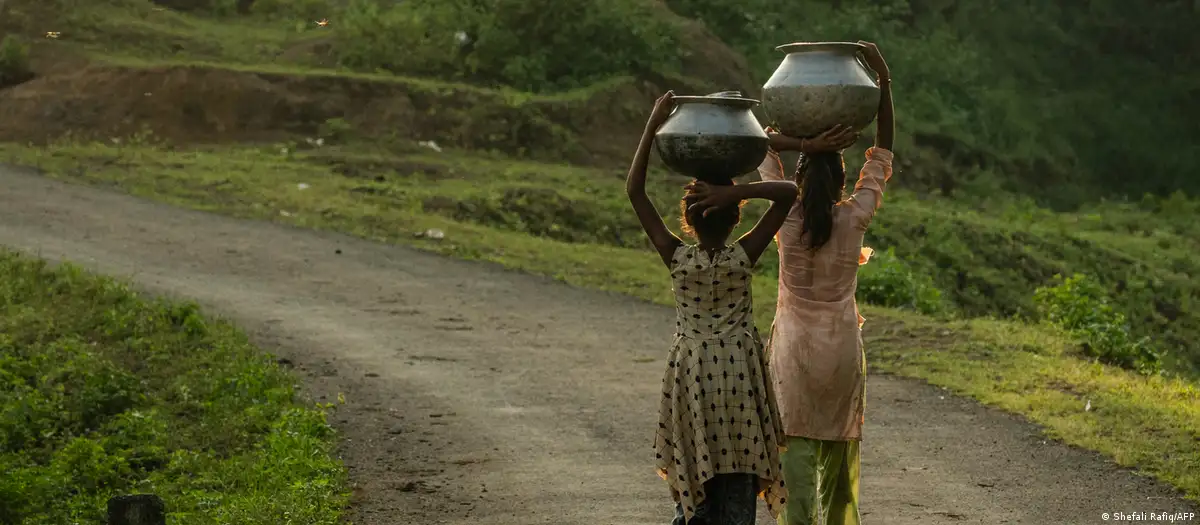
Fetching water
Every morning, 17-year-old Ramati Mangla sets off in the Indian state of Maharashtra, walking several kilometers barefoot with a steel pot in hand to fetch water from a distant source. By the time she returns home, her school day is already in full swing. Many girls in the region are in the same situation.
Dried-up wells
In the drought-stricken villages of the Nashik and Nandurbar districts in Maharashtra, wells are drying up and rainfall is becoming increasingly unpredictable, forcing families to adapt to harsher living conditions. While many men migrate to nearby cities in search of work, girls are put to work on household chores and sent to fetch water.
Millions without enough water
Fetching water is a task that can take several hours a day, leaving little time for school. Local authorities estimate that nearly 2 million people in these regions struggle with water shortages every day.
Girls in the minority
This school is run by a nongovernmental organization in the village of Khaparmal, in drought-prone Nandurbar. It consists of only a single room — and there is only one girl among the schoolchildren. Back in 2021, a UNESCO report warned that climate-related disruptions could force millions of girls worldwide out of the classroom.
A future of dependence
Sangita Santoshs looks into a broken mirror — and toward an uncertain future. Teachers report that the attendance of girls in schools has declined sharply in recent years, especially during the dry season. Many families struggling to survive keep their daughters home or marry them off early.
Reminder of better days
When girls are denied an education, the consequences are significant. They face an increased risk of being forced into early marriage and pregnancy, and limited career opportunities mean they are at risk of living in poverty. Without schooling, girls and women will always remain dependent on husbands or other relatives, and will find it difficult to make their own life choices.
Study or survive?
For Ramati, Sangita and many other girls in India, climate change has turned the simple act of fetching water into a choice between education and survival. A lack of education often leads to less knowledge about health, hygiene and, not least, one's own rights.