Iran war: NATO making 'mistake' on Hormuz, Trump says
Published March 17, 2026last updated March 18, 2026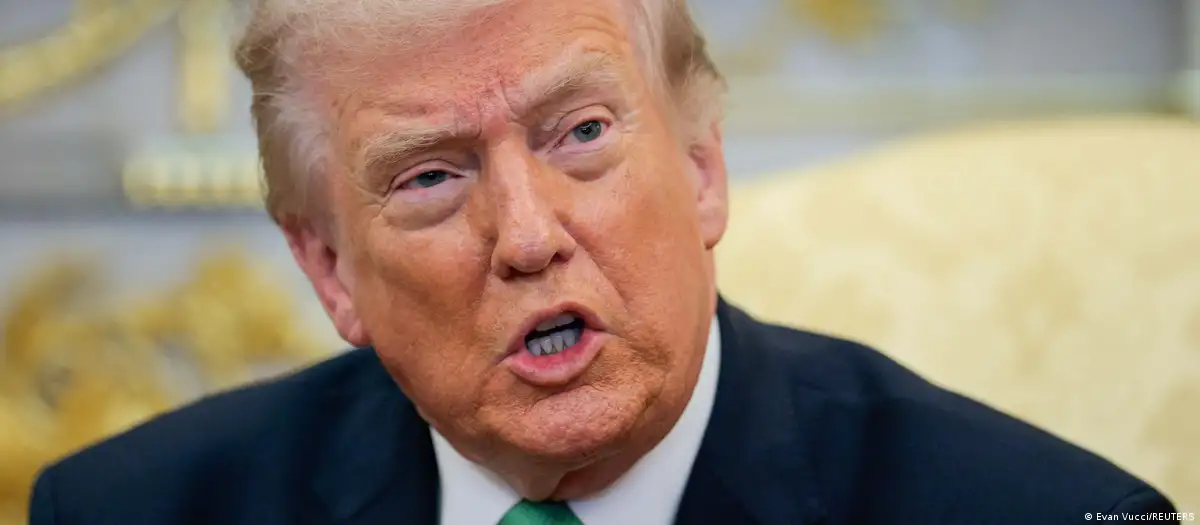
What you need to know
- Iran confirms top security chief Larijani has been killed
- Trump says NATO making 'very foolish mistake' on Strait of Hormuz
- US national counterterrorism center chief Joe Kent steps down over Iran war
- Drone attack hits US Embassy in Baghdad
- Qatar and UAE intercept more Iranian drones and missiles
Follow along our live coverage here.
Below is a roundup of the main developments from the US-Israel war with Iran on March 17.
Thanks for reading
We've now moved our live coverage of Iran war here.
Wrapping Up: The most important war updates from March 17
- Iran's supreme national security council confirmed that its chief, Ali Larijani, was killed. Hours earlier, Israel said he and Gholamreza Soleimani, the head of the Revolutionary Guard's Basij force, were killed in an airstrike.
- US President Donald Trump complained about NATO allies' refusal to join the US in the war. "I think NATO is making a very foolish mistake," Trump said.
- Germany's Foreign Minister Johann Wadephul said expecting controlled regime change in Iran was unrealistic and stressed that the war requires more than a military solution. "There will be no military solution."
- France is ready to help escort ships through the Strait of Hormuz but only once the situation has become "calmer," President Emmanuel Macron said.
- The director of the U.S. National Counterterrorism Center, Joe Kent, resigned, saying he "cannot in good conscience" back the Trump administration's war in Iran. Kent posted that Iran "posed no imminent threat to our nation, and it is clear that we started this war due to pressure from Israel and its powerful American lobby."
- The Israeli military said it was stepping up strikes on Iran-backed Hezbollah militants in Lebanon, who began firing rockets into northern Israel after joint US and Israeli airstrikes on Iran began last month.
- Iran continued to fire salvos of missiles and drones at its Gulf Arab neighbors and Israel.
Several loud explosions heard in Dubai
Several loud explosions were reported over Dubai on Tuesday.
Authorities in Dubai said air defenses were "responding to incoming missile and drone threats from Iran."
The United Arab Emirates says it has been the target of more than 2,000 Iranian drones and missiles since the start of the war.
Iran confirms deaths of top security chief Larijani
Iran has confirmed the death of Ali Larijani, head of the Supreme National Security Council, after an Israeli air strike.
Israel earlier said it killed Larijani along with Gholamreza Soleimani, who commanded the Revolutionary Guard's Basij militia.
Tehran says Larijani, his son and several bodyguards died in the attack on Tuesday.
The council praised Larijani's decades of service, calling him a "righteous servant" who achieved "the grace of martyrdom."
Larijani had been seen as one of the most powerful figures in Iran since Supreme Leader Ayatollah Ali Khamenei was killed on the first day of the war.
Flames reported at US Embassy in Iraq after attack
Iraqi officials said the US Embassy compound in Baghdad came under fire for the second time in two days.
Several Iraqi media outlets and an Associated Press journalist reported seeing a massive fire.
Iraq's armed forces blamed what they called "prohibited groups," describing the strike as a terrorist attack on the country's sovereignty.
Prime Minister Mohammed al-Sudani condemned all assaults on embassies and diplomatic missions, calling them criminal acts that endanger Iraq's stability.
Two days earlier, another attack hit the US Embassy's air-defense system.
Militias aligned with Iran regularly target US forces in Iraq, including recent attacks near Baghdad airport.
WATCH: How will the UAE respond to Iran's drone attack?
UAE's ambassador to Germany, Ahmed Alattar, says the Gulf country will defend itself after Iranian drone strikes but warns of wider escalation.
IRGC confirm death of Basij paramilitary chief in US-Israeli strike
Iran's Revolutionary Guard Corps (IRGC) said a top paramilitary commander has been killed in a US–Israeli strike.
The Guards confirmed that Brigadier General Gholamreza Soleimani, head of the Basij volunteer force, was "martyred" in the attack.
Israel earlier announced it had targeted and killed Soleimani in an air strike.
Asked by DW how damaging his death could be, Sara Bazoobandi, a non-resident research fellow at the Institute for Security Policy (ISPK) at Kiel University, said that it could have a "huge domestic impact."
She described Soleimani as a "very prominent and powerful figure within the oppressing and repressing apparatus of the Islamic Republic."
"The Basij is the force that has been conducting most of the killings and shootings at the protesters," she told DW.
"So eradication that the head of Basij would also have a huge domestic impact in the sense that it might create some weakness in the Islamic Republic if there was an outbreak of protest again anytime soon," Bazoobandi said.
German Foreign Minister says 'there will be no military solution' in Iran
Germany's Foreign Minister Johann Wadephul said expecting controlled regime change in Iran was unrealistic and stressed that the war requires more than a military solution.
"There will be no military solution. And to have a controlled regime change, is, I would say, a hypothetical idea, which is not realistic," he said, speaking alongside his French counterpart in Berlin at an event hosted by the ZEIT media group.
"So chaos in Iran, as bad as the regime is, is also not in our interest and not in the interest of the region and, of course, in the interest of the people living in Iran," he added.
Wadephul's statement echoed those of German Chancellor Friedrich Merz, who on Monday called for a political solution in Iran, saying past experience shows military action won't bring democracy.
Zelenskyy says Ukrainian teams aiding Middle East against Shahed drones
Over 200 Ukrainian anti-drone military experts were in several Middle East countries to help defend against Iranian-designed drones, President Volodymyr Zelenskyy said.
"These are military experts, experts who know how to help, how to defend against Shahed drones. Our teams are already in the Emirates, Qatar, Saudi Arabia, and on the way to Kuwait," he told British lawmakers during an address in the UK Parliament.
Zelenskyy earlier met British Prime Minister Keir Starmer, who told the Ukrainian leader that Russia cannot be allowed to benefit from the Iran war.
Read more about Zelenskyy's visit to London, including an offer to help allies with drones, by clicking here.
Killing of Ali Larijani could deepen Iran's political uncertainty, researcher says
Israeli Defense Minister Israel Katz has said that top Iranian security official Ali Larijani was killed in an overnight strike. Iran has not confirmed Larijani's death.
DW asked Kamran Matin, Associate Professor of International Relations at the University of Sussex, how the killing, if confirmed, would influence Iran's ability to keep fighting.
"I don't think it has an impact or immediate impact on the military side of Iranian operation because Iran has activated what it describes as a mosaic strategy whereby command and control are decentralized and distributed among a 30 odd centres where the military commanders have some level of autonomy," Matin said.
He added that the significance of Larijani's death "really lies in the political terms," because of "his presence in the Islamic Republic."
"He has been one of the really most influential figures within Islamic Republic, occupying some of the highest offices in the Republic," Matin said.
He added Larijani potentially could have "navigated" a post-war "leadership crisis in Iran by bringing the consensus among very different factions who otherwise might have clashed in terms of their perspective and view on how to Iran has to proceed after this war ended."
Matin also said that inside Iran, those who oppose the Islamic Republic would be happy he was killed.
"Not least because reports which were published in social media at least suggest that Ali Larijani was the person who led, designed and led actually the crackdown on protesters back in January, in which thousands, by some accounts more than 20,000 protesters were killed," the researcher said.
Trump says NATO making 'very foolish mistake' on Strait of Hormuz
Trump, in a White House meeting with Irish Taoiseach Michael Martin on St. Patrick's Day, said NATO is making a "very foolish mistake" by not helping out with escorting tankers in the Strait of Hormuz.
"We don't need them but they should've been there," Trump said, reiterating what he said in his earlier Truth Social post.
Trump in particular criticized UK PM Keir Starmer, saying Starmer doesn't measure up to Prime Minister Winston Churchill.
"He hasn't been supportive, and I think's a big mistake," Trump said. "I'm disappointed with Keir. I like him, I think he's a nice man, but I'm disappointed."
The president said that the US was not ready to end the military operation in Iran but added that "we'll be leaving in pretty much the very near future."
Trump also called the resignation of National Counterterrorism Center Director Joe Kent a "good thing." He criticized Kent's belief that Iran is not an imminent threat to US security.
"I always though he was weak on security, very weak on security," Trump said regarding Kent.
Trump says no need for allies help in regards to Iran
US President Donald Trump, in his latest post on his Truth Social platform, said he has been informed by most NATO members that they don't want to get involved in the US-Israeli military operation against Iran.
He said he is "not surprised by their action" and added he has always considered NATO to be a "one way street."
Trump claimed the US has "decimated" Iran's military — "their Navy is gone, their Air Force is gone, their Anti-Aircraft Radar is gone, and perhaps, most importantly, their Leaders, at virtually every level, are gone."
"Because of the fact that we have had such Military Success, we no longer 'need,' or desire, the NATO Countries' assistance — WE NEVER DID! Likewise, Japan, Australia, or South Korea," Trump said. "In fact as President of the United States of America, by far the Most Powerful Country Anywhere in the World, WE DO NOT NEED THE HELP OF ANYONE!"
Macron: France will only help out with Hormuz once hostilities end
French President Emmanuel Macron, during a cabinet meeting, said Francewill only get involved with escorting ships in the Strait of Hormuz once the conflict ends.
"We are not party to the conflict and therefore France will never take part in operations to open or liberate the Strait of Hormuz in the current context," Macron said.
Iran has attacked ships in the vital waterway in response to the ongoing US and Israeli military operation, sparking a global energy crisis. Trump has called for other countries to help oil and gas tankers through the Strait of Hormuz but this could mean those countries are putting their naval forces in harm's way.
"However, we are convinced that once the situation becomes calmer... we are ready, alongside other nations, to take responsibility for an escort system," Macron said.
US national counterterrorism center chief Joe Kent steps down over Iran war
Joe Kent, the director of the National Counterterrorism Center in the US, said he has decided to resign from his position.
"I cannot in good conscience support the ongoing war in Iran. Iran posed no imminent threat to our nation, and it is clear that we started this war due to pressure from Israel and its powerful American lobby," Kent said in a post on X.
Kent said it has been "an honor" serving under US President Donald Trump and Director of National Intelligence Tulsi Gabbard.
"I pray that you will reflect upon what we are doing in Iran, and who we are doing it for," Kent said in his resignation letter addressed to Trump. "You can reverse course and chart a new path for our nation, or you can allow us to slip further towards decline and chaos. You hold the cards."
Kent is a close ally to Tulsi Gabbard, and previously served as her acting chief of staff. Gabbard has previously expressed opposition to "regime change" wars and had made that topic a central plank of her platform during her failed run for president in 2020.
Netanyahu says Larijani killing can pave way for Iranians to rise up against government
Israeli Prime Minister Benjamin Netanyahu said the killing of top Iranian security official Ali Larijani could be another step in allowing Iranians to rise up against their government.
"This morning we eliminated Ali Larijani, the boss of the Revolutionary Guards, which is the gang of gangsters that actually runs Iran," Netanyahu said.
Netanyahu said an uprising against the government "will not happen all at once, it will not happen easily. But if we persist in this — we will give them a chance to take their fate into their own hands."
Iran has not yet confirmed the death of Larijani.