How prey animals survive: Camouflage vs. warning colors
If you're not the biggest, scariest creature around, you have two options in the animal kingdom: Blend into the background or warn others that eating you is a bad idea. Here are some of the masters in each discipline.
How to not get eaten
Prey animals like insects have two options to stay alive: Either blend into the background so well that predators like this bird don't see you, or show everyone thinking about eating you that it would be a bad idea. Animals relying on the latter do so with their bright colors that signal their toxicity to predators. Unfortunately that didn't work for this bright-red insect.
When to wear camouflage and when to wear neon
A new study on birds and insects shows that prey animals' environment determines their strategy. In environments with many birds competing for food, camouflaged insects survive better — the only thing protecting them is invisibility. In areas with fewer birds, insects with warning colors fared better. Birds here could be pickier and learned that bright-colored insects weren't good for them.
Master of warning: The Monarch butterfly
A bird who has eaten a Monarch butterfly once is unlikely to do so again. Monarch caterpillars ingest toxins from the milkweed plant, which are still present in the adult butterflies and give them a foul taste. That's not all — birds can't digest the toxins, so they vomit after eating a Monarch. The bright orange and black colors of the butterfly's wings are a reminder for the bird to stay away.
Bark beetles: Staying invisible in a dangerous place
Bark beetles live, as the name suggests, on tree bark. But trees also happen to be the home of their natural predators. So they don't get eaten by birds, the bark beetle has perfected the art of blending into their surroundings. Some species accumulate dead leaves and tree bark and secrete an adhesive that makes the debris stick to them — rendering them even less visible to bird eyes.
A toxic diet: The blue poison dart frog
Keeping predators away with bright colored skin or wings is called "aposematism." Another animal using nature's warning signals is the blue poison dart frog. The tiny frogs don't actually produce the neurotoxins they excrete onto their skin themselves, but rather collect it from venomous insects they eat, like fire ants.
Master of camouflage: The chameleon
Everyone knows the chameleon as an ever-changing master of disguise, its color always matching the background. Right? Wrong! Chameleons are exceptionally good at camouflage, but their basic color often already matches their environment. They can make adjustments like turning darker or lighter, but not switch to a completely different color.
Snowy owls: Living in a winter wonderland
Snowy owls, or Arctic owls, live in the polar regions of Eurasia and North America. When they are young, the baby owls' plumage is dark grey and mottled, so they're camouflaged while still in the nest. When they get older, they grow their signature white plumage. The look protects them from predators live wolves or foxes in their world of snow and ice.
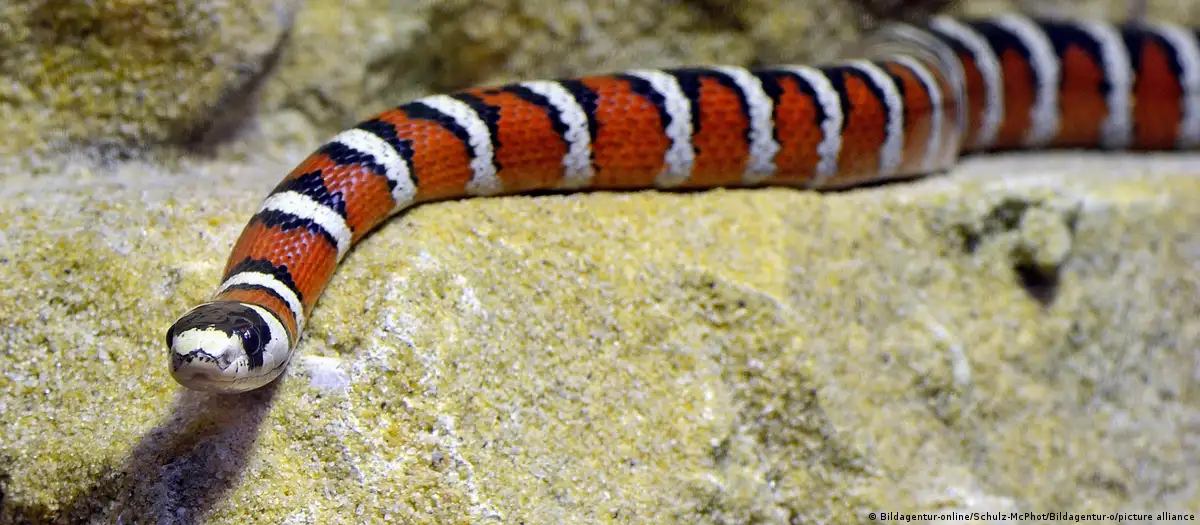
Pretend poison: The Arizona mountain kingsnake
Some bright-colored animals aren't actually poisonous, but instead imitate other species' warning colors in order to keep predators away — all bark, no bite. One animal relying on this mimicry is the Arizona mountain kingsnake. It only grows to around a meter (3.3 feet) in length and is completely harmless, but it strongly resembles the venomous Arizona coral snake.