Germany updates: Police nab suspected far-right extremists
Published May 21, 2025last updated May 21, 2025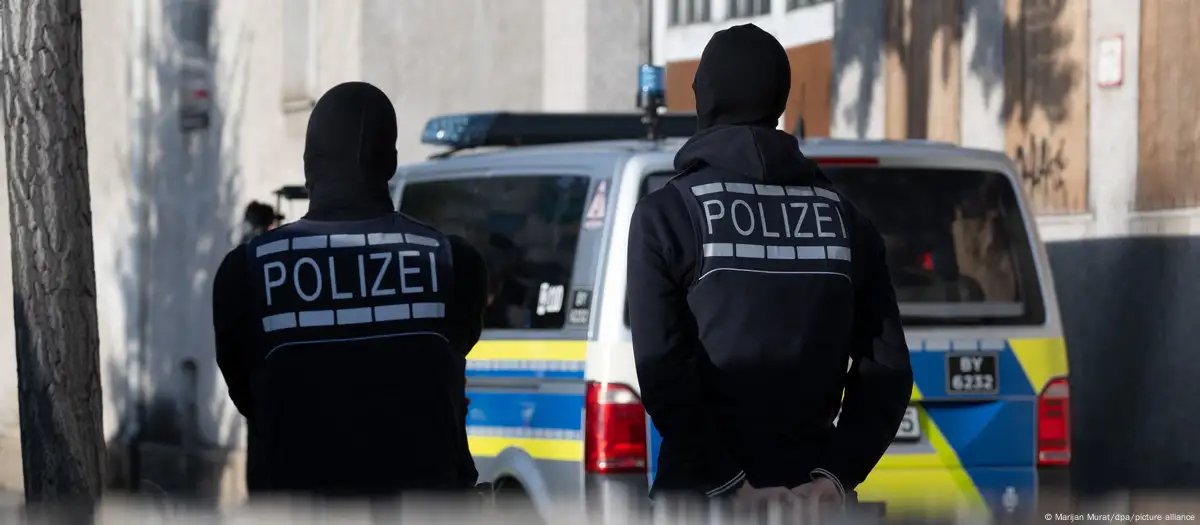
What you need to know
German authorities said they had launched multiple raids across three states on Wednesday morning and arrested five suspected far-right extremists.
Later today, Interior Minister Alexander Dobrindt will take questions from lawmakers in the Bundestag. Shortly after taking office earlier this month, Dobrindt ordered tougher border checks at the country's borders, allowing officials to turn back migrants even if they apply for asylum.
Meanwhile, the influential German Council of Economic Experts released its forecasts for the country’s economy.
The report comes as Germany — Europe’s largest economy — struggles to get out of stagnation, after two years in recession.
The new government of Chancellor Friedrich Merz has promised a blitz of reforms to get the economy back on its feet, from slashing corporate taxes to cutting red tape.
These live updates have been closed. Thank you for reading.
Below, you can read a roundup of of top news stories from Germany on Wednesday, May 21:
Merz says US talks show hope on tariff deal, but work remains
German Chancellor Friedrich Merz has said there are early signs that the United States may be open to a deal to lower tariffs, but cautioned that significant persuasion is still needed.
"There are discernible indications that the American government might be prepared to reach an agreement with us to get rid of these high tariffs," Merz said. "There is still a lot of convincing to be done, but high tariffs and economic policy and open and free trade are not a one-way street."
He warned against viewing trade as a zero-sum game and said open markets benefit all participants. "That has always been our conviction and remains my personal conviction," he said.
Merz added that he would soon visit President Donald Trump to make the case directly.
"I will be visiting him soon and will try to convince him in this way that it is in our mutual interest that we do not escalate further into a tariff conflict, but that we get out of it and that we agree on tariffs at a level as low as possible, ideally even no tariffs at all."
City mayors protest German border checks near Strasbourg
The mayors of Strasbourg and Kehl have been protesting Germany’s intensified border checks, saying they are disrupting daily life and harming the local economy in the cross-border region.
In a joint letter to German Chancellor Friedrich Merz, Strasbourg Mayor Jeanne Barseghian and Kehl Mayor Wolfram Britz said the reinforced controls are having a considerable impact on the Franco-German conurbation. The letter was released by the town of Kehl.
Kehl, a town of about 40,000 people on Germany’s southwestern border, lies just across the Rhine from Strasbourg. The two cities are connected by the Europe Bridge, which has seen repeated traffic congestion since the checks were stepped up.
Germany, a member of the Schengen area like France, has over the past decade reintroduced temporary checks at all land borders to reduce irregular migration. The new government, in office since May 6, has intensified those measures and granted border guards authority to turn back asylum seekers.
The two mayors warned that the stricter controls are deterring shoppers from Strasbourg, hurting Kehl’s retailers. At the same time, they said German companies rely on skilled workers from France’s Alsace region.
“Border checks in this form represent a competitive disadvantage,” the mayors wrote, inviting Merz to visit the region and see the effects firsthand.
The Schengen area, made up of 29 European countries including 25 EU members, was established to allow free movement without internal border checks. Such checks can only be reinstated in response to a "serious threat to public policy or internal security."
German interior minister defends extra border controls amid police concerns
German Interior Minister Alexander Dobrindt has been defending the continued intensification of border controls, insisting the Federal Police remain capable of sustaining the measures over time.
The Police Union (GdP) has been warning that the current level of controls can only be upheld for a limited period. Andreas Rosskopf, chairman of the GdP's federal division, told the Funke Media Group that staffing demands are only being met because training has been suspended, overtime reductions paused and duty rosters restructured.
However, Dobrindt told lawmakers in a parliamentary questioning session that it would be possible for the police to maintain the enhanced border operations over an extended period.
"The Federal Police president has confirmed again today: The Federal Police are also capable of doing everything necessary for a longer period of time — temporarily — but also over a longer period of time," Dobrindt told members of the Bundestag, Germany's lower house of parliament.
Dobrindt has ordered tighter border controls since taking office, including the option to turn asylum seekers back at the border. He has declined to describe the situation as an emergency.
Namibia lands €75 million German loan for water projects
Namibia will reportedly receive a loan of around €75 million ($82.5 million) from Germany's development bank, Kreditanstalt für Wiederaufbau (KfW), to support key water infrastructure projects across the country.
According to The Namibian news website, the funds will support pipeline schemes in the north and east, and the installation of desalination units.
"This funding is for the construction, rehabilitation, and upgrading of extensive bulk water infrastructure that will directly address the water supply challenges faced by communities, particularly in the northern regions," said Finance Minister Ericah Shafudah during the signing ceremony on Monday.
Namibia faces serious water scarcity issues, especially in its arid and semi-arid northern regions. Access to clean and reliable water supplies is a longstanding development challenge.
The announcement also reflects ongoing cooperation between Namibia and Germany, which have a longstanding but complex historical relationship due to Germany's colonial past in what was then German South West Africa.
Foreigners pay about 10% more rent in Germany than German citizens
Foreign nationals living in Germany are paying higher rents on average when compared to people holding German passports, according to new figures released by the country's Federal Statistical Office (Destatis) on Wednesday.
In 2022, the rent paid by foreigners stood at €7.75 ($8.7) per square meter on average, 9.5% above that paid by German nationals, the office said.
One reason for the disparity could be that German tenants live in larger flats on average, which tend to be cheaper in terms of rent per square meter, the agency pointed out.
In addition, Germans tend to live in the same property for longer, meaning they benefit from older rental agreements.
But even when Germans and foreign nationals were renting a property for the same period of time, there were still differences, Destatis said.
Foreign nationals who have lived in the same place for more than 20 years, for instance, are paying 9.1% more rent than those holding a German passport.
School in Bavaria evacuated after discovery of explosive device
A secondary school in Bavaria was evacuated after a pupil discovered what is believed to be a hand grenade on the school's premises.
Initial findings suggest it could be an explosive device dating back to World War II, police in Bayreuth said.
The school has been evacuated and police have cordoned off the area where the device was found.
A squad of explosives experts was on its way to Bayreuth in the early afternoon to disable the device, police said.
There is currently no danger to the public, the authorities added.
It is not uncommon for unexploded World War II ordnance to be discovered in Germany, even more than 80 years after the end of the war.
German economic advisers slash 2025 growth forecast to zero
The German Council of Economic Experts cut its growth forecast for the German economy, saying that it now expects zero growth for this year, down from its previous projection of 0.4% expansion.
The economy continues to face a "pronounced phase of weakness," the experts said.
Germany has struggled with a lack of growth for the past two years, as it has confronted a myriad of challenges ranging from high energy prices, low global demand for its exports, a manufacturing slump and, recently, the trade turmoil caused by US President Donald Trump's sweeping tariffs on foreign goods.
Chancellor Friedrich Merz's new government says it wants to reverse the downswing by implementing an array of measures, including boosting infrastructure spending, slashing red tape and reducing energy prices, among others.
Germany in March approved plans for a €500 billion ($570 billion) fund for infrastructure and exemptions from debt rules for defense spending.
"The German economy will be significantly influenced by two factors in the near future: US tariff policy and the fiscal package," said Monika Schnitzer, the council’s chairwoman.
The panel expects the increased fiscal spending to have a positive effect on growth next year.
The experts forecast German GDP to grow by 1% in 2026.
Today marks the 50th anniversary of trial of far-left Baader-Meinhof Gang
Fifty years ago, on May 21, 1975, the trial of the leaders of the Baader-Meinhof Gang — otherwise known as the Red Army Faction (RAF) — began in Stammheim, a district in Stuttgart city.
The RAF described itself as a communist and anti-imperialist urban guerrilla group and kept West Germany on tenterhooks from the 1970s.
It openly attacked leading representatives of government, business, and the judiciary.
According to investigating authorities, the group was responsible for more than 30 murders.
Those it murdered included Federal Prosecutor General Siegfried Buback, as well as the head of Dresdner Bank, Jürgen Ponto.
A total of 27 RAF members have been sentenced to life imprisonment over the decades.
The RAF was disbanded in 1998, which was announced in a letter that the authorities deemed authentic.
Still, German investigative and judicial authorities remain on high alert when it comes to the group.
Interior minister to face questions from lawmakers over border controls
German Interior Minister Alexander Dobrindt is scheduled to appear in the Bundestag on Wednesday and address questions from lawmakers over a host of issues, including policies the new government put in place to curb irregular migration.
Shortly after taking office earlier this month, Dobrindt revoked a 2015 instruction that had allowed entry for undocumented third-country nationals and ordered tougher border checks at the country's borders, allowing officials to turn back migrants even if they apply for asylum.
Dobrindt, however, said exceptions would be made for vulnerable people such as pregnant women and children.
The minister said the number of people turned away has since risen by almost half.
The new government has also agreed to stop family members of people with subsidiary protection status from moving to Germany.
It also wants to enable deportations of rejected asylum-seekers to places like Syria and Afghanistan.
Germany's 'economic sages' to release GDP growth forecasts
The influential German Council of Economic Experts will release its projections for the country’s economy for 2025 and 2026.
The panel of five selected economists is also known as Germany's "economic sages." Their job is to evaluate the German government's economic policies and provide independent analysis.
The German economy contracted in the past two years and is facing tough challenges even this year amid a manufacturing slump, weak export demand and the sweeping tariff onslaught launched by US President Donald Trump.
The EU this week said Germany would not grow at all in 2025, a significantly sharp reduction from the 0.7% predicted last year.
The new government of Chancellor Friedrich Merz has its work cut out for it as it tries to stimulate growth. Merz has promised a blitz of reforms to get the economy back on its feet, from slashing corporate taxes to cutting red tape.
Germany in March also approved plans for a massive spending surge, including a €500 billion ($570 billion) fund for infrastructure and exemptions from debt rules for defense spending.
German police arrest suspected far-right extremists
German authorities said they had launched multiple raids across three states on Wednesday morning and arrested five suspected far-right extremists.
The raids took place in the states of Mecklenburg-Western Pomerania, Brandenburg and Hesse.
Those detained are alleged to have planned attacks on refugees and political dissidents, among others, according to the Attorney General's Office and the Ministry of Justice.
Welcome to our coverage
Guten Morgen from Bonn. An influential panel of economic experts will release its assessment of how Europe’s largest economy will perform this year and the next.
Also on the agenda today: Interior Minister Alexander Dobrindt will face lawmakers in the Bundestag amid the new government’s efforts to stop the flow of undocumented migrants into the country.
This blog will keep you updated with all of that, as well as other news from Germany.