Germany news: Munich court jails man for spying for Russia
Published October 30, 2025last updated October 30, 2025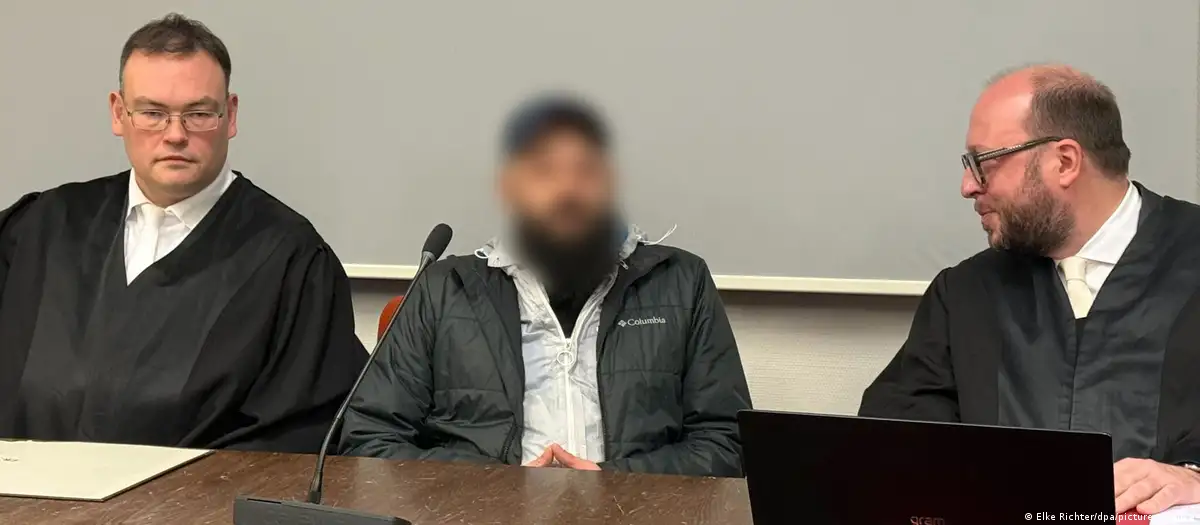
What you need to know
A 41-year-old German-Russian man has been sentenced to six years in prison for spying for Moscow and plotting sabotage in Germany.
Judges in the Bavarian capital, Munich, said he had fought for a pro-Russian militia in eastern Ukraine before returning to plan attacks on targets in Germany. Two accomplices received suspended sentences.
In other news, the German economy continues to stagnate even as Chancellor Friedrich Merz's government seeks to find a path back to growth.
This news blog, the roundup of the latest headlines from Germany on Thursday, October 30, is now closed.
Third group of Afghan refugees arrives in Germany
An airplane from Istanbul carrying 14 Afghan nationals landed in the northern German city of Hanover on Thursday, marking the third group approved for resettlement to arrive in Germany since Chancellor Friedrich Merz took power in May.
The plane landed at Hanover's Langenhagen Airport at about 5:30 p.m. local time (1630 GMT), the German news agency dpa reported.
The plane's journey had started out from Pakistan.
Previous groups of Afghans, eligible under admission schemes for particularly vulnerable people, were flown to Hanover and later spread out across Germany.
NGOs file complaints over coffee labor abuses
Several nongovernmental organizations accused leading coffee companies of sourcing beans from suppliers linked to labor exploitation and human rights abuses.
They said on Thursday that they had filed a legal complaint under the German Supply Chain Act against Nestle, Starbucks, Dallmayr and the Neumann Kaffee Gruppe (NKG).
"We believe the problems are serious, systematic, and widespread. The German authorities must act to ensure that the named companies finally take responsibility," Etelle Higonnet, director of Coffee Watch, one of the NGOs said.
The reports filed with the Federal Office for Economic Affairs and Export Control document alleged violations on farms in China, Mexico, Brazil, and Uganda.
It includes reported incidents of child labor, forced labor and exploitative working conditions.
Nestle told the AFP news agency it has "robust due diligence processes" and had already investigated the cases raised. The company said it was either not directly linked to the farms in question "or has since ended a relationship with a supplier due to a failure to meet our standards."
Starbucks told Germany's Der Spiegel news magazine that it rejects the accusations in the complaint, and said it was committed "to sourcing coffee responsibly, including by promoting respect for human rights."
Neumann Kaffee Gruppe said it launched a review of Uganda's Kaweri plantation after the allegations. While it couldn't rule out isolated misconduct, it found the farm's practices met or exceeded legal requirements. The company said it does not tolerate any form of human rights abuse.
Germany's Wadephul shocked by civil-war devastation in Damascus
German Foreign Minister Johann Wadephul has pledged over €52 million in humanitarian aid during a surprise visit to Syria.
Speaking from Harasta, a suburb of Damascus devastated by years of civil war, Wadephul described the destruction as "beyond anything he had witnessed."
"It is barely possible for people to live here with dignity," the minister said, calling for rapid reconstruction.
The aid package will support displaced communities in Syria, Lebanon and Jordan, with nearly €40 million earmarked for Syria alone.
The funds will go to international and local groups working on food, shelter, and health care.
DW correspondent takes stock of Merz's inaugural visit to Turkey
It was supposed to be a friendly encounter between partners, with as little friction and as much pragmatism and realpolitik as possible. At least, that was the expectation from both sides ahead of the meeting between Turkish President Recep Tayyip Erdogan and German Chancellor Friedrich Merz on Thursday.
In bilateral relations, things are moving forward: closer economic cooperation, including in the arms trade, is on the horizon, as is working together on migration issues, and the desire to strengthen ties with the EU is a firm goal for both sides.
But when it came to fundamental issues in Gaza, the two politicians, who actually wanted something of a "fresh start" in bilateral relations, ended up trading verbal blows on stage at the press conference.
Merz was asked whether Germany was on the wrong side of history, while Erdogan repeatedly referred to the "genocide" in Gaza, pointing the finger at Israel. On this issue, both set clear limits on common ground in their responses.
However, these differences will hardly change the fundamental course of rapprochement. Other interests that Germany and Turkey have in their bilateral relationship are too important for that.
Erdogan and Merz both practice realpolitik and know that they need and want something from each other. Germany will continue to focus on strategic dialogue with Turkey for foreign and domestic policy reasons. Ankara wants to move closer to the EU and needs significantly more military equipment from Europe.
Erdogan's final words were: "We will work together, hand in hand, and we will succeed."
The subsequent dinner with both their spouses, which rounds off the visit, should help to defuse the rather tense atmosphere at the end of the press conference.
Merz is flying back to Berlin this evening. Will his inaugural visit to Turkey really mark a new beginning with prospects for the future? There doesn't seem to be any alternative.
Read more about their meeting in DW's article: Merz backs Turkey's EU bid despite strains over Gaza, rights
Massive drug lab uncovered in Brandenburg warehouse
Authorities have uncovered a massive illegal drug lab in Nauen, Brandenburg, describing its scale as "impressive" and unprecedented in the region.
A 50-year-old Ukrainian and a 41-year-old Polish man have been arrested, prosecutors in the eastern border city of Frankfurt an der Oder said. Both face charges of large-scale drug trafficking, which carries a minimum sentence of five years in prison. A judge will decide whether they remain in custody ahead of trial.
Investigators found about 100 kilograms of finished drugs, more than €200,000 in cash, and tons of chemical substances used for production. Customs officers reported seeing "incredible amounts of chemicals," including toxic waste byproducts, suggesting large-scale drug manufacturing.
The substances, identified as 3-CMC and 4-CMC — amphetamine-type party drugs — are being analyzed. Crystal meth was not found, officials said.
The raid, led by the Customs Investigation Bureau, involved around 150 officers, including federal police. The operation followed months of surveillance.
The lead investigator said he had "never seen anything like it" in 30 years of drug enforcement. Authorities expect to release precise data on the quantities seized next week after safety checks and chemical analyses are complete.
Volkswagen loses €1 billion in single quarter
German carmaker Volkswagen reported a net loss of €1.07 billion ($1.24 billion) for the third quarter on Thursday. This is its first quarterly loss in five years.
Volkswagen's earnings have been affected by multiple challenges, including higher US tariffs as well as a change of strategy at its luxury Porsche brand, which scrapped its previously announced goals on electric vehicle production.
Read the full story here.
Trial set in Frankfurt for alleged Russian spy ring
A court in Frankfurt has scheduled a trial for three men accused of spying in Germany on behalf of a Russian intelligence service.
The Higher Regional Court said Thursday that it had admitted the federal prosecutor's indictment, alleging the men tried to gather information on a Ukrainian national who had fought against Russian forces.
The defendants, identified as Robert A., a Russian citizen; Vardges I., an Armenian; and Arman S., a Ukrainian, allegedly plotted in May 2024 to lure the target to a cafe in Frankfurt under false pretenses. The plan failed after the Ukrainian man alerted police, who arrested the suspects in June.
Prosecutors believe the surveillance attempt was part of preparations for further intelligence operations in Germany, possibly including an assassination.
The men are accused of acting for a Russian intelligence agency in a particularly serious case of espionage. They remain in custody pending trial, which begins on December 9, with hearings scheduled through March.
Afghans on route to Germany despite resettlement freeze
A group of Afghans is currently making its way to Germany for resettlement despite a German government freeze on the policy. It is the third resettlement of Afghans to Germany since this year's change of government in Berlin.
Germany's previous SPD/Green/FDP government pledged to resettle former local staff at German institutions — plus their relatives — and others, such as lawyers and journalists, who fear persecution by the Taliban.
Germany's new conservative-led government pledged in its coalition contract to end voluntary federal admission programs for Afghanistan and others — as well as pledging not to replace these with similar new programs.
The change in policy and the bureaucracy accompanying the plan bave stranded many Afghans with valid documents in neighboring Pakistan for months, even years — caught between the country they had to flee and the one that promised to take them in.
Berlin says some 1,910 approved Afghans are currently in Pakistan. The contingent comprises roughly 220 former local staff and relatives, 60 from human rights protection lists, 600 under a temporary bridging program and about 1,030 under the broader federal admission plan for Afghanistan.
Germany's dpa news agency reports this third group is flying to Istanbul then on to Germany aboard a commercial plane. No destination has been reported.
Germany's Interior Ministry has said all Afghans being resettled have been thoroughly screened and vetted.
Puma cuts 900 jobs in major restructuring
Puma is cutting jobs and streamlining its business as part of a turnaround effort under new CEO Arthur Hoeld.
The German sportswear maker — number three globally behind Nike and Adidas — plans to eliminate around 900 administrative positions and focus more tightly on football, training, running, and sports fashion by the end of 2026.
The company has been posting losses amid falling sales. In the first nine months of the year, revenue dropped 8.5% to €5.97 billion, while the net result fell by about half a billion euros, leaving Puma with a loss of €257 million.
Court orders psychiatric confinement for Aschaffenburg knife attacker
A court in Aschaffenburg has ordered the psychiatric confinement of a 28-year-old Afghan man who fatally stabbed a two-year-old boy and a 41-year-old man in a city park in January.
Judge Karsten Krebs said the defendant was legally incapable of guilt at the time of the attack due to paranoid schizophrenia. Prosecutors, defense, and victims' representatives had all called for his indefinite placement in a psychiatric facility.
According to the verdict, the man killed the toddler, who was of Moroccan descent, and the German father of two who tried to protect the children's group. He also injured another two-year-old, a 73-year-old helper, and a 59-year-old caregiver.
A psychiatric report found that the suspect had been hearing voices commanding him to kill children. Experts ruled out the possibility that he was faking his condition and warned that he remains highly dangerous without treatment.
The man had previously come to police attention for assault and property damage and had been prescribed medication that he failed to take regularly. Questions remain as to why he had been repeatedly released from psychiatric care despite his condition.
The attack triggered nationwide debate over migration policy and public safety. The ruling, issued under security detention procedures,sets no fixed duration for confinement, which will be reviewed annually based on the man’s progress in therapy.
Drunken man eats sausages after tumbling into butcher's
Police in southwestern Germany say they discovered a drunken man in a butcher shop after he inexplicably found himself there eating sausages.
According to police in the Baden-Württemberg town of Schwäbisch Hall, the 28-year-old called them late on Wednesday night but was unable to say where he was.
Officers eventually found him a short time later in the sales area of a closed butcher's shop. The 28-year-old had apparently fallen from a window of a nearby pub into the shop's courtyard. Instead of calling for help, he broke into the building — and made himself comfortable there. According to police, he ate some sausages before finally calling them himself.
Read the full story here.
Germany's Merz on a delicate mission in Turkey
German Chancellor Friedrich Merz is due to meet Turkish President Recep Tayyip Erdogan in Ankara, with the talks expected to focus on Turkey's role in international conflicts such as the ones in Gaza, Syria, and Ukraine.
Merz and Erdogan are also to discuss cooperation in the defense industry and other bilateral issues between their two countries. However, Merz is unlikely to address the domestic political situation in Turkey.
With Germany and Europe needing to keep Turkey as a strategic partner, Berlin is likely to look the other way as Erdogan asserts his power in the country by any means necessary, including undemocratic ones.
It is worth noting that this is Merz's first official trip outside the EU and the US — another positive gesture towards Ankara. The German leader is also taking his wife Charlotte Merz with him, following the invitation by the wife of the Turkish president.
DW's Rosalia Romaniec is one of the reporters traveling with Merz.
Germany dodges recession but shows zero growth in third quarter
Germany's economy has stalled again, with gross domestic product showing zero growth in the third quarter after a contraction in the spring, according to official numbers published on Thursday.
Weak demand in key industries such as automotive and chemicals hampers Germany's industrial output, and high US tariffs have slowed its exports. At home, consumers remain cautious as prices for everyday goods like food stay well above pre-pandemic levels.
Investment in equipment, including machinery and vehicles, rose between July and September, but exports declined compared with the previous quarter.
Conservative Chancellor Friedrich Merz has pledged to pull Germany out of its downturn through major increases in infrastructure and defense spending.
Commerzbank chief economist Jörg Krämer said the economy is not gaining real momentum, adding that government stimulus measures are likely to support growth next year, though without lasting impact due to stalled reforms.
Businesses cite high energy costs and bureaucracy as major obstacles for growth.Unemployment remains a concern, with 3.02 million people out of work in August — the highest figure in a decade. Labor data released Thursday showed only a slight improvement in October.
Munich court convicts three men of spying for Russia
A court in Munich has convicted three men of espionage for Russia, handing the main defendant a six-year prison sentence for spying, planning sabotage, and past involvement as a paramilitary fighter in eastern Ukraine.
Investigators claim he later spied for Russia while in Germany between October 2023 and April 2024, plotting arson and sabotage against military sites and key railway lines, with help from the two other men. All three suspects denied the espionage charges, insisting their discussions were ironic.
The Munich Higher Regional Court also sentenced his two co-defendants to prison terms of six months and one year, both suspended on probation. Prosecutors had sought eight years and eight months for the main defendant and one year suspended for each of the others.
Prosecutors argued that the main defendant maintained close ties to Russian intelligence and that his accomplices knowingly took part in the activities.
Judges ruled that the 41-year-old led the group and had been part of a terrorist organization fighting against Ukrainian forces between 2014 and 2016.
He was found guilty of helping to plan attacks on German railway lines and military infrastructure, allegedly on behalf of Russian intelligence. He was accused of scouting targets for potential attacks, including US military bases and a tool manufacturing company.
The suspect denied the accusation, claiming he had only been in the region because of a relationship with a woman there and was not involved in combat.
Welcome to our coverage
Guten Tag from DW's newsroom in a surprisingly sunny Bonn and danke schön for joining us.
In Munich, a court has convicted three German-Russian dual nationals of spying for Moscow, sentencing the main defendant to six years in prison.
Judges found the 41-year-old had fought for a pro-Russian militia in eastern Ukraine between 2014 and 2016 and later planned sabotage in Germany.
Prosecutors said the main defendant had close ties to Russian intelligence and claimed others were knowingly helping him.
Follow here for this and other latest stories from Germany.