Bluebells blossom in Belgium, Britain
When the bluebells bloom, shady garden areas and woodlands in places like England and Belgium are transformed into luminous carpets of flowers.
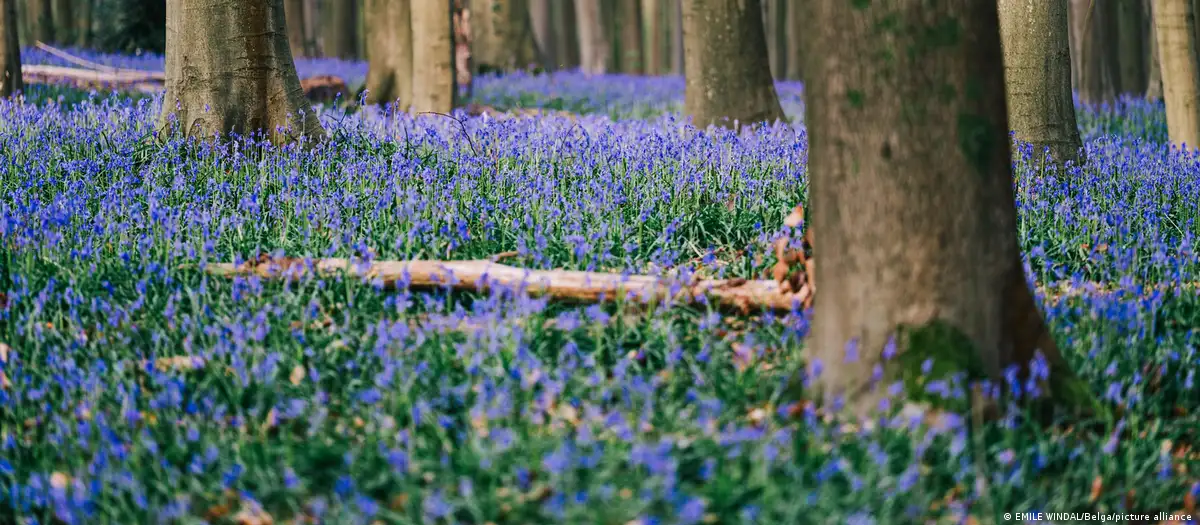
Blooming Belgium
When the bluebells bloom in the Hallerbos in April, the forest, located about 50 kilometers (30 miles) from Brussels, transforms into a sea of blossoms. This undemanding plant thrives in shady areas and forms dense carpets of flowers. They are particularly widespread in the Hallerbos — which is why it's also known as the Blue Forest.
Peak season
Along with the first blossoms come the tourists; the flower carpets are a popular subject for photographs. But time is of the essence: the bluebell flowering period only lasts about two weeks, usually from mid-April to early May.
Fragile flower
A close-up reveals the origin of the early bloomer's name: the flowers of these delicate purple bulbous plants are bell-shaped. The various species of bluebell, which grows to about 40 centimeters (about 15 inches) tall, are native to North Africa and Europe.
Picking prohibited
Look, but don't touch — and definitely don't step on them. Bluebells are very delicate, and are protected in many European countries, including Belgium and Germany. Anyone picking or even digging up these flowers can expect a fine.
Protected plants
Bluebells are also strictly protected in the United Kingdom. Although widespread here, habitat destruction and the trade in bulbs collected in the wild have threatened the plant population. So does carelessness: This sign indicates that it takes five years for a plant to recover from being carelessly trampled.
Early season
In the British Isles, including here in St. James's Park in London, bluebells are considered harbingers of spring. The 2026 season is already in full swing: Due to the mild winter, it began as early as the end of March this year.
Caution advised
Dense carpets of blossoms have also sprung up in the old beech forests of southern England, known as the Bluebell Woods. This family is admiring the natural spectacle in Chorleywood, northwest of London. However, a little caution is advised: bluebells are poisonous, especially for pets and children.
Pollen for pollinators
Insects, on the other hand, appreciate bluebells as a food source. The nectar- and pollen-rich early bloomers provide bumblebees, wild bees and other pollinators with plenty of energy during the strenuous nest-building phase in spring.