Tulip fever grips the Netherlands
Millions of visitors flock to the Keukenhof, located between Amsterdam and The Hague, to admire the quintessentially Dutch flower. But tulips are more than just beautiful to look at ― they have a turbulent history.
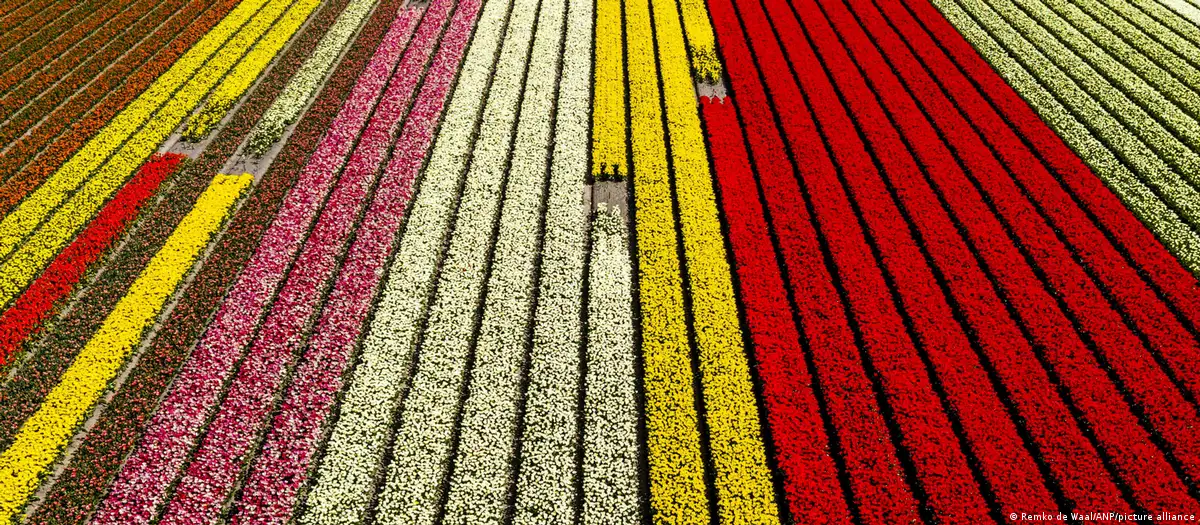
Sea of colors
In spring, a sea of colors blankets parts of the Netherlands as millions of flowers — tulips, daffodils and hyacinths — bloom across the coastal regions. In the Bollenstreek region, not far from Amsterdam, locals really know how to showcase the flowers.
Millions of visitors
Keukenhof is the heart of this floral wonderland. Up to 1.7 million visitors flock here every year. Around 7 million flowers bloom on the grounds, including 4 million tulips of more than 800 varieties. The annual spectacle ends after two months on May 10.
A global brand
The tulip has long been more than just a plant — it has become a symbol of the Netherlands. And it remains an important export: The Vatican, for example, is supplied with tons of flowers. For Easter, Dutch florists transform St. Peter's Square into a sea of color.
400 years of tulip cultivation
The tulip's rise to prominence in the Netherlands began with Carolus Clusius. When he arrived in the Dutch city of Leiden in 1592 to take the position of honorary botany professor, he brought along valuable specimens. His work laid the foundation for tulip growing in the Netherlands. Soon, the tulip became a status symbol of the wealthy elite.
Tulip mania
Viewed from the air, the tulip fields form colorful geometric patterns. In the 17th century, this enthusiasm escalated into "tulip mania." Bulbs were traded like securities, and a single bulb could cost as much as a house. The market became irrational — until the crash of 1637. Within a few months, many tulips plummeted in value.
From Central Asia to Europe
The tulip originally hails from Central Asia. It made its way to the Ottoman Empire via Persia, where it was cultivated and revered. In the 16th century, diplomats and merchants brought the exotic plant to Europe. Its elegant form captivated people — and quickly made it highly sought after.
Billions of flowers
The Netherlands dominates the global tulip market. More than 2 billion tulips are exported from the country each year — about 80% of global production. Ideal climatic conditions and centuries of experience have turned the flower into a major economic factor and export product for the Netherlands.
Between beauty and transience
The tulip's bloom often lasts only a few weeks. Yet it is precisely this fleeting splendor that attracts people from all over the world. Amid history, economics and nature, it remains a symbol of the fleeting magic of spring.