A look at China's exotic pet boom
Exotic pets are becoming increasingly popular in China, especially among young people. But experts and animal rights activists criticize the lack of knowledge, weak laws and dangerous living conditions.
Meerkats in the Spotlight
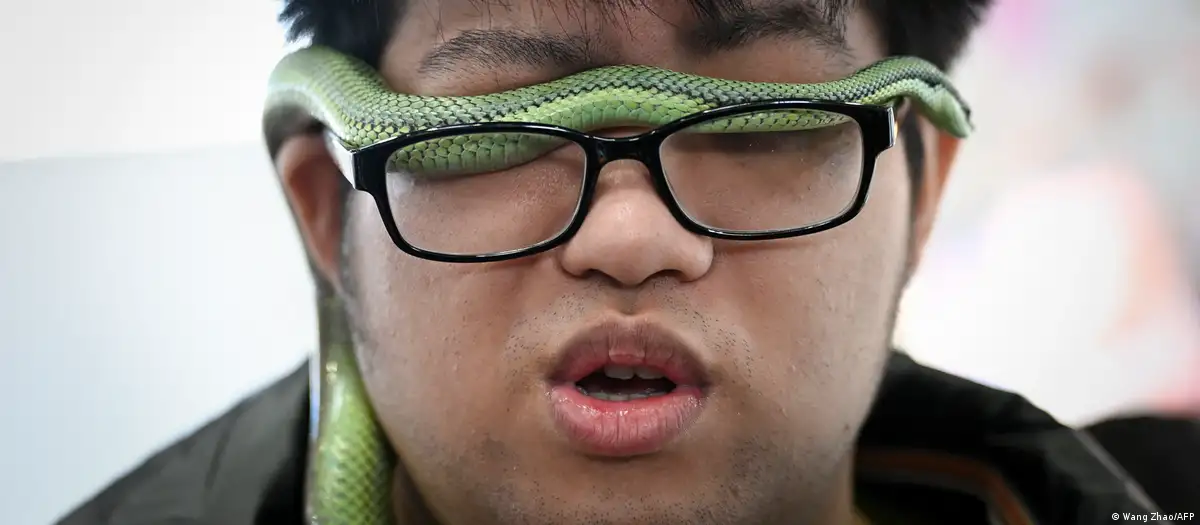
Pet Fair is China’s leading trade show for the pet industry. Pet lovers gather excitedly around a container to take photos of meerkats, which are being sold at the pet fair in Beijing for the equivalent of 275 euros (320 U.S. dollars) each, while nearby a raccoon paces nervously back and forth in a cage that’s too small.
Growing interest in exotic animals
Every year, people from all over China flock to a pet fair where exotic animals are more common than cats or dogs. The market is booming, with sales reaching around 10 billion yuan (€1.3 billion, $1.5 billion). About 17 million people keep these somewhat unusual pets, but animal rights activists have increasingly criticized the often poor living conditions for these animals.
Life in a Plastic Container
Unusual pets are particularly popular among young people in China. Videos about caring for them are widely shared on social media. An 18-year-old visitor is convinced that caring for them is easier than it was with his previous cats and dogs. "I think keeping exotic pets is really a piece of cake in comparison," he tells the AFP news agency.
An easy problem to solve?
The 18-year-old had previously purchased a short-headed gliding possum. He's convinced that these animals are low-maintenance because they do not suffer from separation anxiety. The animals seek closeness when you want them to, he said, but they also entertain themselves just fine on their own when left alone.
Animal Sales in Everyday Life
China's Ministry of Public Security has issued a warning about the trend of owning exotic pets. The trade, care and abandonment of these animals all pose risks. At the same time, animal welfare laws in China are considered lax, and animals such as fish, birds and even pigs are frequently sold in shopping malls.
Call for stricter measures
Experts have called for stricter measures against dealers and breeders who profit from the exotic animal trade. Some are accused of misleading customers with false information. A lack of knowledge about these animals also poses significant risks. Abandoned animals can quickly multiply, disrupt ecosystems, and spread disease, as is the case with bats.
Cuteness over responsibility
Although awareness of animal welfare is growing in China, many buyers are poorly informed about legality, care and costs. Despite the potential impact on human habitats, many are considering purchasing these animals because, as one trade show visitor put it, "they're just so cute."