World Cup 2026: Africa's new era takes shape
June 17, 2026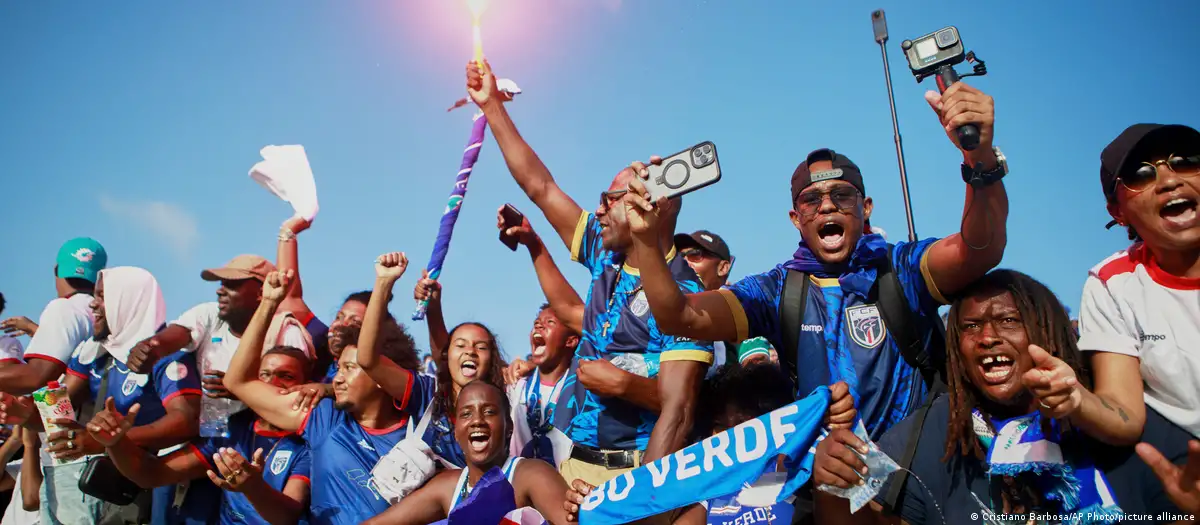
The 2026 FIFA World Cup marks a turning point for African football. With the tournament expanded from 32 to 48 teams, the African continent is enjoying unprecedented representation on soccer's biggest stage.
Ten African nations qualified for this year's World Cup: Morocco, Senegal, Egypt, Cote d'Ivoire, South Africa, the Democratic Republic of Congo, Tunisia, Algeria, Ghana and Cape Verde.
In last week's opening match against Mexico — one of three host nations alongside the United States and Canada — South Africa faced a huge challenge in front of one of the tournament's loudest crowds.
Though Mexico secured a 2–0 victory, Bafana Bafana, the nickname of South Africa's national football team, meaning "The Boys" in isiZulu, worked hard to move beyond their 2010 World Cup legacy.
The 2010 tournament in South Africa — the first World Cup hosted on the African continent — remains historic, despite the country becoming the first host nation to exit in the group stage.
Not all Africans rallied behind South Africa in the 2026 World Cup opening match last Thursday, though. Many backed Mexico amid lingering resentment over recent xenophobic attacks in South Africa.
Cote d'Ivoire coach Emerse Fae said, "We came here with ambitions, with high hopes," after the Elephants' dramatic 1–0 win over Ecuador.
Striker Sebastien Haller, one of the most important figures in the Elephants' squad, who's known for his strength, aerial ability and finishing, played a key role in Cote d'Ivoire's triumph in the 2024 Africa Cup of Nations.
Morocco have transformed from outsiders into genuine contenders after their historic 2022 semi-final run. With players like Achraf Hakimi and Brahim Diaz, the Atlas Lions made a statement in their first 2026 World Cup match against Brazil on Saturday, earning a 1–1 draw.
And Ghana, yet to play their first match against Panama, hopes a new generation around midfielder Mohammed Kudus can restore the Black Stars' reputation.
Drama in Tunisia first match
Further opening matches brought more drama: Egypt drew 1–1 with Belgium, with all eyes once again on forward and team captain Mohamed Salah.
Tunisia suffered a difficult start, losing 5–1 to Sweden.
"This is football, and results decide everything," said Sabri Lamouchi, Tunisia's head coach, after the match. The defeat led to his immediate dismissal, making him the first coach in World Cup history to be sacked after only one match.
Meanwhile, Cape Verde delivered what many soccer fans describe as one of the tournament's highlights when veteran goalkeeper Vozinha stopped European champions Spain, even though an expensive travel bond stopped his mother from attending.
"All of us, we are happy because we work a lot to be here. We deserve to be here," said Vozinha. In the hours following the match, his Instagram following skyrocketed from 50,000 to over 6 million.
France vs. Senegal: the Francophone derby
Tuesday's heated clash between France and Senegal, which France won 3–1, carried a deeper historical meaning: Senegal was a French colony until gaining independence in 1960, and the relationship between the two countries remains complex.
France remains one of Senegal's key economic partners, with close links in areas such as infrastructure, investment, energy and business, while migration between the two countries has created large Senegalese communities in France.
Senegal players such as Kalidou Koulibaly, born in France to Senegalese parents, and Edouard Mendy, who also has Senegalese heritage and grew up in France, reflect the shared history between the two countries.
Others, like Sadio Mane, built their careers internationally while representing Senegal's identity and football ambitions.
And many of France’s biggest football stars, including Kylian Mbappe, Ousmane Dembele, Aurelien Tchouameni, Dayot Upamecano and Michael Olise, have African roots.
Ousmane Sonko, speaker of Senegal's National Assembly and former prime minister, summarized it this way: "Whichever team wins, it is Africa that will have beaten Africa."
Back after 50 years: DR Congo's Leopards
Meeting Portugal in their first match on Wednesday, the DR Congo's Leopards are back for the first time since the 1974 World Cup, led by a new generation including stars such as Yoane Wissa.
The team attracted attention even before playing a single match, with one of the tournament's most distinctive arrival looks: tailored suits featuring leopard patterns, paired with matching leopard-inspired bags. The outfits were designed by Alvin Mak, a Congolese designer.
DR Congo's probably also has the most famous football supporter: Michel Nkuka Mboladinga, better known as "Lumumba," became instantly recognizable through his distinctive appearance.
Lumumba wore a bright blue, red and yellow suit matching the colors of the Congolese flag, combined with a hairstyle and glasses that closely resembled Patrice Lumumba, the first prime minister of independent Congo.
His unique matchday ritual, standing almost motionless during games, reminds many of the Lumumba statue in Kinshasa. Mboladinga says his silent presence is a way of supporting the team itself. "I remain still to give strength to the team, to give energy to the players," he told The Associated Press.
While African teams are celebrating their biggest-ever presence at the World Cup, the tournament has also highlighted wider issues beyond the pitch.
The US State Department fully or partially suspended the issuance of travel visas to 39 countries, including Cote d'Ivoire and Senegal.
Somali referee Omar Artan was set to make history as the first official from his country to referee at a men's World Cup. However, he was denied entry to the United States because of his supposed links to "suspected members of terror organizations," the Trump administration said.
A spokesperson for the governing body FIFA told the German press agency dpa that Artan, the 2025 African referee of the year, would receive his full tournament fee despite not officiating any matches.
That, however, does not shrink the excitement surrounding the tournament — and the passion with which fans support their teams, even from afar.
Edited by: Keith Walker