Ukraine updates: Russia kills 24 in attack on pension queue
Published September 9, 2025last updated September 10, 2025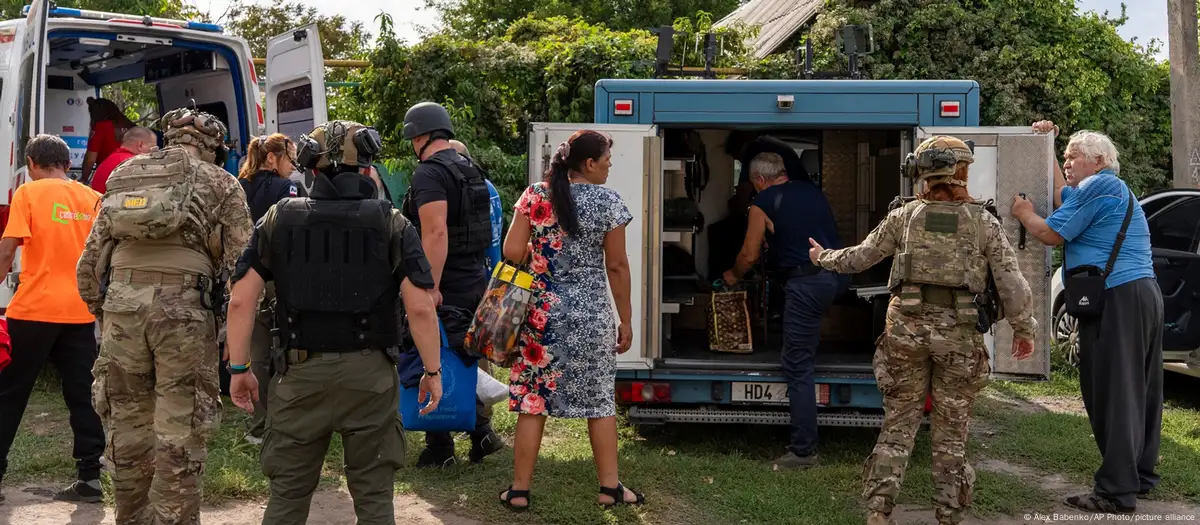
What you need to know
A Russian glide bomb has struck a village in eastern Ukraine as people queued for pensions, killing at least 24 and injuring nearly two dozen more.
The attack on Yarova in Donetsk was condemned as "frankly brutal" by President Volodymyr Zelenskyy, with calls for tougher sanctions to make Moscow pay.
Russia has stepped up aerial strikes after US-led peace efforts stalled, hitting Kyiv on Sunday in the largest attack since the war began.
Meanwhile, the European Union's foreign affairs chief Kaja Kallas says the bloc's 27 member states are now providing more military aid to Ukraine than ever before.
This blog has now closed. Read below for a roundup of events from Russia's war in Ukraine on Tuesday, September 9, 2025. For the latest from Wednesday, September 10, follow our blog here.
Trump ready to match EU tariffs on China, India to pressure Putin - reports
The United States is ready to broaden tariffs targeting buyers of Russian oil such as India and China if the European Union takes similar moves, according to media reports.
The Financial Times, citing three officials, said US President Donald Trump had asked the EU to slap tariffs of up to 100% on India and China as part of a strategy to pressure Russia.
The US was prepared to mirror any tariffs imposed by the EU, one official said, according to the Financial Times.
News agencies Reuters and AFP also reported that Trump has pressured the EU to hit Russian oil buyers with strong tariffs.
Trump reportedly made the request during a conference call between officials and EU sanctions envoy David O'Sullivan, who is in Washington leading an EU delegation to discuss sanctions coordination.
Trump indicated the US is prepared to impose more so-called secondary sanctions depending on EU cooperation, the agencies reported citing various officials.
Oil sales are a key revenue source for Russian President Vladimir Putin's war in Ukraine. So far, only India has been hit with so-called secondary sanctions — an additional tariff of 25% — over its continued purchase of Russian oil.
The US request, if heeded, would result in a change of strategy for the EU, which has preferred to isolate Russia with sanctions rather than tariffs.
German's AfD blames Ukraine for Russia offensive
Alternative for Germany (AfD) co-leader Tino Chrupalla suggested Ukraine was partially to blame for the increase in Russian attacks in the war since the meeting between US President Donald Trump and Russian President Vladimir Putin in Alaska.
"That's what you get," Chrupalla told journalists in Berlin. Chrupalla pointed to recent Ukrainian attacks on Russia's Druzhba oil pipeline, which also supplies Hungary and Slovakia.
The far-right AfD is the country's biggest opposition party and it has been critical of Germany's support for Ukraine.
Chrupalla also accused the European Union of fueling the war by supplying Kiyv with arms.
He said it wasn't immediately clear that no progress had been made since Trump and Putin met in Alaska in mid-August, stressing that it had been important and right to start the dialogue.
Germany to back Ukraine with 'deep-strike' drones
Germany has announced a major defense initiative to supply several thousand long-range drones to Ukraine, aiming to disrupt Russian operations deep behind the front lines.
The €300 million programme will be carried out in partnership with Ukrainian defence firms.
Defense Minister Boris Pistorius said Germany was "expanding Ukraine's capabilities to weaken Russia's war machinery in the hinterland, providing an effective defense."
He was speaking at a meeting in London of Ukraine's allies.
At the same meeting, British Defense Minister John Healey said the UK would also continue sending one-way attack drones "vital for Ukraine's defense".
"Over the next 12 months, the UK will fund the delivery of thousands of long-range one-way attack drones, built in the UK, and supporting our 100-year partnership with Ukraine," Healey told the meeting
WATCH: Has Russia's summer offensive failed?
Russia has made regular advances along the front lines in eastern Ukraine in recent months, launching drones and missiles at targets in Kyiv and across the country. However, the summer offensive has yielded only limited territorial gains, coming at a tremendous cost to the lives of Russian troops. DW spoke to Peter Dickinson, editor of the Atlantic Council’s Ukraine-Alert service.
Death toll mounts Russian strike eastern Ukrainian village
Ukraine's interior ministry now says 24 people were killed when a Russian glide bomb struck the village of Yarova, about eight kilometers (five miles) from the front line.
The Kiev-appointed military governor of the Donetsk region, Vadym Filashkin said 23 of the dead were pensioners.
Earlier, Filashkin, had placed the death toll at 21, with many more injured.
The Ukrainian army said Moscow used a glide bomb, a winged weapon designed to travel dozens of kilometers, part of Russia's effort to hit deeper into Ukrainian territory and stretch defenses.
Is Russia's offensive faltering as Ukraine strikes back?
Peter Dickinson, editor of the Atlantic Council's Ukraine Alert Service, has told DW that Russia's summer offensive has "largely failed," pointing to both Ukrainian resilience and Russian weaknesses. The Atlantic Council is an international affairs think tank based in Washington, D.C.
Ukraine's use of drones is creating a "drone wall" that has prevented Russia from consolidating gains, said Dickinson. While Russian units have tried ad hoc tactics — using motorbikes or buggies to slip through — Dickinson said it has been "very difficult for the Russians to bring together large amounts of armor, tanks, armored vehicles and so forth, and push through and hold territory."
Heavy casualties and recruitment problems are also weakening Moscow’s forces. "They're suffering very, very heavy casualties," he said, adding that many newer recruits are older and poorly trained.
The gains Russia has made in recent months have been "minimal," while the costs have been "catastrophic." Dickinson described the conflict as a war of attrition: "They’re really fighting over scraps, and the movement on the front is minimal in either direction."
Ukraine, he noted, faces manpower shortages of its own but has made limited advances, including around the city of Pokrovsk. He said Ukraine has also succeeded in striking Russia directly. "Now we're also seeing Ukraine strike very effectively inside Russia … especially oil refineries. It’s having a big impact on Russia’s war economy."
Dickinson argued that the idea of an inevitable Russian victory is misplaced. "Ukraine is a far stronger force with much greater capabilities in the field. Russia is not nearly as powerful as people seem to think."
EU says military aid for Ukraine at record high
EU foreign affairs chief Kaja Kallas told the European Parliament on Tuesday that member states are providing unprecedented support for Ukraine.
"The European Union and our member states have provided almost €169 billion of financial support since the full-scale war started in 2022," Kallas said in Strasbourg. "This includes over €63 billion in military support for Ukraine."
She noted that €25 billion in military aid has already been delivered this year, the highest annual amount so far. EU countries have also supplied ammunition, meeting 80% of the bloc’s target of 2 million rounds. "We aim for 100% by October," Kallas said.
"This is all so that Ukraine can defend itself, can defend its civilians and push back the aggression," she added.
Russian bomb kills 21 in Ukraine village, Zelenskyy urges sanctions
A Russian glide bomb struck the village of Yarova in Ukraine's Donetsk region on Tuesday, killing at least 21 people and wounding nearly two dozen as residents lined up to collect pensions, officials said.
The Kyiv-appointed governor of the region, Vadym Filashkin, said rescue forces were still in action as he urged residents to flee to safer regions.
Ukrainian President Volodymyr Zelenskyy condemned the attack as "frankly brutal" and called for stronger international sanctions.
"A brutally savage Russian airstrike with an aerial bomb on the rural settlement of Yarova in the Donetsk region. Directly on people. Ordinary civilians. At the very moment when pensions were being disbursed," Zelenskyy wrote online.
"Such strikes by Russia must not remain without an appropriate response from the world," Zelenskyy said.
"The world should not remain silent. The United States needs a reaction. Europe needs a reaction. The G20 needs a reaction," he wrote on Telegram.
"Strong action is needed so that Russia stops bringing death."
The village lies on the Siverskyi Donets river near the Donbas front line, where Russian forces are pressing attacks on the nearby town of Lyman.
The United Nations estimates more than 12,000 civilians have been killed since Russia launched its full-scale invasion in February 2022. The strike follows Russia’s largest aerial assault on Kyiv since the start of the war, carried out on Sunday with missiles and drones.
Welcome to our coverage
Welcome to DW's coverage of the latest developments in the Russian war on Ukraine.
You join us after news of a deadly Russian glide bomb attack on a small village in eastern Ukraine. At least 21 people were killed as they waited in line to collect their pensions.
Ukrainian President Volodymyr Zelenskyy said the strike hit Yarova in the Donetsk region on Tuesday, calling it the latest in a string of Russian attacks deliberately targeting civilians.
It's one of the deadliest recent strikes on civilians since the full-scale war began more than three years ago.
Stay tuned for the latest news and analysis from the ongoing war.