Syria announces new ceasefire deal with Kurdish-led SDF
Published January 18, 2026last updated January 18, 2026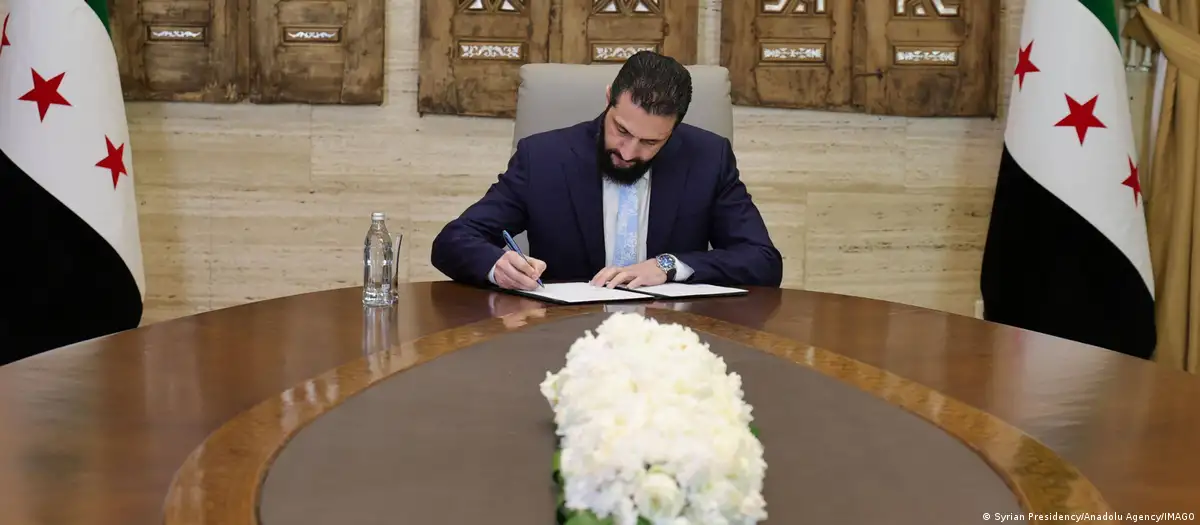
What you need to know
- Syria's government signed a ceasefire deal with Syrian Democratic Forces, a Kurdish-led armed group backed by the US, Syrian state media reported
- Kurdish leaders said they would provide more details in the coming days
- Syria's military over the weekend pushed into towns that have been under the control of Syrian Democratic Forces for many years
- Sunday's military push came after tensions flared between central government and SDF earlier this month that resulted in deadly clashes
Keep reading for the latest news, videos and analyses on the unfolding situation in Syria on Sunday, January 18, 2026:
Kursish leader confirms ceasefire, says details to come
Mazloum Abdi, commander-in-chief of the Kurdish-led Syrian Democratic Forces (SDF), confirmed the ceasefire deal in a televised address on Sunday night.
"In order for this war not to turn into civil war... we accepted to withdraw from the Deir el-Zour and Raqqa regions to Hasakeh," Abdi said in a statement broadcast by Kurdish television channel Ronahi.
“We will explain the terms of the agreement to our people in the coming days,” he added.
Turkey hopes agreement will contribute to 'security, peace'
Turkey hopes the new agreement will "contribute to the security and peace of the Syrian people, as well as the entire region, particularly Syria's neighbors," its Foreign Ministry said on Sunday.
"With the recognition of the realities on the ground, we hope that all groups and individuals in the country fully understand that Syria's future lies not in terrorism and division, but in unity, integration and cohesion," the Foreign Ministry said.
Ankara considers the SDF as a terrorist organization because of its association with the Kurdistan Workers' Party, or PKK.
Syrian leader cancels Berlin visit
Syria's President Ahmad al-Sharaa has postponed a planned visit to Berlin.
The Syrian interim leader was due to arrive in the country on Monday and hold meetings with Chancellor Friedrich Merz, as well as German business leaders, on Tuesday.
Al-Sharaa was scheduled to meet Mazloum Abdi, the leader of the Kurdish-led Syrian Democratic Forces, on Sunday, after the SDF and Damascus government reached a ceasefire agreement.
But the Syrian leader told journalists Abdi could not travel to Damascus due to bad weather and will instead visit him on Monday.
US commends ceasefire, says 'pivotal inflection point'
The US hailed the ceasefire agreement, with Tom Barrack, the US special envoy to Syria, describing it as "a pivotal inflection point."
"President al-Sharaa has affirmed that the Kurds are an integral part of Syria, and the United States looks forward to the seamless integration of our historic partner in the fight against ISIS with the Global Coalition’s newest member, as we press forward in the enduring battle against terrorism," Barrack wrote on X, using the acronym of the "Islamic State" militant group.
Barrack acknowledged the "challenging work" that comes with integrating Kurdish-led forces into the Syrian state, adding that the US "stands firmly behind this process at every stage."
Al-Sharaa voices support for 'Syria's unity, sovereignty over all its territory'
Syria's interim President Ahmed al-Sharaa on Sunday voiced support for the country's "unity and sovereignty over its territory."
In a meeting with US envoy Tom Barrack in Damascus shortly before the announcement of the ceasefire agreement, Syria's interim leader affirmed the importance of dialogue and rebuilding the country "with the participation of all Syrians."
On Friday, as the Syrian government was extending its grip on Kurdish-run areas, al-Sharaa issued a decree declaring Kurdish a "national language" and granting official recognition to the minority group.
However, the Kurds said that Friday's announcement did not meet their expectations.
Tensions flared amid disagreement over integration of Kurdish force into new Syrian state — what to know
Fighting frequently broke out between the Syrian army and Kurdish-led forces as negotiations stalled between Damascus and the SDF over an agreement reached in March 2025.
The agreement aimed to integrate Kurdish forces into the new Syrian state, and allow the central government to take control of assets, including border crossings and oil fields, that have long been under Kurdish control.
During Syria's civil war, the SDF was the US' most important ally in fighting the extremist "Islamic State" group, but the Syrian government accuses the SDF of tolerating Assad loyalists and members of the banned Kurdistan Workers Party (PKK) within its ranks.
In turn, Kurdish representatives distrust assurances by al-Sharaa, the former leader of the Islamist group HTS, that their rights will be protected. They also warn of a possible resurgence of the "Islamic State."
What prompted a ceasefire agreement?
The ceasefire agreement comes after two days of fresh fighting in the country's east, which saw Syria's army dislodge the Kurdish-led Syrian Democratic Forces (SDF) from areas in northern and northeastern Syria that the SDF had controlled for over a decade.
On Sunday, the government announced the capture of the strategic town of Tabqa, located about 55 kilometers (34 miles) west of the key city of Raqqa, held by the SDF.
Last week, Syrian government troops drove Kurdish forces out of two neighborhoods in Aleppo. On Saturday, they also took control of an area east of the city.
Reuters reported Sunday that Kurdish-led forces had withdrawn from the Omar oil field, Syria's largest, in the eastern province of Deir Ezzor, amid fighting.
Read DW report on the Syrian army's advances over the weekend here.
What do we know about the ceasefire deal?
Here are some of the most important points of the 14-point deal announced by the Syrian government, according to SANA, the government news agency:
- A comprehensive and immediate ceasefire
- The withdrawal of all SDF forces to the east of the Euphrates river
- The Syrian government to take over the Deir el-Zour and Raqqa provinces
- SDF forces to be 'individually' integrated into the Defense and Interior Ministries
- All civilian institutions in Hasaka province to come under the state's control
- Syrian government to take over all borders, oil and gas fields in the region
- SDF to identify (and eliminate) individuals within its ranks affiliated with Bashar Assad regime
- Syrian government to take over administration of housing prisoners belonging to the 'Islamic State' group
- SDF to expel all non-Syrian members of the Kurdistan Workers' Party (PKK) outside Syria
Syria government announces ceasefire deal with SDF
The Syrian government has announced a new ceasefire agreement with the Kurdish-led Syrian Democratic Forces, which for decades controlled large swathes of Syria's east and northeast.
Over the course of the weekend, the Syrian army reportedly took over strategic locations, including oil and gas fields previously held by the SDF.
According to the accord, the central government is to have access to several Syrian eastern and northeastern provinces. It also involves fully integrating the SDF into Syria's Defense and Interior Ministries, the state-run SANA news agency reported.
Welcome to our coverage
Syria's government announced a new ceasefire deal with the Kurdish-led Syrian Democratic Forces (SDF) after two days of intense fighting in areas that have been under the control of the SDF for nearly a decade.
Syria's interim President Ahmad al-Sharaa had signed a deal in March last year with the SDF for it to merge with the Syrian army by the end of 2025. But there were many disagreements over the deal, with both sides accusing each other of violating it.
The SDF has long been the US's major partner in the fight against the so-called "Islamic State" terror group. On the other hand, the Trump administration has developed ties with the al-Sharaa government and has called for Kurds to implement the deal.
This blog will cover the latest news and details on the deal as well as the situation in Syria more generally.