Nigeria expands security ties amid insurgency
March 25, 2026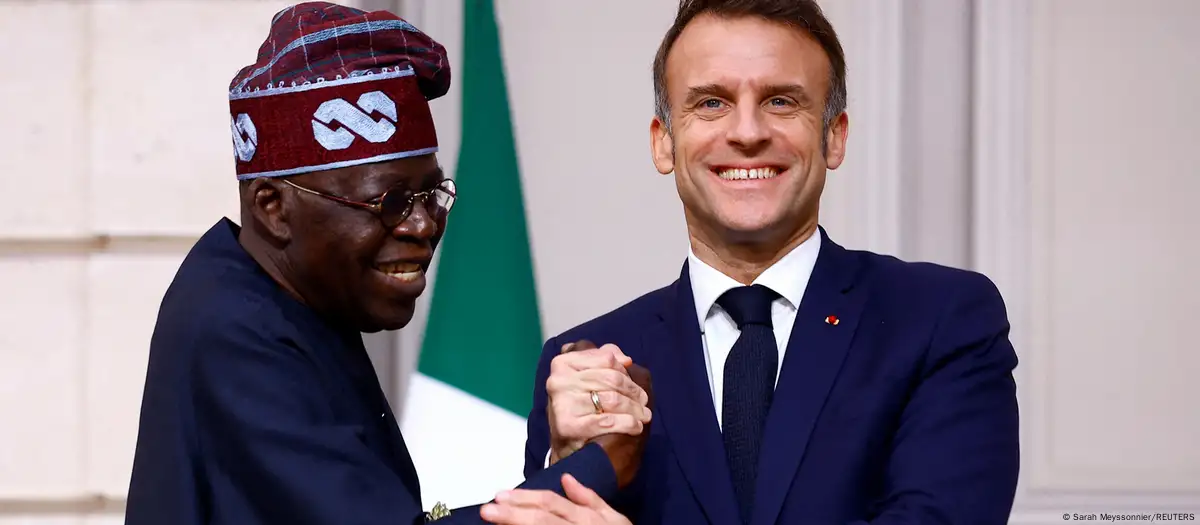
France has renewed its commitment to boosting Nigeria's fight against violent extremism in the Lake Chad Basin and Africa's Sahel region.
The French support aims to strengthen Nigeria's ability to counter extremist groups such as Boko Haram and its breakaway faction, the Islamic State West Africa Province (ISWAP), responsible for persistently deadly attacks across the northeast and border areas.
Among the groups are also IS-linked Lakurawa and other "bandit" groups specializing in kidnapping for ransom and illegal mining.
Discussions between Abuja and Paris — including a phone call last week between Nigerian President Bola Tinubu and French President Emmanuel Macron — have centered on intelligence sharing, joint training and capacity‑building support for Nigerian security forces.
Can France succeed where Sahel missions stumbled?
While French missions in Africa's Sahel region have faced criticism for their limited success, analysts point to significant differences between Nigeria and its neighbors.
"The first important distinction to make is that the Nigerian army is generally considered better equipped and trained than their counterparts in the Sahel," said Ryan Cummings, a security analyst at Africa-focused risk management company Signal Risk.
"So many of the pitfalls associated with French counterterrorism operations in the Sahel — much of which was linked to the poor capacity of the Malian, Nigerian, and Burkinabe national armies — could be mitigated," Cummings told DW.
Yahaya Shinko, a retired major in the Nigerian army, said that Nigerian forces understand the strategy because they have been dealing with the situation for more than 15 years.
"With these countries trying to come in and help Nigeria… once we coordinate with them and they are able to [make an] impact to our military with the technology of the day, I'm sure it will help in counterterrorism in northeastern Nigeria and even in other parts, particularly the northwest," he told DW.
How US training is boosting Nigeria's fight against insurgency
Last month, the United States began deploying 200 troops to Nigeria to provide technical and training support to the country's soldiers.
The US approach includes assistance with integrating US-supplied A-29 Super Tucano aircraft for targeted operations against insurgents.
"The American technical assistance, especially in intelligence and air-to-ground operations, can translate into long-term operational effectiveness," said Shinko, who stressed that strengthening Nigeria's security response ultimately depends on building local capacity.
"It is important that there is sufficient investment by the federal government into enhancing the overall capacity of the Nigerian army and not relying solely on that capacity to stem from external sources," Cummings told DW.
Stronger intelligence for tougher threats
Analysts note that foreign assistance is expected to be particularly transformative in intelligence gathering, which is a long‑standing gap in Nigeria's counterterrorism toolkit.
Both France and the US possess advanced surveillance technologies, including satellite imagery and drones, which could significantly strengthen Nigeria's ability to monitor insurgent activity and respond to emerging threats.
"The French Army is expected to only provide training to the military personnel of the Nigerian forces and help in intelligence gathering, but allow the Nigerian forces to lead the operation in the field," said Shinko.
He added that once Nigerian troops take the lead, with France supplying training, intelligence support and equipment, the partnership should strengthen operations and help prevent the setbacks seen in the region.
Security analysts underline the importance of technical assets for early warning and precision response.
"Intelligence gathering will be key to mitigating against these forms of jihadist attacks. Reconnaissance through drone technologies will also be essential in providing early warning to more complex attacks involving multiple insurgents," said Cummings.
With robust, sustained support from France and the US, Nigeria could see more effective, intelligence-driven operations, improved professionalism among its armed forces and stronger regional responses.
Shinko emphasized, "It will be of no substance or of no use where intelligence will be shared… unless Nigeria is ready to implement what has been gathered and analyzed."
Rising threats drive new alliances
In a bid to expand its network of security partners, Nigeria's national security adviser, Nuhu Ribadu, led a delegation to Brussels last month to engage the European Union.
Discussions centered on technology transfers, intelligence sharing, and capacity building as Nigeria advocates for comprehensive support from the US, France and other EU member states.
Nigeria's diplomatic push comes amid renewed extremist attacks. Over the past weeks, coordinated assaults by Boko Haram and ISWAP in Borno State left dozens dead, including soldiers and civilians.
Raids on villages and ambushes on military convoys underscore the persistent threat posed by organized insurgents.
The surge in violence has amplified calls for effective international partnerships and advanced counterterrorism strategies as humanitarian agencies warn of escalating displacement crises.
For Nigeria, integrating foreign expertise, technology and intelligence support will be crucial in tackling the mounting security challenges.
Edited by: Keith Walker