Germany news: Most Germans see decline in public manners
Published April 11, 2026last updated April 12, 2026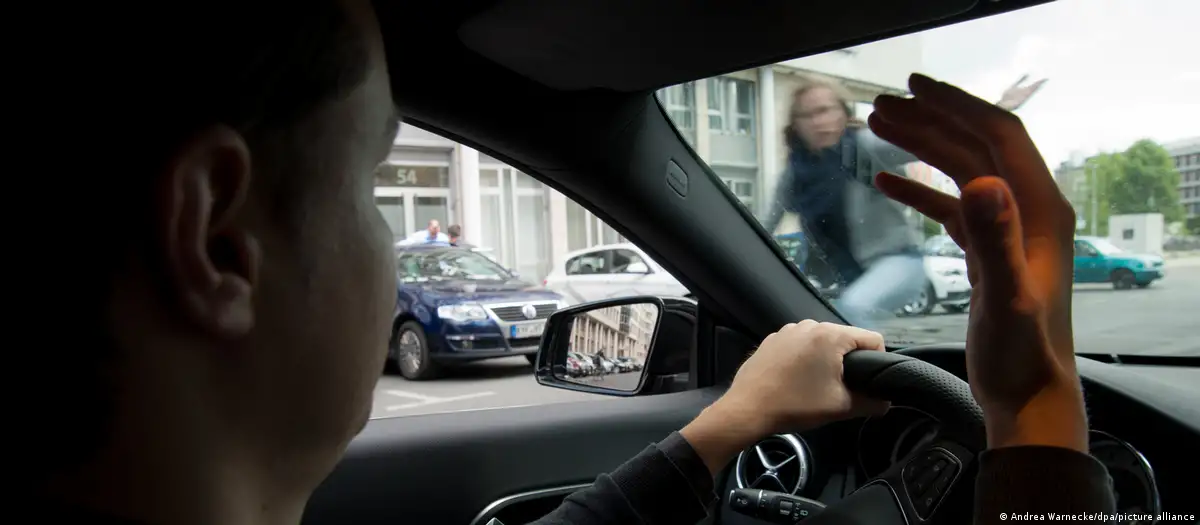
What you need to know
- A sizeable minority of Germans believe that people's manners in public have declined over the past five years
- An overhead line on the route between Berlin and Munich snapped, causing major damage and ongoing disruption
- Germany's center-left Finance Minister Lars Klingbeil wants to limit prices at the pump amid the oil crisis
- Conservative Finance Minister Katharina Reiche has openly rejected the idea, exposing a split in the ruling coalition
- A media survey reports there was a significant rise in the number of rape cases last year
Here is a roundup of the latest headlines that Germany is talking about on April 11 and April 12, 2026:
The city of Heilbronn tops Germany in purchasing power ranking
The small southwestern city of Heilbronn has ranked highest in Germany for purchasing power, according to a new study.
The German Economic Institute said the city led with a price-adjusted per capita income of €39,424 ($46,264) in 2023, ahead of the lakeside Bavarian Starnberg district.
While Starnberg posted the highest nominal income at €44,500, its cost of living is about 14% above the national average, reducing real purchasing power.
Rural regions dominated the top 10, including Rhön-Grabfeld district at the northern tip of Bavaria and the Neuwied district of Rhineland-Palatinate where people benefit from lower living costs.
The Olpe district of Germany’s Sauerland region also ranked among the top performers.
At the bottom were cities with economic and structural issues, including Bremerhaven, Ludwigshafen, and the former industrial Ruhr area cities of Gelsenkirchen, Herne and Duisburg. The city of Offenbach am Main, south of Frankfurt, ranked last.
Major cities performed poorly overall due to high housing costs. Stuttgart ranked 249th out of 400, while Berlin, Frankfurt am Main, and Cologne also lagged. Meanwhile, Munich and Düsseldorf performed relatively better
Human head found in German forest
Investigators have launched a murder inquiry after a human head was found in a forest in the western state of North Rhine-Westphalia.
Authorities said the discovery was made during a litter cleanup operation, and a homicide unit has been examining possible links to an earlier case involving a 32-year-old Eritrean woman.
Prosecutors in the city of Siegen and police in the town of Hagen, about 65 kilometers (around 40 miles) to the north, said all lines of inquiry remain open.
Investigators are checking whether the remains belong to the woman whose hands were found in November in the same municipality and whose body was later discovered in woodland near the village of Monreal in the neighboring state of Rhineland-Palatinate.
The case shocked the country in late 2025 after the remains were found in multiple locations. She had been living in a refugee shelter in Bonn, while her three-month-old baby was found unharmed in the village of Waldsolms, just north of Frankfurt am Main.
Her partner, now 41, has been in pre-trial detention in Germany for about two months on suspicion of manslaughter after being extradited from Ethiopia.
Authorities have not released further details about the latest discovery or the exact circumstances, and investigations are ongoing.
Major rail damage after overhead line snaps on Berlin-Munich route
A snapped overhead power line on the Berlin-Munich rail route has caused significant damage and ongoing disruption.
Police said the damage is estimated to be in the six-figure range after the incident near Zahna-Elster.
An ICE train struck the fallen line on Saturday, leaving around 600 passengers stranded. Two people were slightly injured.
Rail operator Deutsche Bahn said travelers should continue to expect delays and longer journey times on Sunday. It estimated the additional journey time between the cities at 30 minutes.
Authorities said it remains unclear what caused the overhead line to fail. Rescue operations were slowed due to the danger posed by the live rail power system.
Berlin bans execution reenactments at protests
Berlin has banned the public reenactment of executions at demonstrations and rallies.
Police in the German capital said assembly rules were expanded after authorities reviewed recent incidents, prohibiting simulated killings and realistic depictions of executions.
The ban also covers tying up individuals and using related props in such scenes. The move follows criticism of a pro-Palestinian protest on Alexanderplatz, where participants staged an execution to protest a death penalty law targeting Palestinian prisoners in Israel.
Police spokesperson Florian Nath said the updated rules remain proportionate.
“From our point of view, this is a quick and flexible adjustment that takes relevant changed conditions in the assembly situation into proportionate account when necessary,” he told the Berliner Zeitung newspaper.
Dozens of demonstrators gathered at Alexanderplatz to protest the closure of Al-Aqsa Mosque and the controversial law
Germans see public manners declining
Most people in Germany say everyday interactions have become less friendly, while still viewing themselves as polite.
A YouGov survey for the language learning app Babbel found 59% perceive a harsher tone than five years ago, although 85% consider themselves to be courteous.
Older respondents were more critical, with 65% of the Boomer generation reporting a decline in manners, compared with 39% among younger participants. Regional differences also emerged, with Hamburg deemed most polite by its residents and Bremen ranking the lowest.
Road traffic was identified as the main hotspot for rudeness, cited by 61% of respondents, while only 15% viewed the workplace as particularly unfriendly.
Political affiliation showed smaller gaps: 10% of socialist Left party supporters reported issues with tone, compared with 16% among conservative CDU/CSU supporters and 15% among center-left Social Democrat voters. The highest concern came from far-right Alternative for Germany and populist-left BSW supporters, both at 19%.
Babbel said the findings suggest a perceived need to improve everyday courtesy, especially in direct interactions.
Union Berlin names Marie-Louise Eta as interim men's coach
Bundesliga side Union Berlin says it has parted ways with coach Steffen Baumgart and appointed Marie-Louise Eta as interim head coach until the end of the season.
Eta became the first woman to lead a Bundesliga team in January 2024, while then-manager Nenad Bjelica served a suspension. She now takes on the coaching role for the final five matchdays.
Eta had already made history earlier that season as the first female assistant coach in the Bundesliga and across the top divisions of Europe’s “big five" soccer leagues.
The club announced the decision late Saturday after a 3-1 defeat at bottom side Heidenheim, citing poor results and lack of confidence in a turnaround.
Sporting director Horst Heldt said the team urgently needs points to avoid relegation after just two wins in 14 matches since the winter break.
Eta, who takes over Union's women's side next season, said the club's place in the Bundesliga’s top flight was not yet secure.
"I am delighted that the club has entrusted me with this challenging task. One of Union’s strengths has always been, and remains, the ability to pull together in such situations. And, of course, I am convinced that we will secure the crucial points with the team," she said.
Germany restricts nitrous oxide sales to protect minors
Sweeping restrictions come into force across Germany today on the sale of nitrous oxide cartridges to curb misuse as a party drug.
The law, backed by Health Minister Nina Warken, bans sales and possession for minors and prohibits online sales and vending machine distribution.
The measure aims to limit easy access after rising recreational use. Nitrous oxide, also known as laughing gas, can cause unconsciousness and long-term nerve damage, especially when inhaled improperly.
Under the new rules, cartridges above 8.4 grams (about 0.3 ounces) fall under stricter controls. Adults may still purchase them, but only up to ten cartridges per transaction.
Exceptions remain for legitimate uses, such as small cartridges for canned whipped cream.
Strict bans are also coming into force on chemicals commonly used as so-called "date rape drugs."
The law prohibits the marketing, trade, and production of GBL and BDO, substances linked to incapacitating victims within minutes.
Officials say the chemicals can cause dizziness, loss of consciousness, and leave victims vulnerable to crimes such as sexual assault.
Welcome back to our coverage
Guten Tag once again from DW's newsroom in Bonn.
You're joining us as a new law comes into force that stops minors from buying nitrous oxide, or laughing gas, which has become a party drug for many young people.
The law also applies to so-called "date rape drugs" GBL and BDO, substances linked to incapacitating victims within minutes that some partygoers also use.
For this and more stories out of Germany, stick with us here.
We'll resume blog this morning
We'll be back later this morning. See you then.
Thousands of protesters call for review of far-right parties
A few thousand people attended rallies in German cities calling for the Constitutional Court to review whether far-right parties should be banned.
Police said that up to 2,000 people took part in a rally in Munich organised by the PRÜF campaign.
PRÜF, which means "check," is also an acronym with the letters standing for “Prüfung Rettet Übrigens Freiheit!” — Review Saves Freedom.
Berlin saw around 1,000 people gather while in Potsdam the number was around 800 although organisers put the number at 1,100.
"All parties classified by the Federal Office for the Protection of the Constitution as suspected or confirmed right-wing extremist should be reviewed by the Federal Constitutional Court," the organisation said on its website.
In February a German court ordered authorities to stop calling the Alternative for Germany (AfD) party far-right extremist until a final ruling on the designation can be handed down.
The AfD is the country's second largest party in nationwide polling and Germany's largest opposition party.
Germany: Lufthansa pilots' union call for two-day strike
Lufthansa pilots are set to strike next week on Monday and Tuesday, the pilot's trade union announced on Saturday.
Lufthansa Cargo, Lufthansa Cityline and Eurowings are all included in the call to down tools.
The work stoppage is expected to run from 12:01 am on Monday (22:01 UTC on Sunday) through to 23:59 pm on Tuesday, the union said.
"The Cockpit Union feels compelled to take this step after the employers showed no discernible willingness to reach a solution in several collective bargaining disputes," the organization said.
"Despite a deliberate decision not to take strike action over the Easter holidays, no serious offers were forthcoming. During this period, there was neither a response nor any discernible willingness to engage in talks on the part of the employers," union President Andreas Pinheiro said.
Police shoot man during hotel incident near Hanover
Poolice have said they shot and seriously injured a man during a disturbance at a hotel in the state of Lower Saxony.
Authorities said the 39-year-old had called emergency services himself around 10:15 p.m. local time on Friday, reportedly threatening himself with a sharp object in his room.
Officers said the situation in the town of Hemmingen near Hanover remained tense even after additional units, including state criminal police, arrived. The man was described as being in a psychological crisis.
A warning shot had no effect as he repeatedly approached officers while holding the object. Police then fired a targeted shot, and when he did not stop, also used a Taser.
Officers provided first aid immediately and took the man into custody. He was hospitalized in stable condition and is not considered to be in life-threatening danger.
Investigators in Hanover have opened a case, and the man is being investigated on suspicion of making threats.
Vice chancellor rejects tax plan for welfare health costs
Germany’s finance minister has rejected a proposal to fund welfare recipients' health costs entirely through taxes.
Lars Klingbeil, who is also Germany’s vice chancellor, said the idea would cost around €12 billion ($14.07 billion) and called it misguided, arguing it would not reduce the overall budget gap.
The proposal came from a government-appointed commission on reforming the statutory health insurance system. It suggested shifting the costs for basic welfare recipients to the federal government to ease pressure on insurers.
Criticism of Klingbeil's response followed from the GKV health insurance fund association and patient advocates, who argued the state should take on the burden. GKV spokesman Florian Lanz said the current system unfairly advantages privately insured and higher-income groups.
"It is a gross social injustice to have the healthcare of basic income recipients financed primarily by the contributors to the statutory health insurance funds, instead of this state social benefit being financed by the federal government and thus by all taxpayers," said Lanz.
Eugen Brysch of the German Patient Protection Foundation said Klingbeil was ignoring the principle of fair burden-sharing, adding that statutory insurance holders already carry most of the costs for welfare recipients.
Klingbeil said shifting funds between budgets would not solve structural gaps, stressing that broader reforms are needed to stabilize public finances.
Economist sees only brief relief at fuel pumps
Fuel prices in Germany have begun easing slightly after the ceasefire in the Iran war, but relief is expected to be short-lived.
ING economist Carsten Brzeski said prices had surged earlier in the week due to escalation, and are now only correcting from those highs.
"We won't end up at the fuel prices we saw before the Iran war,” said Brzeski. "The ceasefire is far too fragile for that. There is still far too high a risk of further escalation."
Moreover, he added, the important shipping route through the Strait of Hormuz remains restricted.
Brzeski expects energy prices to stay elevated under a baseline scenario, which assumes another escalation before stabilization begins. He said the strait could gradually reopen over four to six weeks, with full normalization only expected in the fourth quarter.
By year-end, oil prices could settle just below 90 dollars per barrel of Brent crude. Fuel costs may remain persistently high, even if slightly below recent peaks.
WATCH: Could egg donation become legal in Germany?
Germany is one of the last countries in Europe that still bans egg cell donation completely. The health minister has now proposed limited legalization. Will that be enough to meet the needs of people planning families?