American apocalypse: The end 'feels personal and imminent'
March 24, 2026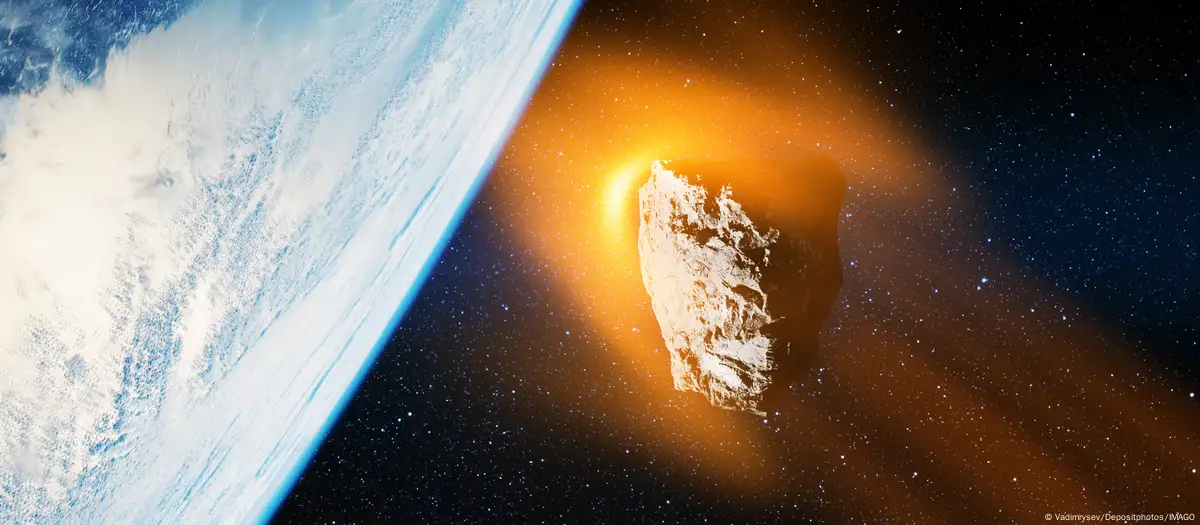
"People believe all sorts of things about how the world's going to end," said Matthew Billet, social psychologist at University of California, Irvine, US, in conversation with Science unscripted hosts, Conor Dillon and Gabriel Borrud.
"Some people mean human extinction," Billet said. "Some people mean the collapse of civilization or some sort of transformation of civilization as we know it, sometimes leading to a utopia, or a revitalization of humanity. And some people mean the complete destruction of Earth [by] a comet or a solar flare or something."
Most of us have had such thoughts about the end of the world. But what Billet and his colleagues wanted to find out was how these beliefs affect people's attitudes.
The researchers found that people's attitudes to global risks depend on four factors:
- How soon you think the world is going to end
- How you think it's going to end
- What role you personally have in its end
- What you think is going to happen after the end
"For example, if you think that the end of the world is in God's hands, if it's the fulfillment of a supernatural prophecy, that will predict that you are not willing to take on costly actions — costly and sometimes extreme actions — to prevent global risks, like climate change."
Likewise, if you feel there's no collective future, you're less likely to support policies that affect the whole community, such as higher taxes to fund efforts to decarbonize the atmosphere.
Studying the psychology of end-of-world thinking
The researchers conducted six pilot studies, with a total of 2,079 participants in the US and Canada, and a pre-registered study of 1,409 people.
Pre-registered studies aim to increase transparency and reduce risks of bias, such as "Hypothesizing After Results are Known" (HARKing) — that's when scientists adjust their original hypothesis to fit the results of their tests, rather than acknowledging the data discounts their hypothesis.
Participants came from a variety of religious backgrounds: Catholic, Mainline Protestant, Evangelical Protestant, Jewish, Muslim, and non-religious. They had a mean age of 50 years; genders appeared to be balanced; most participants identified as ethnically white (about a quarter total identified as Black/ African American, Hispanic/ Latino or Asian), and economic backgrounds were varied.
They were shown a list of five global risks:
- Economic (for example, supply chain collapse; debt crisis)
- Environmental (natural disasters; failure to mitigate to climate change)
- Geopolitical (nuclear war; collapse of nation states)
- Societal (global pandemic; erosion of social cohesion)
- Technological (artificial intelligence; disinformation)
Participants were then asked questions to determine how close the end of the world felt to them; whether humans would cause the end, or whether it would come through divine and/or cosmic intervention; whether they felt they had any control over events leading to the end of the world; and emotion valence, or how they felt about an apocalypse — was it good or bad?
They found that while the end of the world feels "distant and abstract" for the majority of people, one in three contemporary Americans considers an apocalypse as "personal and imminent."
"People who think the world is going to end in their lifetime tend to see global risks, like climate change, pandemics or AI as more severe, they fear them more than other people, and they want to take costly action to stop them," Billet said.
How end-of-world thinking helps us cope with uncertainty
There is hope we can draw from this study, but it depends on how you feel about the end of the world.
As Billet explained, some people believe nothing good will come after the end of the world: "Like if a nuclear war happens, that's it. Everyone is dead."
"But other people believe a utopia will come afterwards, that there'll be a restoration of the Earth, especially for the righteous," he told DW's Science unscripted hosts.
How you feel about the end of the world is personal. But end-of-world thinking is also a collective process, said Billet — we are all involved, no matter how we, as individuals, think or feel about the end of the world.
And because end-of-world thinking is a collective process, it can help people cope with the fragility of their groups, communities, and of our civilizations, he said.
"If you believe that you have a personal role to play in the apocalypse, like your actions matter — your good or bad behavior — and you believe that there'll be a utopia afterwards, then you can tolerate exposure to [global] threats that are distressing for [other] people," Billet said. "There's evidence that these beliefs help us cope with an uncertain world."
Edited by: Zulfikar Abbany
Editor's note: Matthew Billet of University California, Irvine, and his colleagues, Cindel J.M. White of York University, Canada, and Azim Shariff and Ara Norenzayan of the University of British Columbia, Canada, published their study "End of world beliefs are common, diverse, and predict how people perceive and respond to global risks" as a pre-print paper in January 2026 (https://osf.io/preprints/psyarxiv/hq59n_v1). It was not peer-reviewed at the time of the interview, which forms the basis of this article.