Ukraine: Zaporizhzhia nuclear plant's power cut off
Published June 11, 2026last updated June 11, 2026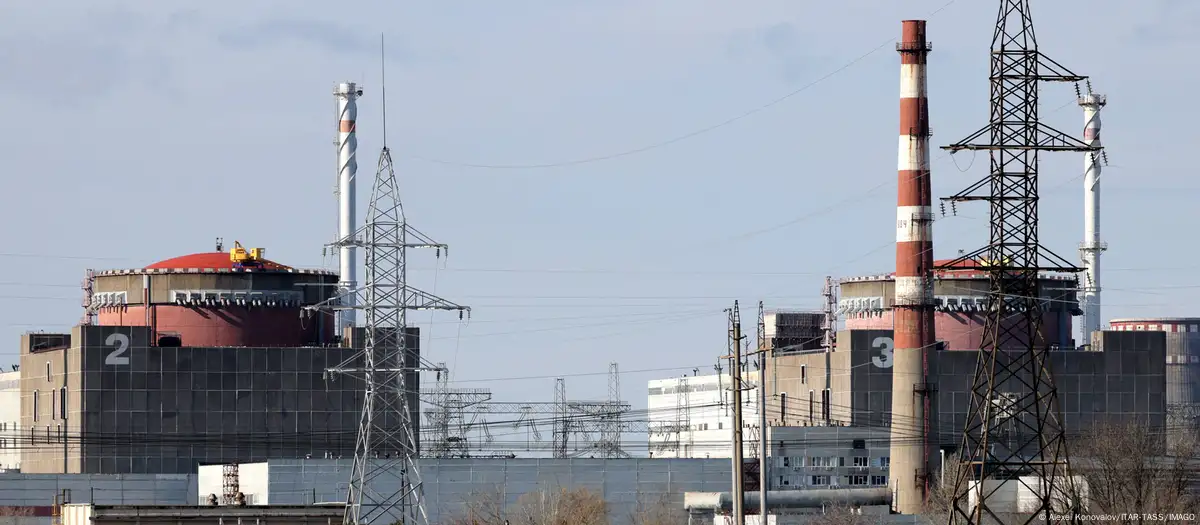
What you need to know
- A strike on Wednesday evening has shut off power supplied to the nuclear power plant at Zaporizhzhia in southeastern Ukraine
- The IAEA says no increased radiation has been detected
- Ukraine has struck an oil refinery in Krasnodar, sparking a fire and injuring at least three people, Russia says
- Ahead of an EU summit, German Chancellor Friedrich Merz has again pledged his country's support to Ukraine's defense against Russia
These updates have been closed. Thank you for reading.
Below is a round-up of the developments in Russia's war in Ukraine from Thursday, June 11, 2026:
Tired of missing our real-time updates? Click here to add us as a Preferred Source on Google. Then tap the "Star" or "Preferred" to keep DW News at the top of your feed.
French, UK, German ambassadors meet with Russian deputy foreign minister
Mikhail Galuzin, Russia's deputy foreign minister, met with the ambassadors to Russia from Germany, the United Kingdom and France on Thursday.
The three Western nations are members of the E3, an informal security alliance that has championed support for Ukraine in its defense against Russia's invasion.
During the meeting in Moscow, Galuzin told the three ambassadors that their nations were engaged in a "destructive policy."
The Russian Foreign Ministry said in a statement that Galuzin had provided an "objective assessment of the destructive policy pursued by their countries' leaderships regarding the Ukrainian crisis, which is aimed at maximally encouraging the Kyiv regime to continue the war against Russia on behalf of, at the expense of, and with the direct assistance of the Western 'coalition of the willing.'"
The meeting came after the leaders of the three nations had met with Ukraine's President Volodymyr Zelenskyy in London on Sunday.
At that meeting in Downing Street, Germany's Friedrich Merz, France's Emmanuel Macron, the UK's Keir Starmer and Zelenskyy agreed that the current frontline should serve as the basis for ceasefire talks between Ukraine and Russia.
They also agreed that Kyiv should have legally binding security guarantees backed by international troops.
IN DEPTH: Kyiv strikes key Russian supply lines
Russian troops rely on supplies via the land corridor to Crimea, but Ukrainian forces are now able to launch concentrated attacks along the critical route. Experts say this indicates growing Russian vulnerability.
Learn more about how Ukraine is disrupting Russian supply lines in this report by DW's Lilia Rzheutska.
Crimea: Petrol stations run out of fuel after Ukraine drone strikes
Gas stations on the Crimean peninsula, which Russia illegally annexed in 2014, are running out of fuel, according to reports by Reuters news agency on Thursday.
The shortages come amid a sustained Ukrainian drone campaign that has been targeting Russian supply lines to the peninsula in the Black Sea.
In Sevastopol, Crimea's biggest city, witnesses told Reuters that most local petrol stations had run dry. Even a rationing regime imposed in recent weeks has failed to keep the petrol flowing.
Long queues at gas stations were also reported in the town of Yevpatoriya, Reuters said.
The Russia-backed governor of Sevastopol, Mikhail Razvozhaev, said Wednesday that distribution of rationed petrol had had to be delayed. Recent Ukrainian drone attacks on supply routes mean that trucks have been unable to deliver fuel to the city.
Crimea relies on road and rail deliveries for its fuel supplies, which Ukraine has been increasingly targeting.
Overnight, the Sevastopol governor said 33 Ukrainian drones had been downed.
Meanwhile, the governor of the Russian-occupied Kherson region, to the north of Crimea, said Ukrainian drones had caused damage to bridges.
Germany's Merz pledges continued support for Ukraine
Chancellor Friedrich Merz has told the German lower house of parliament, the Bundestag, that his government will continue supporting Ukraine in its defense against Russia.
Merz said the goal of Germany and Europe's support for Kyiv is a "just and lasting peace that also takes our security interests into account."
The German leader added that Berlin would continue to back Ukraine "for as long as necessary."
Merz also said that Germany was "strengthening NATO's eastern flank" to counter Russia's "obvious readiness to escalate," while also remaining engaged in diplomacy to reach a negotiated settlement.
"A sustainable peace can only be achieved through negotiations involving Ukraine, Russia, the US and Europe — there is no other way," he said.
Ukraine, which "belongs in Europe and would one day be part of the European Union," is defending both its own freedom and that of the whole of the continent, Merz said.
During his speech, the center-right politician also attacked the far-right Alternative for Germany (AfD) party for its alleged support for Russia, after some AfD lawmakers visited Russia in recent weeks.
The AfD has long opposed Germany and Europe's staunch backing of Ukraine, calling for an end to weapons deliveries and the lifting of sanctions against Russia.
"You laugh about it, about the fate of millions of people in this country, and travel to Moscow for your champagne receptions. Bon voyage," Merz said.
AfD leader Alice Weidel accused Merz of wanting to drag Germany into the war. "No, Ukraine can never become a member of the European Union and NATO! Full stop," she said during the heated debate.
Ukrainian drone strike sparks fire at large Russian oil refinery
Ukraine hit a major oil refinery in the southern Russian city of Krasnodar overnight, local officials said Thursday.
The drone attack, the latest Ukrainian strike targeting Russian energy sites, sparked a fire that has since been extinguished.
Ukraine has repeatedly targeted the refinery at Afipsky, which is located some 400 kilometers (around 250 miles) from the frontlines in eastern Ukraine.
Kyiv says it targets Russian energy facilities as part of its attempts to disrupt Russian fuel supplies and dent Moscow's ability to finance its war effort.
No injuries were reported at the refinery, but Krasnodar Governor Veniamin Kondratyev said at least three people were injured by falling drone debris that landed on residential buildings in the region.
WATCH: Ukraine strikes hit fuel supplies and economy in Crimea
Ukrainian forces are increasing their assaults on energy infrastructure in Crimea. Russia annexed the peninsula illegally in 2014 and has been using it as a base to launch attacks and supply troops in southern Ukraine.
Zaporizhzhia nuclear plant cut off from all off-site power: IAEA
An overnight strike has cut off power supplies to the Zaporizhzhia nuclear power plant in Russian-occupied southeastern Ukraine, the International Atomic Energy Agency (IAEA) said Thursday.
In a statement, the IAEA said no radioactive release was detected and that radiation levels were normal.
The UN's atomic energy agency said the nuclear plant — the largest in Europe — was relying on backup diesel generators to "power the cooling of its six shut-down reactors and maintain other essential nuclear safety functions."
"The latest loss of off-site power once again highlights the extreme fragility of the electrical grid and the constant dangers to nuclear safety during the war," IAEA Director General Rafael Grossi said.
It was not clear which country was responsible for the strike on Wednesday evening, which hit an electrical substation that powers the plant.
This was the 19th time the plant has been cut off since the start of Russia's full-scale invasion in February 2022. Russian forces occupied the area around the plant shortly afterwards.
Both Russia and Ukraine have repeatedly accused each other of risking a nuclear disaster with strikes in the plant's vicinity.
Welcome to our coverage
Thank you for joining us as we bring you the latest developments in Russia's war against Ukraine.
The nuclear power plant at Zaporizhzhia, the largest of its kind in Europe, has again had its power supplies cut off after a strike hit the area on Wednesday evening.
While no radiation leak has been detected, the International Atomic Energy Agency (IAEA) says the incident highlights the "constant dangers to nuclear safety" posed by the war, which is in its fifth year.
Ukraine has continued its recent trend of striking energy targets inside Russia, hitting an oil refinery in the southern city of Krasnodar and supply lines leading to the Crimean peninsula.
Stay tuned as we bring you the details on those incidents and plenty more.