Palaces of power
All over the world, heads of state and government erect buildings intended to symbolize authority and permanence, from Donald Trump's White House ballroom to Recep Tayyip Erdogan's massive presidential palace in Ankara.
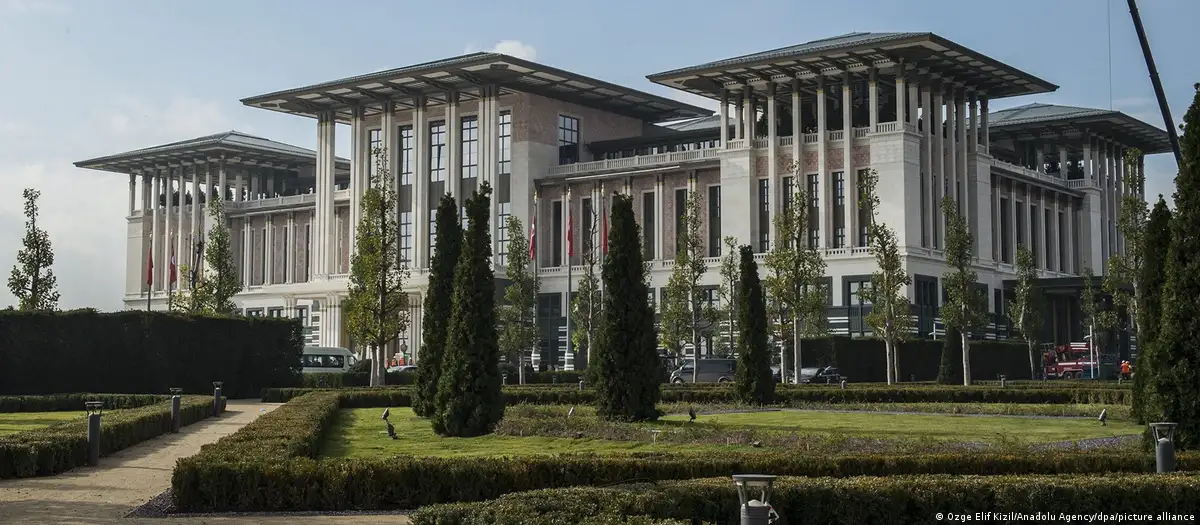
Ankara: Neo-Ottoman magnificence without planning permission
The presidential palace in Ankara was commissioned by Prime Minister Recep Tayyip Erdogan, who would later become Turkey's president. It was built from 2011 to 2014 in a modern Ottoman style. The site, in a recreation area, was opposed by many, and Turkey's highest administrative court ruled that the construction did not comply with the law. Erdogan, however, simply ignored the decision.
Washington, DC: That was the East Wing of the White House
US President Donald Trump has had the White House East Wing demolished to construct a luxurious ballroom right beside his official residence. This section, built in 1942, was not as historic as the White House itself; nonetheless, preservationists are appalled. The administration was able to exploit weaknesses in the oversight system, and the ballroom is being funded by private donations.
Bucharest: A dictator's gigantomania
The "People's House," constructed in the 1980s, is one of the biggest buildings in the world by surface area. It later became known as the "House of the People." Romania's Communist president, Nicolae Ceausescu, demolished large swaths of Bucharest's old town to build it. Ceausescu was executed after the revolution in 1989. Today, the building houses the Romanian parliament.
Nameless city in the Egyptian desert
A "new administrative capital," intended to relieve the pressure on Cairo, is being built in the desert around 50 kilometers to the east. The new city, an intiative of President Abdel Fattah al-Sisi, doesn't yet have a name, but the tallest building in the world is to be built there by 2030. Critics condemn the massive outlay by the poverty-stricken country — an estimated 60 billion euros.
New Delhi: Old and new side by side
Like many buildings in India's administrative quarter of Central Vista in New Delhi, the parliament building (at the back of the photo) dates back to the British colonial period. A new, much larger building (in front) was inaugurated in 2023. The whole of Kartavya Path, a three-kilometer-long boulevard, is being redesigned: A prestige project initiated by the Indian president, Narendra Modi.
Ciudad de la Paz: Move to the jungle
Teodor Obiang's presidential palace is already finished, but an entire city is being built around it in the rainforest of Equatorial Guinea. This is to be the West African country's new capital. The dictatorial Obiang has ruled the country since 1979, and is Africa's longest-serving leader. To date, the planning and financing of his "City of Peace" have been obscure.
Sejong: South Korea's new capital has yet to be accepted
Many of the buildings in this model of Sejong have already been built. The idea of moving South Korea's capital to the center of the country came in 2003 from the then president, Roh Moo-hyun. But the project has been plagued by political and legal setbacks. Many ministries have already moved, but officials are reluctant to leave bustling Seoul.
Berlin: Chancellery still too small?
The Office of the Federal Chancellor in Berlin, dubbed the "Washing Machine," is said to be the biggest seat of government in the world. Yet the building, opened in 2001, is apparently too small: There are plans to build an extension, costing €777 million ($900 million). The Federal Audit Office has criticized the cost, and it is also controversial at a time when budgets are tight.
Berlin: Different times, different palaces
In 1950, East Germany's Communist leadership demolished the war-damaged Berlin palace of the Hohenzollern monarchy. A new one arose in its place: The Palace of the Republic, nicknamed Palazzo Prozzi, seen here in a photo from 1980. This too is now history: It was torn down in the 2000s, and the Berlin Palace was partially rebuilt. It now houses the Humboldt Forum museum.