Germany news: More people lack health care, aid group says
Published December 12, 2025last updated December 12, 2025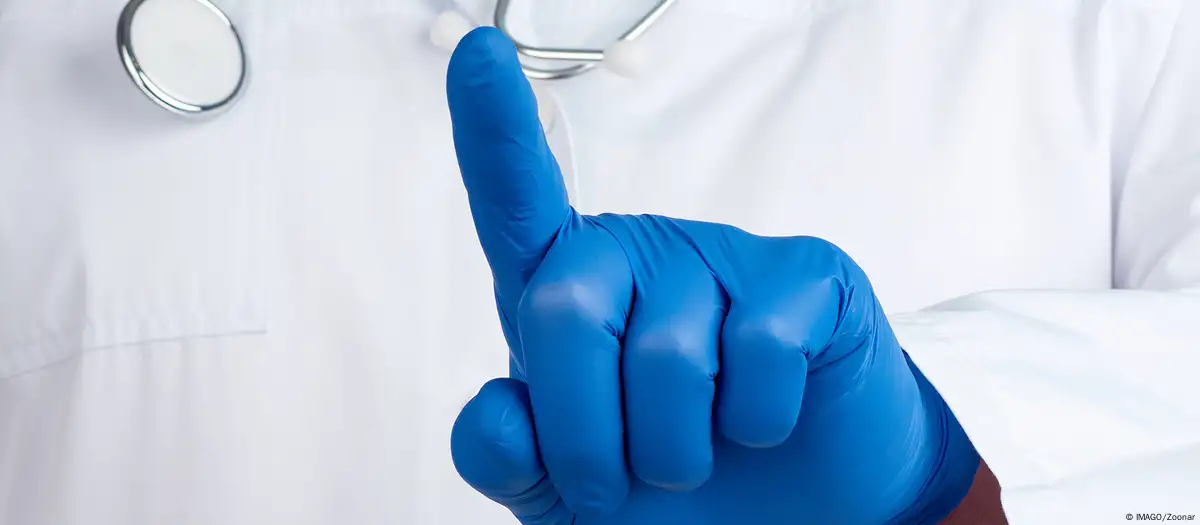
What you need to know
- Aid group Doctors of the World says many people in Germany still have little or no access to medical care
- The group cites rising numbers of uninsured patients and gaps for those with insurance debt
- Polling shows that most Germans reject greater US involvement in European politics
- Russian ambassador to Germany summoned over alleged 'hybrid' attacks
This blog is now closed. Below is a roundup of the main headlines in Germany on Friday, December 12.
German arms exports sink in 2025
German arms exports decreased by more than half in the first half of 2025. According to figures published by the Federal Ministry of Economics, from January to June, exports of military goods worth €3.2 billion ($3.7 billion) were approved, compared to €7.5 billion in the first half of 2024.
There was a decline indeliveries to Ukraine, while arms exports to Israel rose.
But Ukraine still remains the largest arms delivery recipient with around €760 million or 24% or arms deliveries. Sweden, Denmark, Qatar and Estonia are also among the most important recipient countries.
Markus Söder reelected head of CSU
Bavarian Premier Markus Söder was reelected head of the Christian Social Union (CSU) with a weak result of 83.6% on Friday.
It was his worst result as leader of the CSU, the smaller Bavarian sister party to Chancellor Friedrich Merz's Christian Democratic Union (CDU).
There was no one running against him to lead the conservative Bavarian party. At his last election two years ago, Söder received 96.6% of the vote.
In his speech, Söder attacked the far-right Alternative for Germany (AfD) party and reiterated that he would not cooperate with the anti-immigrant party.
"We are being attacked like never before. Our prosperity model, our welfare state model, our democracy model. It is time to defend ourselves," Söder said. "Many things stand on shaky ground. What was once indisputable is now wavering."
Merz will meet with Zelenskyy next week
German Chancellor Friedrich Merz is scheduled to meet with Ukrainian President Volodymyr Zelensky and other European and NATO leaders in Berlin on Monday, a German government spokesman said.Monday's meetings will center on talks regarding the economy and proposals to end the war in Ukraine, the spokesman said.
It all comes as the US continues to push for a peace plan that is seen as favoring Russia.
Zelenskyy and Merz will be joined later in the evening by numerous European heads of state and government, including EU and NATO leaders.
The discussions will likely center on the set of security guarantees the US and others would offer Ukraine in the event of the passing of a peace agreement.
Authorities seize over 11,000 rough diamonds at Frankfurt airport
Custom authorities at Frankfurt Airport discovered almost 11,300 rough diamonds in the luggage of a 53-year-old man traveling from Angola.
The value of the diamonds was not immediately clear as the jewels must be appraised by an expert.
The uncut gems had been hidden in a false bottom inside the suspect's carry-on bag, the Frankfurt am Main Customs Investigation Office said.
To bring rough diamonds into Germany, a Kimberley certificate is required. The document certifies that the diamonds are conflict-free, to prevent the entry of illicit stones into the market. The scheme was set up to crack down on the trafficking of illegally mined diamonds, which have often been used to finance civil wars on the African continent.
The man did not produce a Kimberley certificate and had not declared the gems, so authorities confiscated them and proceeded to count them by hand.
The 53-year-old was brought before a judge on Thursday, who ordered him to be remanded in custody.
Germany summons Russian ambassador over 'hybrid' attacks
The German government has accused Russia of carrying out repeated hostile actions against Germany, including acts of sabotage, cyberattacks and disinformation campaigns during elections.
Read more about why Berlin has summoned Russia's ambassador to Germany.
Company insolvencies rise further in Germany
The number of company insolvencies in Germany continued to rise in November.
The Federal Statistical Office said on Friday that filings were up 5.7% from a year earlier, based on preliminary data.
Around 18,000 companies filed for insolvency in the first nine months of the year, the highest level since 2014.
The German Chamber of Commerce and Industry (DIHK) said the causes were high costs, weak demand and widespread uncertainty.
It added that there was little sign of relief in the short term and warned insolvency figures were likely to remain high into early 2026.
DIHK chief analyst Volker Treier said small and medium-sized firms were under particular strain.
He cited a recent DIHK business survey showing 30% of companies with fewer than 20 employees expected their situation to worsen, noting these firms account for about 85% of all businesses in Germany and warning their failure would have serious consequences for jobs and regional economies.
From January to September, the highest insolvency rates per 10,000 companies were recorded in transport and warehousing, followed by hospitality and construction.
The figures come after last week it was revealed that there had been a surge in shop insolvencies across Germany.
Services push German inflation to 2.3% in November
Consumer prices in Germany rose higher in November, driven by the service sector, figures released on Friday show.
The Federal Statistical Office says the inflation rate stood at 2.3% year-on-year, confirming preliminary figures, while energy and food prices eased overall price pressures.
Prices for services, including public transport and social institutions (e.g. private care homes) were up, while energy prices were down slightly, compared to November 2024.
Food prices rose at a below-average rate. Butter, olive oil, and potatoes were cheaper than a year earlier, while sweets, especially chocolate, became more expensive, as did meat and meat products, particularly beef.
Here are the specific figures:
- Services +3.5%
- Rail fares +11.9%
- Social institution services +7.6%
- Energy prices -0.1%
- Electricity prices -1.5%
- Natural gas +0.5%
- Food prices +1.2%
- Chocolate +19.4%
- Meat and meat products +4.2%
- Beef and veal +13.8%
- Butter -22%
- Olive oil -17.4%
- Fresh vegetables -4.2%
- Potatoes -13.3%
- Alcohol-free drinks +6.4%
- Coffee (and similar products) +21.1%
Inflation had been 2.4% in September and 2.3% in October.
Statistics office president Ruth Brand said the 2.3% rate in November showed consumer price growth had stabilized toward the end of the year.
Germans reject greater US role in European politics
Most Germans have rejected greater US involvement in the politics of European countries, according to a new ZDF Politbarometer poll.
The findings follow the release of a US security strategy that accused Europe of losing democracy and freedom of expression.
The document said the goal should be to help Europe correct its current course and described the growing influence of "patriotic" European parties as grounds for optimism.
Forschungsgruppe Wahlen surveyed 1,295 eligible voters between December 9 and December 11 by phone and online.
Here's more on what the survey's findings show:
- 90% of respondents said it was not acceptable for the US government to seek more influence in European politics, while 8% approved
- A clear majority has also questioned Washington’s reliability on security
- Some 84% said the United States under President Donald Trump was no longer a dependable partner for Europe's security, down from 89% during Trump's first term in June 2020
- Views on Ukraine have remained starkly divided, with 44% of respondents believing Ukraine should accept giving up Russian-occupied territory
- 42% said Kyiv should continue fighting to retake those areas
- A majority of Germans are skeptical about a possible ceasefire
- About 78% doubt Russian President Vladimir Putin is seriously interested in a lasting truce
- 16% believe he is, including an above-average share of supporters of the far-right Alternative for Germany (AfD).
Report says many in Germany lack access to medical care
Many people in Germany have had little or no access to medical care, according to a report released by the aid group Doctors of the World.
Christian Stegmüller, who heads the organization’s domestic programs, said Germany was failing to guarantee the right to medical care for everyone living in the country, pointing to a rising number of uninsured people and gaps in care for those with health insurance debt.
The report, published on Friday, is based on data from Doctors of the World clinics and mobile treatment units in Berlin, Hamburg, and Munich.
In those cities, 2,254 patients were treated and advised free of charge last year in 7,403 consultations, including 1,133 first-time patients.
The vast majority of patients, about 97%, were at risk of poverty, while 88% had no fixed residence and 26% were homeless.
Living on the streets or in shared shelters was linked to a higher incidence of illness, with respiratory diseases the most commonly diagnosed.
About 88% of patients were uninsured, while 9% had limited coverage, mainly because of unpaid insurance contributions or restrictions under asylum benefit rules.
People who fall behind on contributions for two months often receive only limited care, for example when their electronic health card is blocked.
Welcome to our coverage
Guten Tag from DW's newsroom in Bonn, where there's no snow but the Christmas market makes for a winter wonderland in any case.
Danke schön for joining us, as a charity says an increasing number of people in Germany are without proper health insurance.
The Doctors of the World group says Germany is failing to guarantee the right to medical care for everyone living in the country.
It pointed to an uptick in the number uninsured people relying on its services and gaps in care for those with health insurance debt.
Follow us here for this and the latest headlines throughout the day.