Tourists flock to a Brazilian favela for viral videos
A viral video trend on social media is reigniting a heated debate about favela tourism. Critics say the trend is glamorizing poverty, but some residents are happy for the attention — and the income tourists bring in.
Social media trend
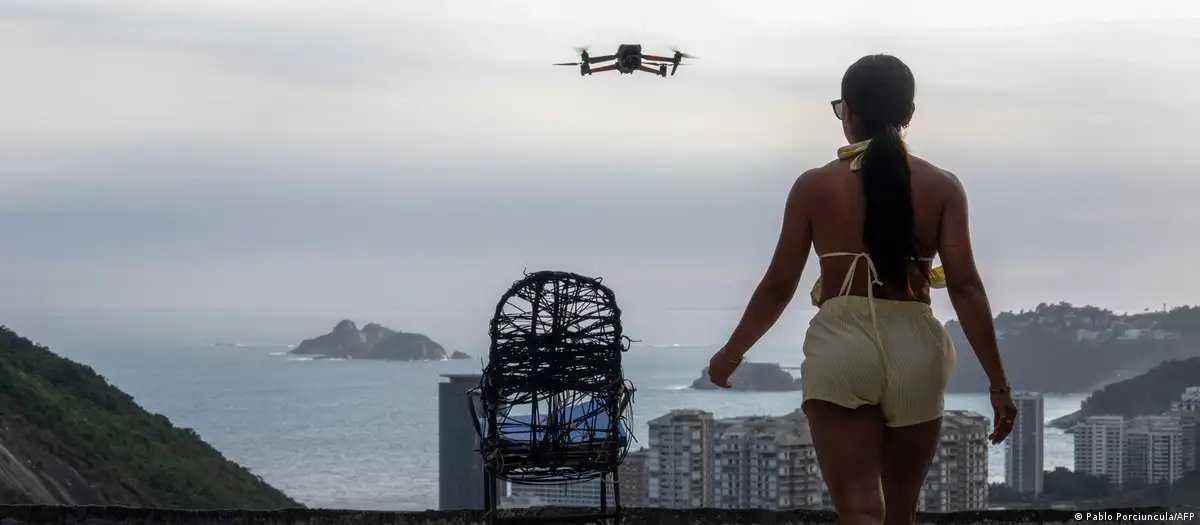
The Brazilian fashion influencer Ingrid Ohara followed a viral social media trend, posing for aerial drone footage on a favela rooftop known as Porta da Ceu (Door to Heaven). The trend has stirred controversy over whether tourists should be able to visit impoverished Brazilian neighborhoods.
Rooftop photoshoot
Rocinha is Rio de Janeiro's largest slum. Here, tourists can pay to strut along a concrete rooftop runway and be filmed by a drone that then pans out to breathtaking aerial shots of the surrounding houses. Chasing the viral social media trend costs visitors €20 to €60 ($23-$69). That's roughly a third of what favela residents earn in a month.
Mirror, mirror on the wall ...
Tourists waiting in line for their concrete catwalk have an opportunity to touch up their looks in a mirror. Here in Rocinha at the famous Porta da Ceu viewpoint, lines can grow so long that visitors have waited up to two hours for their big performance.
Dance and self-defense
Visitors touring the Rocinha favela can also watch a capoeira performance by local dancers. This Afro-Brazilian dancelike martial art is a UNESCO Intangible Cultural heritage. Its original elements were brought to Brazil by enslaved people and reinterpreted within the enslaved community as a sort of self-defense veiled as dance and acrobatics.
Viral trend stirring controversy
The trendy online videos have stirred controversy over responsible tourism. By centering themselves in high-res, energetic videos situated in low-income neighborhoods plagued by drug-related violence, tourists are being accused of glamorizing poverty and crime. In 2017, a Spanish tourist was killed in a gunfight between police and drug traffickers.
Guided tour with local residents
After the incident, all tourism to the area stopped for a while. When it resumed, the tour guide Renan Monteira developed a new strategy with local community representatives. Together, they created fixed tourist routes, guarded by local residents.
Coordinating via app
Monteiro also developed an app that helps guides track each other's positions and thereby steer the stream of tourists through the mazelike streets. When police raids against drug traffickers become known, this app can be also used to cancel or postpone tours, adding an extra layer of safety for tourists.
A new start for favela residents?
For many residents, growing up in a favela is part of their heritage. This is why they are eager to show visitors the sunny sides of their lives. And tourism is not only a great way to educate outsiders: It's also lucrative. Renan Monteiro has trained 300 guides and 10 drone pilots. Across the favelas Rocinha and Vidigal, there are a total of 26 rooftops for tourists to strut their stuff.
A viral video trend on social media is reigniting a heated debate about favela tourism. Critics say the viral visitors are romanticizing poverty, but some residents are happy for the attention — and the income that tourists bring.