Nigeria bets on UK port investment
March 27, 2026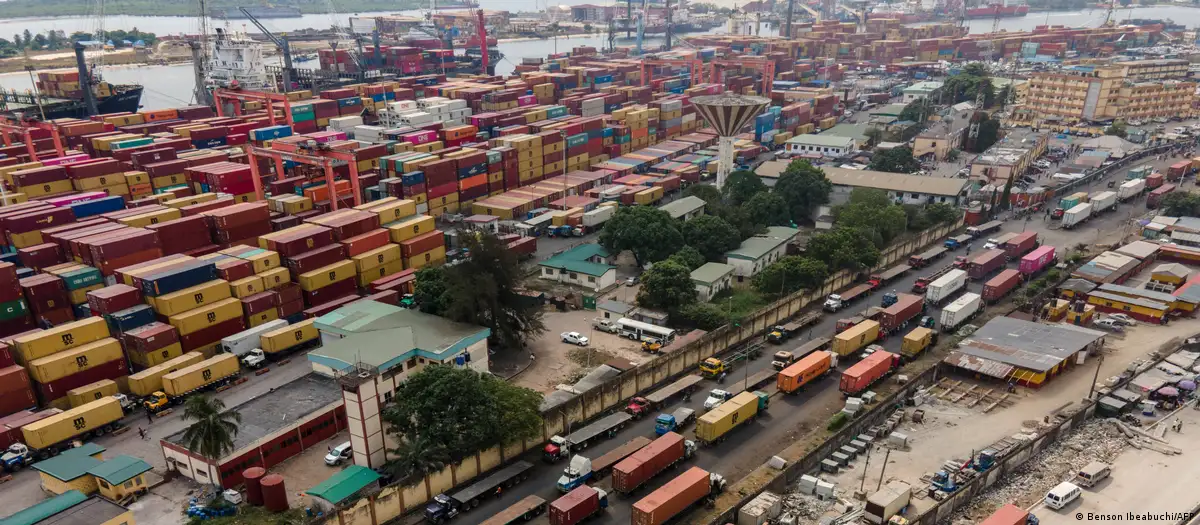
Last week, Nigerian President Bola Tinubu visited the United Kingdom, which has agreedto help refurbish Nigeria's major trading ports. These include the Apapa Quays, built a century ago when the West African country was still a British colony, and the Tin Can Island port, both near Lagos.
The £746 million (€860 million) investment deal, backed by the UK Export Finance, would be "transformative," says Adegboyega Oyetola, the country's Minister of Marine and Blue Economy.
He said the upgrade of the ports would lay "the foundation for a new era of efficiency, transparency and competitiveness in Nigeria's port system."
It's hoped that the turnaround times for vessels, and cargo dwell times within the ports that currently average between 18 and 21 days — far above the roughly four-day benchmark — could fall sharply.
The two ports are Nigeria's busiest and handle more than two-thirds of goods trade. But for many years, congestion, delays, and high transaction costs, including indiscriminate extortion along the ports' corridors, have hampered businesses and contributed to rising prices.
While Nigerian authorities boasted that modernized infrastructure, such as automated processes replacing paperwork-heavy procedures, and expanded capacity would phase out the longstanding bottlenecks, analysts say problems extend beyond infrastructure.
Nigeria's creaking harbor infrastructure
Nigeria's ports handle the bulk of its imports and exports, making them central to the country's economy. The country has seven major seaports, and Lagos ports handling over 80% of imports. Decaying infrastructure, shallow channels limiting vessel size, and high security costs and bureaucratic delays often force importers to use more efficient ports in neighboring Benin, Togoand Ghana.
This is despite Nigeria having a significantly longer coastline (about 853 kilometers) than that of its regional neighbors, and a population many times larger. In comparison, Ghana has 560 kilometers, Benin has 121 kilometers, and Togo has just 56 kilometers of coast.
Local media reports Nigeria loses about €11 million per day due to inadequate infrastructure and system inefficiencies at its ports, especially the Apapa Quays and the Tin Can Island ports.
"Right now, Nigerian ports are viewed as expensive chokeholds rather than efficient gateways. Now while the infrastructure is a genuine issue, the core problems are systemic. We cannot pave over corruption, bureaucratic rent-seeking or the cartels that control truck access," Ikemesit Effiong, managing partner at consultant SBM Intelligence, told DW.
Big Nigeria-UK investment deal
Minister Adegboyega Oyetolasaid the agreement would upgrade the ports with digitalized and automated processes to enable faster clearance of imports and exports while also reducing "demurrage and logistics costs for businesses."
As part of the deal arrangements, UK companies are set to earn at least €272 million, with a contract for British Steel worth about €80 million to supply 120,000 tonnes of steel billets. The deal has drawn concerns from critics, including the opposition coalition African Democratic Congress (ADC), who say it is disproportionately skewed in the UK's favor.
But analyst Ikemesit Effiong points out that for Nigeria the benefits will be "contingent on whether we actually have the operational sovereignty to ensure the ports serve our trade interests, and the operations are managed to account for our trade, export and import interests rather than just becoming yet another concessionary cash cow."
Will UK investment fix Nigeria's ports?
Analysts and stakeholders believe a successful rollout of the project could have an outsized effect on the wider Nigerian and West African economy.
"Nigeria has the market size, the location, and trade potential to be a major logistics hub in West Africa. But the ports have not really matched that ambition. If Lagos ports become more efficient, for example, and we have more predictable and less congested ports, it makes us more competitive," Victor Ejechi, a Lagos-based analyst, told DW.
He says an efficient port system would transform the country into a regional hub for cargo bound for neighboring landlocked countries.
But without addressing the longstanding issues stunting the ports, Ikemesit Effiong fears the port deal could exacerbate existing problems.
"If we fix the concrete infrastructural issues, but not the corruption and the cultural issues, I think the risks are existential for the wider economy," he told DW.
Ikemesit explains: "We would have deepened debt for assets that will still underperform. Manufacturers will continue to exit the country for the likes of Tema and Lome and the cost of import dependence will become even more punitive for Nigerian consumers."
Edited by Cai Nebe