Iran vows retaliation for death of security chief Larijani
Published March 18, 2026last updated March 18, 2026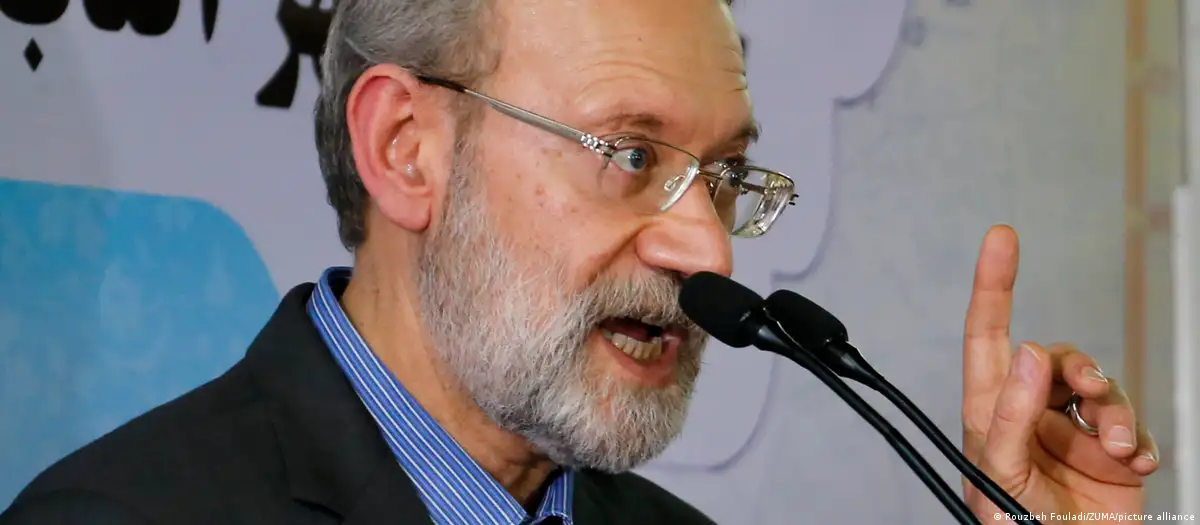
What you need to know
- Iran launches missiles with multiple warheads at Israel in retaliation for the killing of security chief Ali Larijani
- The Iranian missile attacks kill at least two people in central Israel
- The US says it used 'bunker buster' bombs against Iranian missile sites along the strategic Strait of Hormuz
- Israel launches more strikes on Beirut, killing six
- The Israeli military also targets Hezbollah sites in southern Lebanon
Here is a roundup of the main developments from the US-Israel war with Iran on Wednesday, March 18:
US hits Iranian missile sites with 'bunker buster' bombs
The US military said on Tuesday it struck Iranian missile sites near the Strait of Hormuz using deep-penetrating "bunker buster" bombs.
"US forces successfully employed multiple 5,000-pound deep penetrator munitions on hardened Iranian missile sites along Iran's coastline near the Strait of Hormuz," US Central Command (CENTCOM), the military's regional command, said in a statement on X.
"The Iranian anti-ship cruise missiles in these sites posed a risk to international shipping in the strait."
The specialized munitions, some of the most powerful in the US arsenal, are used against reinforced facilities or underground bunkers.
The strikes come as shipping through the waterway has largely ground to a halt following Iran's threats to target vessels amid the ongoing conflict with the United States and Israel.
Oil prices have soared with the closure of the traffic through the strait, a transit point for a fifth of the global oil trade.
Iranian president's son warns of defeat if senior officials' killings continue
Yousef Pezeshkian, son of Iran's president, Masoud Pezeshkian, has warned that Iran will be defeated if Israel's repeated killings of its senior officials is allowed to continue.
"We should not have allowed the enemy to be able to carry out another successful assassination," he wrote.
Pezeshkian, who serves as a government advisor, warned that Tehran "will suffer a defeat" if it failed to halt such assassinations.
Iran's Supreme Leader Ali Khamenei was killed in an air strike on February 28.
Iran reports projectile hitting Bushehr nuclear power plant
The UN's nuclear watchdog said on Wednesday it received a report from Iran that its Bushehr nuclear power plant complex had been hit by a "projectile."
In a post on X, the International Atomic Energy Agency (IAEA) said that there were no injuries and the plant suffered no damage.
It did not clarify what sort of projectile had hit the power plant or who fired it.
IAEA chief Rafael Grossi renewed his call for "maximum restraint during the conflict to prevent risk of a nuclear accident."
Bushehr is Iran's only operational nuclear power station .
The plant is operated by Russian technicians from Rosatom using Russian-made, low-enriched uranium.
Rosatom CEO Alexey Likhachev told Russia's state-run Tass news agency that there were no casualties among the personnel and added that "the radiation situation at the site is normal."
Iranian missile barrage kills two near Tel Aviv
An Iranian missile barrage killed two people near Tel Aviv early Wednesday, medics said.
The missile strikes were Tehran's retaliation after Iran's most senior security official, Ali Larijani, was killed in an Israeli attack, Iran's Revolutionary Guards said.
Police said a residential building in Ramat Gan, a city just outside Tel Aviv, was likely struck by a cluster munition, where Israel's Magen David Adom emergency medical service said two people were found dead.
Falling munitions also hit multiple sites across central Israel and damaged a railway station, authorities said.
Israel's national railway company said in a statement that shrapnel caused damage to platforms at Tel Aviv's main station. No casualties were reported.
The statement announced that trains were "temporarily suspended across the country."
Israel's police said its bomb disposal experts were "operating at several impact sites involving munition debris within the (Tel Aviv) district."
Iran confirms Ali Larijani's death: What to know
Iran confirmed on Tuesday that senior security official Ali Larijani was killed in an Israeli strike, hours after Israel announced his death.
"Ali Larijani, Secretary of the Supreme National Security Council, has been martyred," the Fars News Agency wrote on X, translated from Persian.
The Israeli military said Gholam Reza Soleimani, the head of the Basij volunteer paramilitary force, was also killed overnight.
The 67-year-old Larijani was widely believed to be the country's de facto ruler following the killing of Supreme Leader Ayatollah Ali Khamenei.
Larijani was an advisor to the Ayatollah on strategy in nuclear talks with the Trump administration and took part in negotiations in Oman in the weeks before the war.
In response to Larijani's killing, Iranian army chief Amir Hatami vowed a "decisive and regrettable" retaliation.
Welcome to our coverage
Thank you for joining us as we bring you the latest on day 19 of the US-Israeli war with Iran.
Here is a recap of the main developments of the previous day:
- Iran confirmed the death of top security official, Ali Larijani
- President Donald Trump scolded NATO allies for not heeding his call to reopen Hormuz, calling their decision a 'very foolish mistake'
- Trump then dropped his push for allies to help reopen the Strait, saying the US doesn't "need that help"
- Germany's Foreign Minister Johann Wadephul said "there will be no military solution" in Iran
- Joe Kent, the director of the US national counterterrorism center, resigned over the war with Iran
- Drones and rockets continue to target Gulf states