Jakarta topples Tokyo as world's biggest city
Indonesia's sprawling capital Jakarta is a city of contradictions, where gleaming skyscrapers stand right next to slums. It's also a city struggling with air pollution, housing shortages and growing social inequality.
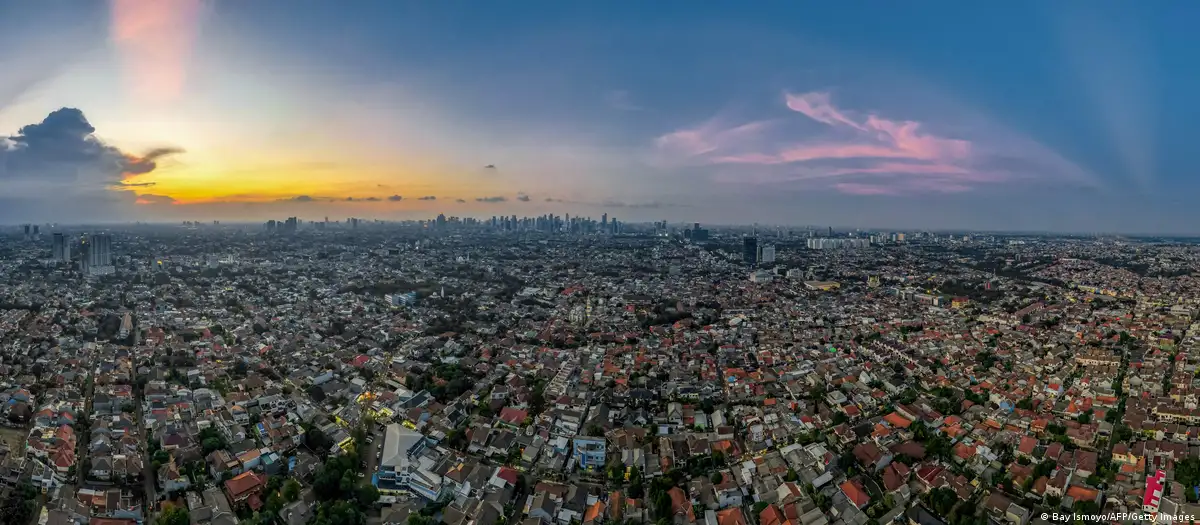
Surreal view
The view from Jakarta's tallest building — the Autograph Tower in the Thamrin Nine complex — is breathtaking. According to a new UN report, Jakarta is now the world's most populous megacity, with nearly 42 million inhabitants. While this rapid growth has brought economic opportunities, it has also put a strain on infrastructure, the environment and quality of life.
Contrasts in confined spaces
In Jakarta, luxury residential complexes and glass office towers are often located just a few meters away from informal settlements. According to a study, the population density in Jakarta is now 22,000 people per square kilometer. As a result, social contrasts are particularly evident. While some live in modern high-rise buildings, many others struggle to find affordable housing.
Poor air quality
The growing population is also having an impact on urban traffic. Congested roads and traffic jams are commonplace, degrading air quality. According to a recent study by the Republic of Indonesia Defense University, particulate matter pollution is critical in densely populated areas such as central Jakarta.
Limited green space
When it comes to green spaces, Jakarta has a lot of room for improvement. Although there are some local gardening projects, these aren't nearly enough. According to AI-powered satellite monitoring by Husqvarna Urban Green Space Insights (HUGSI), which monitors green spaces and their development, green spaces account for only 18% of Jakarta's total area. Of this, 14% is covered by trees.
Growth with consequences
Immigration accounts for the largest share of the high population density. The birth rate in Jakarta is comparatively low, and the mortality rate is not above average. However, it's not only people moving to Jakarta, but also parts of the population moving to suburban areas favored by highly qualified people.
Severely struck by climate change
The Indonesian capital isn't just struggling with overpopulation, but is also suffering the consequences of climate change. Many people living in the densely populated coastal areas must deal with regular flooding, or live in floating houses. The combination of sinking land due to excessive groundwater extraction, rising sea levels and heavier rainfall has put Jakarta particularly at risk.
A new capital?
Indonesia's would-be new capital Nusantara, on the island of Borneo, is intended to take the pressure off Jakarta. The plan is to build a completely new "smart forest city" with plenty of green space, a sustainable energy supply, modern infrastructure and an intelligent transport system. But critics say the project is politically motivated and serves mainly to promote the government's image.