In pictures: How the US attack on Venezuela unfolded
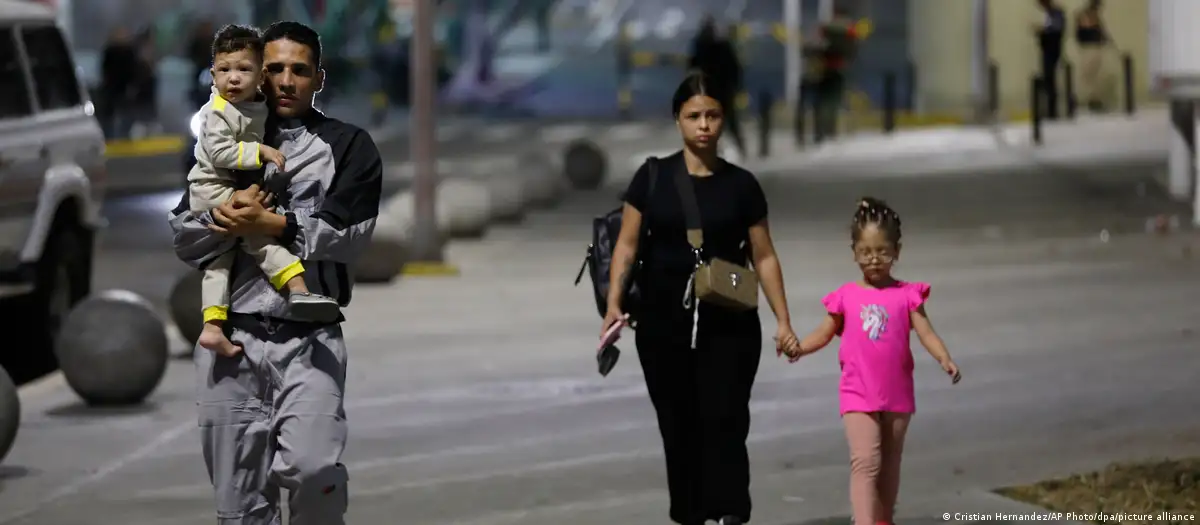
At first there was panic, as rumors spread on social media and Venezuelans feared a larger attack. Later, the capital, Caracas, was deserted as locals stayed home and shops closed.
Just 30 minutes to attack
The American attack began around 2 a.m. and lasted about 30 minutes, consisting of precision airstrikes, electronic jamming and targeted ground operations. Afterwards, Venezuela declared a state of emergency.
Targeting Fuerte Tiuna base
The primary target of the attack was Fuerte Tiuna, the country's largest military complex. It is considered the strategic heart of Venezuela's armed forces and a symbol of political power. Venezuelan politicians have said President Nicolas Maduro was at home on the base when the attack happened.
Rude awakening
Maduro and his wife Cilia Flores (pictured in January 2025) were reportedly asleep when the attack began, before they were arrested and immediately taken out of the country. Maduro has long been accused of corruption, manipulating election results and serious human rights violations.
Panic on the streets
There was widespread panic immediately after the explosions, as many feared a large invasion. Rumors on social media spread rapidly, with official information only released after a delay.
Morning after
As the sun came up on January 3, the results of the US attacks became clear. According to US reports, several military facilities were hit, as was the country's main port of La Guaira.
Military attempts to stabilize
Soldiers secured key roads, government buildings and media outlets. The armed forces were meant to signal stability and to prevent any sort of power vacuum. Still, it remains unclear how united the country's military actually is.
Caracas paralyzed
The morning after the US military operation, the Venezuelan capital, Caracas, seemed deserted. Schools remained closed, shops didn't open and normally crowded highways were empty.
Vice president in focus
In a statement on Saturday, Vice President Delcy Rodriguez (seen here in August 2025) said the whereabouts of Maduro were not known and demanded a "sign of life" from the US. Rodriguez is seen as close to Maduro, and focus is likely to shift to her as the country's political structures are evaluated.
Divided society
Maduro's supporters began protesting in Caracas on Saturday, calling the US actions a "coup from abroad" and demanding the return of their leader. Venezuelan society is divided on the Maduro regime, and the protests show that he still enjoys some support.
Celebrating in Miami
In Miami, Venezuelans in exile celebrated the fall of Maduro. For many, it was an emotional, hopeful moment after years of sanctions, political repression and forced exile.
Hopes and fears
Venezuelan exiles also celebrated in Chile, as well as in other countries. But jubilation over the potential end of the Maduro era is mixed with skepticism: Will there even be political change? Who will now take power?