Germany: Stranded humpback whale moving again
March 30, 2026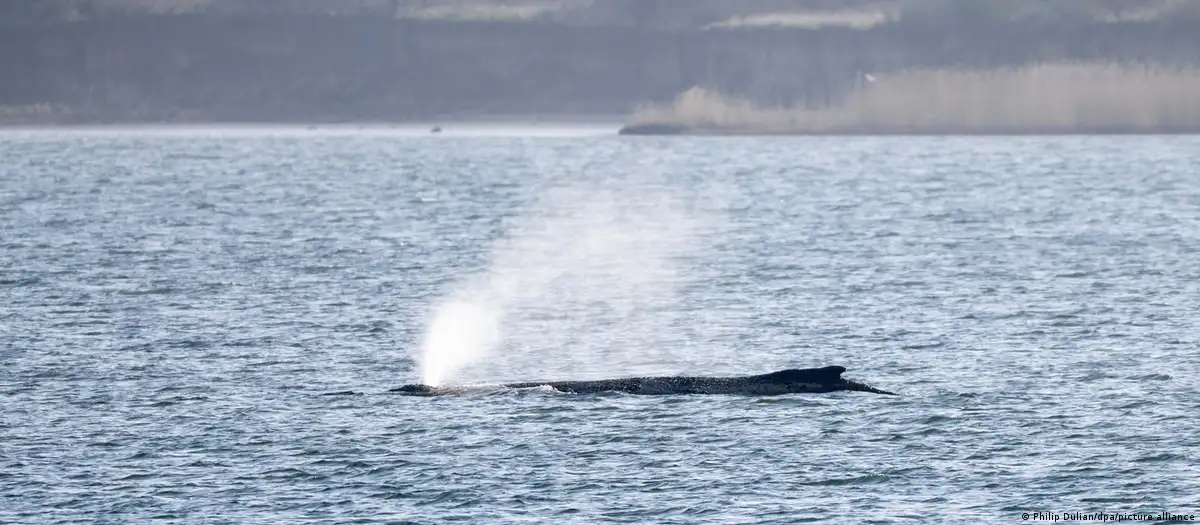
The humpback whale stuck for more than a week in two different spots in the Baltic Sea finally started to swim again on Monday evening, despite having shown signs of deteriorating health throughout the day.
Water levels in Wismar Bay rose around 30 centimeters on Monday evening, presenting a chance for the whale to free itself, and rescuers had been preparing to try and coax it into moving off.
"It could now get on its way if it wanted to," Till Backhaus, the regional environment minister for the northern state of Mecklenburg-Western Pomerania, had said.
That moment appeared to have arrived on Monday evening, although a ministry spokesman said it was unclear in which direction the whale was swimming. Environmental organization Greenpeace said it was heading toward Wismar harbor.
German whale: what was the latest on Monday?
Professor Burkhard Baschek of the German Oceanographic Museum said Monday could prove a "decisive day" in the stranding. He warned that it was almost entirely up to the whale to free itself from the shallows and there was limited scope to offer external assistance.
He said the mammal had only moved around 1 or 1.5 meters (roughly 3 to 5 feet) in the previous 24 hours, despite a period with higher water levels overnight that had presented an opportunity to move.
Greenpeace's Franziska Saalmann also said the whale was less responsive than on previous days when rescuers tried to gauge its reactions to stimuli.
"When we gently tried to reanimate it, by striking the water loudly with our paddle, it barely reacted," Saalman told reporters. "It's not making any more noises. This lack of movement and reaction to our presence shows that it's simply very weak and getting weaker."
Baschek said that the whale was now only breathing roughly once every four minutes, describing this rate as a "massive reduction," and warned that its skin was showing signs of secondary infections.
He also said that if a point in time were to come when the whale had a clear and simple chance to escape, but was unable to make use of it, it could eventually become necessary to think about euthanization to end its suffering.
"But we have not reached that point yet," Baschek said.
Minister says he's 'in contact' with marine biologist after criticism, calls for 'respect'
The whale was initially stranded on a sandbank off a beach in Timmendorf early last week. After several days and dredging efforts to help clear a path, it was able to free itself and start moving north.
But as it tried to navigate shallows and natural bottlenecks of the Baltic Sea toward the North Sea and the Atlantic Ocean, it became stranded again off Wismar Bay, after swimming to the east more than along the path out to the north.
A marine biologist who had been on site in Timmendorf, across state lines in Schleswig Holstein, Robert Marc Lehmann, was critical of the continuing rescue efforts over the weekend. He said he had been frozen out of the later operations, and called on rescuers off Wismar to don wet suits and wade out to the whale as he had.
State Environment Minister Backhaus alluded to this at Monday's press conference, saying that he had been "in contact" with Lehmann and would remain in contact.
He said he preferred to solve issues through cooperation not conflict and also appealed to members of the public online to show "respect" toward the experts in Mecklenburg-Western Pomerania working to help the whale. Backhaus said he did not recognize "any deficits" in the work of the German Oceanographic Museum and Greenpeace and others on site.
It's considered likely that the whale first lost its way and veered into the Baltic Sea in early March.
Edited by: Rana Taha