Ruling party in Ethiopia secures 90% of seats in parliament
June 21, 2026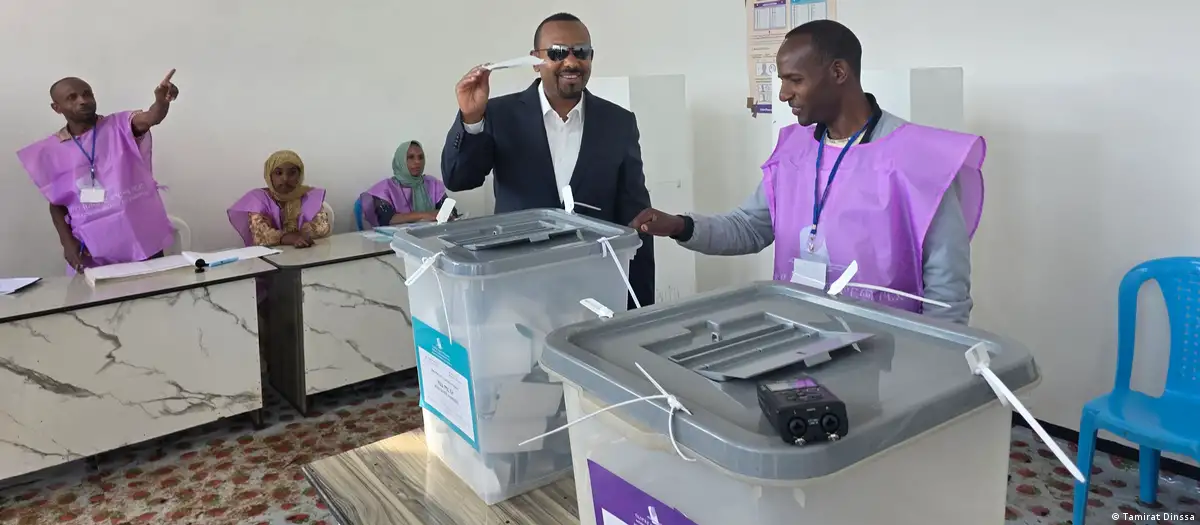
Ethiopian Prime Minister Abiy Ahmed's Prosperity Party has secured a landslide majority, according to election results released Sunday by the National Elections Board (NEBE), .
"The ruling Prosperity Party secured 438 of the 486 seats in the House of Peoples' Representatives," Melatwork Hailu, chairperson of the NEBE, announced.
The June 1 legislative elections went ahead, despite voting not taking place in parts of the country, including areas in the Tigray and Amhara and Oromia regions.
Prosperity Party maintains its hold on power
More than 40 parties ran against Ahmed's Prosperity Party, but most lacked funding, and the ruling party was unopposed in 64 constituencies. The best-represented rival, Ezema, fielded 293 candidates, compared with the Prosperity Party's 461.
"The party's victory accounts for roughly 90 percent of the contested seats," the NEBE said.
The outcome will likely give Abiy, who has been in power since 2018, another five years in office, as the legislature elects the prime minister.
Some analysts say the suspension of voting in parts of Amhara, Oromia, and Tigray highlights the impact of unresolved conflicts.
"I hope they use the coming five years to really bring what the majority of the country really needs and deserves, which is peace and security," analyst Bizuneh Yimenu previously told DW.
Why did voting not take place in Tigray and parts of Amhara and Oromia?
Ethiopia has been rocked by multiple ethnic nationalist insurgencies, with rebel groups still active in multiple regions.
The northern Tigray region was the site of a 2020-2022 armed conflict between the Tigray People's Liberation Front (TPLF) and the Ethiopian army.
The Amhara region has seen clashes between the federal government and Amhara nationalist militias known as the Fano, while Oromia is home to the Oromo Liberation Army (OLA) rebels.
Edited by: Saim Dušan Inayatullah
Don't let the algorithm hide the news. If you rely on our team for trusted reporting, please take a moment to select us as your Preferred Source on Google, so you'll always see our verified news first.