The closest F1 title battles in history
Drivers' championships in Formula 1 history have often come down to the final race. In 2025, Lando Norris held off teammate Oscar Piastri and defending champion Max Verstappen to win.
1976 – James Hunt vs. Niki Lauda
Lauda dominated the 1976 championship until his fiery accident at the Nürburgring. Forty-two days later, the Austrian was back in his Ferrari. Before the season finale in Japan, he was still three points ahead of Hunt. However, in heavy rain, Lauda parked his car shortly after the start. "Life is more important to me," he said. Hunt finished third, becoming world champion by one point.
1984 – Niki Lauda vs. Alain Prost
Lauda's third world championship title is the closest in Formula 1 history so far. He finished the season just half a point ahead of his teammate. Because the race in Monaco was canceled due to rain, only half the points were awarded. Before the final race in Portugal, Lauda was just 3.5 points ahead of Prost and moved up from 11th to second behind Prost, which was enough to win it all.
1994 – Michael Schumacher vs. Damon Hill
Schumacher won the first of his seven titles off the track. Before the final race in Adelaide, he was one point ahead of Damon Hill in his Williams. When the Brit tried to overtake Schumacher after a driving error, they collided. The German slid into the tire barrier and was forced to retire. But Hill's car was also damaged, and he too had to retire, handing Schumacher the championship.
1997 – Jacques Villeneuve vs. Michael Schumacher
In his second year with Ferrari, Schumacher was very close to winning the title. With a one-point lead over Williams driver Villeneuve, he traveled to Jerez for the season finale. When the Canadian made a risky overtaking maneuver, Schumacher "closed the door" and the two collided. The move cost Schumacher the race and all his points as Villeneuve finished third and won the title.
2008 – Lewis Hamilton vs. Felipe Massa
Ferrari driver Felipe Massa had a chance to celebrate a title in front of his home crowd, but the party with his team and family started a bit too early. McLaren's Lewis Hamilton overtook Germany's Timo Glock in the penultimate corner of the race in Sao Paulo, handing the Brit a fifth-placed finish and his first world championship. Hamilton's margin of victory over Massa was just one point.
2010 – Sebastian Vettel vs. Fernando Alonso and Mark Webber
In 2010, the German surprisingly became the youngest Formula 1 world champion in history at the time. Because his competitors, former world champion Fernando Alonso and Red Bull teammate Mark Webber, came into the pits too early, they got stuck in traffic. Vettel, who was 15 points behind Alonso before the season finale, chose a different tactic, won the race, and was the one laughing in the end.
2016 – Nico Rosberg vs. Lewis Hamilton
In his third year with Hamilton as his teammate, Nico Rosberg benefited from the superiority of Mercedes in Formula 1. He engaged in a close battle with his former childhood friend, who went on to become his "favorite enemy." At the end of the 2016 season, the German prevailed by just five points and ended his career immediately after the race.
2021 – Max Verstappen vs. Lewis Hamilton
In the final race in Abu Dhabi, the Mercedes star had his eighth title in the bag until the very last lap. Race director Michael Masi made a controversial decision, reopening the race instead of ending it behind the safety car. Verstappen, who was tied with Hamilton on points before the final race, pulled ahead on fresh tires and clinched his first of four world championship titles to date.
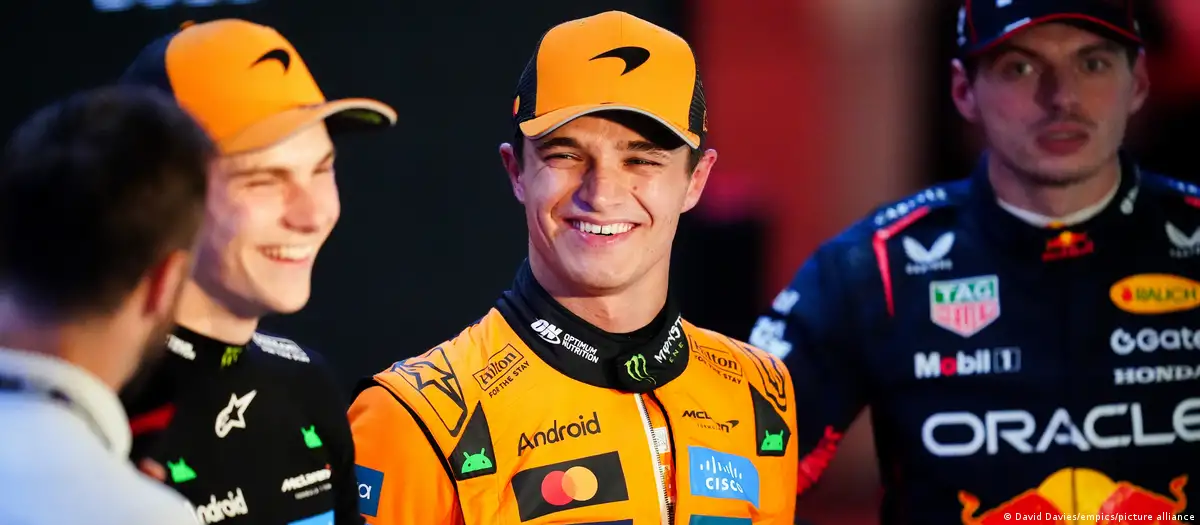
2025 - Lando Norris vs. Oscar Piastri and Max Verstappen
Lando Norris had a 100 point lead over Max Verstappen at one point in the season, but going into the final race the Dutchman had roared back to within just 12. Norris was also being challenged by his McLaren teammate Oscar Piastri, and the Australian overtook him early on in Abu Dhabi. Verstappen won the race, but Norris held on to third to seal the Briton's first world title by just two points.