Somalia's capital Mogadishu gets a fresh start
After decades of war, Mogadishu is experiencing a remarkable construction boom. Despite poverty, hopes are growing in the Somali capital for a new economic and social beginning.
Construction boom in Mogadishu
Mogadishu, the capital of Somalia, is experiencing a remarkable construction boom. After decades of civil war, hopes are growing for economic recovery. A multi-story building with large glass facades is being constructed in the city center. This is something completely new, explains a local resident. "The builders are not afraid of shattering."
Thousands of new buildings
Cement blocks are piled up on the streets of Mogadishu. Somalia's construction sector is largely unregulated, and precise figures are hard to come by. In June, the mayor of the Somali capital told media representatives that he estimated that around 6,000 new buildings had been constructed in the city over the past five years.
Life in poverty
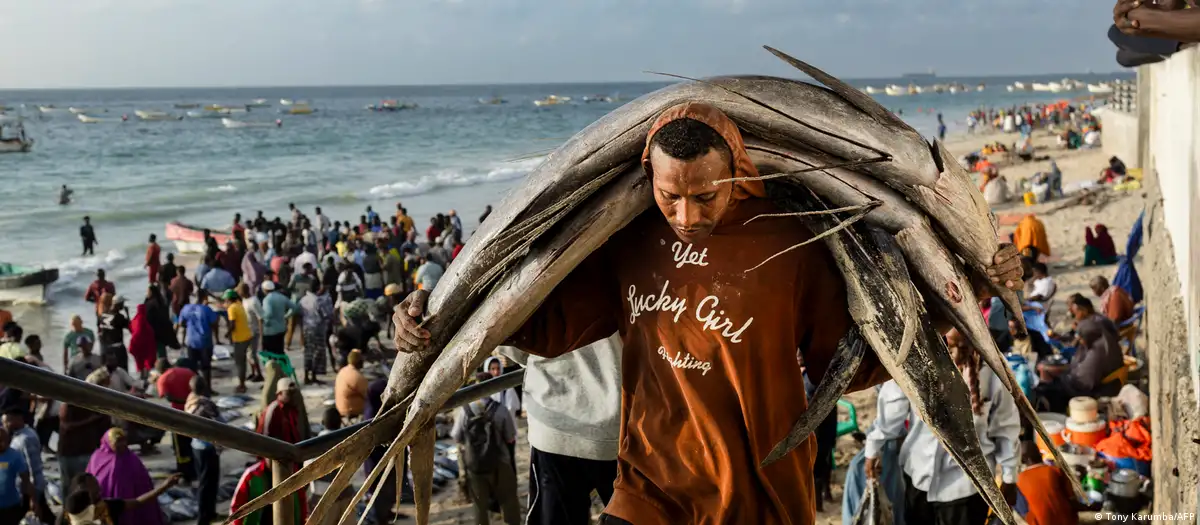
Local fishermen sell their fresh catch at a fish market on a beach in Mogadishu. According to the United Nations, 70% of Somalia's population lives in extreme poverty. Since the 1990s, the country has been embroiled in a civil war, which later also involved Islamist militias and still threatens large parts of the country.
More security...
The improved security situation within the city is a driving factor for the significantly more optimistic mood. At checkpoints, security forces search every vehicle. Out of concern for hidden explosive devices, vehicles that have been outside Mogadishu for more than 20 days are not allowed to reenter the city.
...and less corruption
The checkpoint system has reduced the number of terrorist attacks within the city by 86% since 2023. Previously, soldiers demanded money at every checkpoint and "hit you with the muzzle of their guns," said a 38-year-old taxi driver. Today, there is a reporting center for victims of police violence and corruption, and security personnel have been working much more professionally.
'A fast-growing market'
A new multi-story building is being constructed in the Hamer Weyne district near the coast. Much of the money comes from abroad: remittances from Somali expatriates accounted for almost 30% of gross domestic product in 2024. The funds flow into real estate, the financial sector, trade and infrastructure. "A fast-growing market," says Mohamed Gheedi of Premier Bank in Somalia.
Unstable security situation in Somalia
Despite all efforts, numerous inmates escaped during an attack on a prison in Mogadishu in August 2025. Somalia's security situation remains extremely tense outside the city limits. Al-Shabaab, an Islamist terrorist group, captured up to 200 villages and towns in the vicinity of the capital during the course of the year.
'Who is paying the price?'
While wealthy residents benefit from greater security and economic growth, gentrification is a problem for the poorer parts of the city. This leads to evictions, some of them violent, and people losing access to schools and clinics, criticizes Mahad Wasuge from the Somali Public Agenda think tank. With regard to urban development, he asks, "Who is paying the price?"