Iran war: Former supreme leader buried amid new escalation
Published July 10, 2026last updated July 10, 2026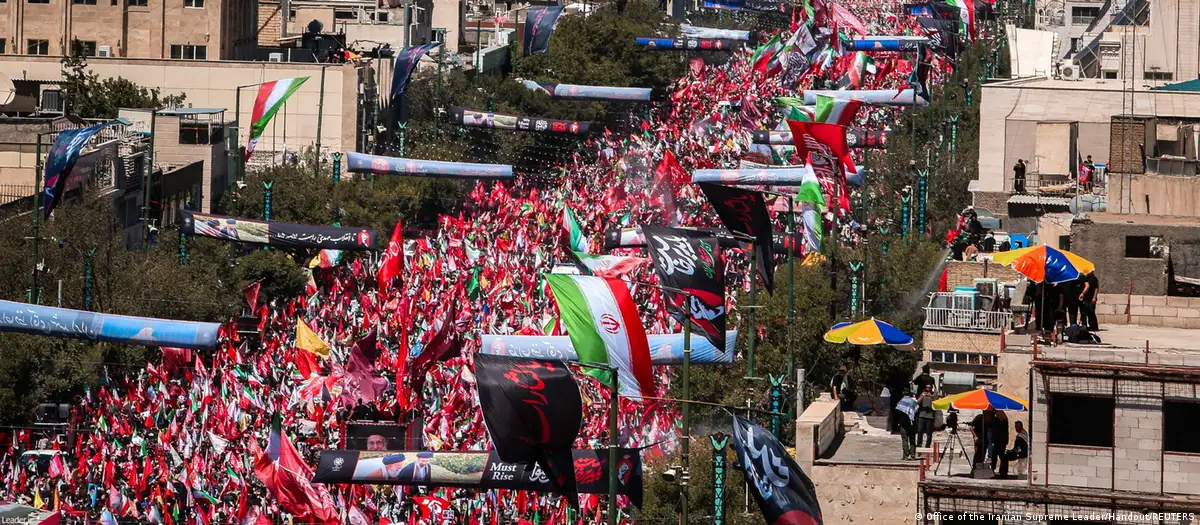
What you need to know
- Iran's late supreme leader buried after 6 days of funeral events
- No reports of fresh overnight strikes
- CENTCOM says Iran does not control Strait of Hormuz
Follow DW's coverage of the ongoing conflict between the United States and Iran on Friday, Jule 10.
Tired of missing our real-time updates? Click here to add us as a Preferred Source on Google. Then tap the "Star" or "Preferred" to keep DW News at the top of your feed.
Recovery in world oil demand picking up, says global energy agency
The International Energy Agency (IEA) said "a recovery" in global oil appetite was taking place amid the resumed flow of supply through the Strait of Hormuz.
"A recovery in world oil demand is underway, with consumption set to rise from its May nadir," the IEA said in a monthly report.
The agency revised its 2026 oil demand growth forecast to 1.0 million barrels a day lower than in 2025, from 1.1 million barrels a day in its previous report, citing the war in the region.
"Global oil supply rebounded by a sharp 4.1 million barrels a day (mbd) to 98.8 mbd in June, as a resumption of flows through the Strait of Hormuz underpinned a partial recovery in Gulf production. World output was nevertheless some 9.4 mb/d below pre-war levels," the IEA said.
WATCH: What is Khamenei's funeral revealing about Iran?
Iran held six days of mourning for Ayatollah Ali Khamenei, with massive crowds fill the streets. But the absence of his son, Mojtaba Khamenei, has raised questions about Iran's future leadership.
Reports of slower traffic through Strait of Hormuz
The traffic of oil tankers transiting through the Strait of Hormuz appears to have slowed since the latest escalation between the US and Iran.
US broadcaster CNBC cited trade intelligence firm Kpler with information that thirteen oil tankers had crossed the vital waterway when compared with an average of 33 crossings the previous week.
CNBC cited Matt Smith, director of commodity research at Kpler as saying that the vessels either followed the route controlled by Iran or switched off their transponders in order to avoid being tracked as they made their way through the shipping channel.
Manwhile, the US military said that Iranian state media claims that passage through the strait was only permitted through routes designated by Iran, were false.
"Iran does not control the Strait of Hormuz. Since early May, US forces have helped facilitate the successful transit of more than 800 commercial vessels and 380 million barrels of crude oil through the vital international trade corridor," CENTCOM said in a post on X.
The Reuters news agency also reported that liquefied natural gas tankers were transiting the strait.
According to Reuters, at least five ballast LNG tankers entered the strait in recent days, citing data from Kpler and LSEG.
The vessels include GasLog Shanghai, controlled by Greek shipping company GasLog, and QatarEnergy-linked carriers Al Samriya, Al Dafna, Al Gattara and Al Rayyan.
Trump, Netanyahu discuss US 'moves in the Gulf'
Israeli Prime Minister Benjamin Netanyahu and US President Donald Trump held a call on Thursday and agreed to continue coordination between their countries on various fronts, Netanyahu's office said in a statement.
It added that Trump updated Netanyahu on "American moves in the Gulf."
WATCH: Iran leader’s burial overshadowed by new US strikes
Reported US strikes on sites in Iran have heightened tensions with Tehran. At the burial of Iran's late Supreme Leader Ali Khamenei, some mourners called for a stronger response as the conflict escalated.
Iran buries former Supreme Leader Ali Khamenei
Iran laid to rest its former Supreme Leader Ali Khamenei early Friday over four months after he was killed in an airstrike.
Khamenei's flag-covered coffin was carried into the shrine of Imam Reza in his home city of Mashhad in eastern Iran as a sea of people waited outside and listened to prayers. There was no public appearance by his son and successor, Mojtaba Khamenei.
The "body of the martyred leader of the Islamic Revolution was buried in the memorial hall of the shrine of Imam Reza," state broadcaster IRIB reported.
The burial follows a week of funeral processions, rallies and mourning. The ceremonies coincided with a new round of conflict with the United States following weeks of a truce.
Welcome to our coverage
Hello and welcome to DW's coverage of the latest developments in the ongoing conflict between Iran and the United States.
This week has seen renewed airstrikes from the US and retaliatory attacks from Iran after vessels were targeted in the Strait of Hormuz.
Amid the renewed escalation, Iran has buried the late Ayatollah Ali Khamenei, months after he was killed during the opening stages of the Iran war in February.
Overnight, there have been no reports of fresh attacks.
Stay with us as we provide news updates throughout the day.