India: Threatened idyll on the Siang River
China and India are competing for control of water in the Himalayas with massive dam projects. The local communities are protesting against India's Upper Siang project and fighting to preserve their mountain villages.
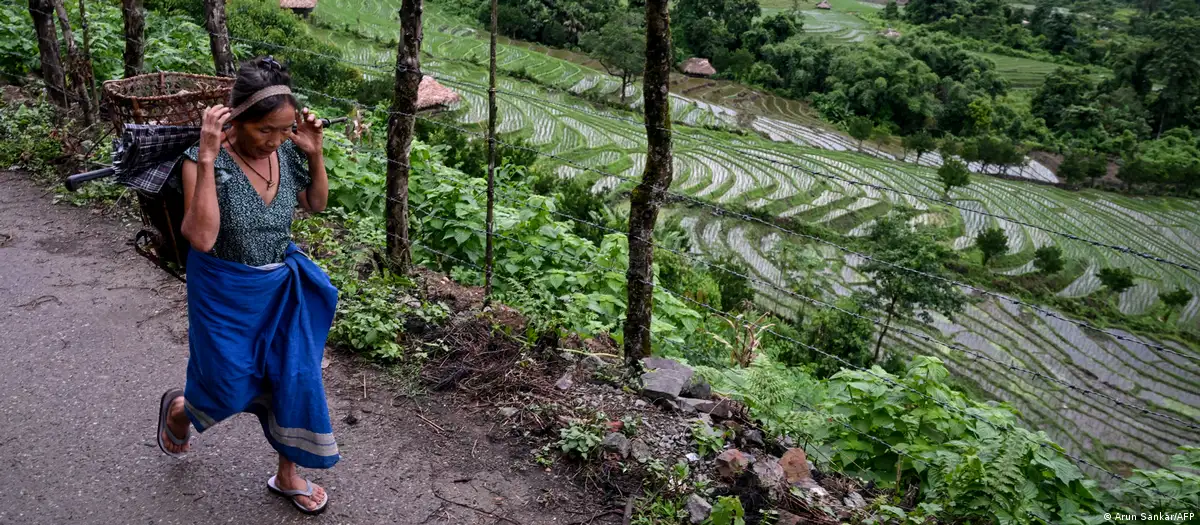
Home of the Adi on the Siang River
The Adi tribe in the Indian state of Arunachal Pradesh has been farming fertile land for generations. A planned mega dam threatens to flood this idyllic landscape in the future. But the Adi are fighting back against the government's Siang Upper Multipurpose Project (SUMP) and hope to preserve their culture and homeland.
Water control in the Himalayas
In December 2024, China announced plans to build a dam with the world's largest hydroelectric power plant in Tibet: the massive dam project on the Yarlung Zangbo River on the border with India. The Indian government fears that the dam could reduce the flow of the Brahmaputra by up to 85%. It is "countering" the plans of its rival China with the Siang Upper Multipurpose Project.
Source area in glaciers
The Yarlung Zangbo River originates in the glaciers of the Himalayas and winds its way for miles through the Tibetan plateaus before flowing into Arunachal Pradesh. Known there as the Siang River, it joins other tributaries until, from the city of Assam, it becomes the mighty Brahmaputra River, supplying water to 100 million people in India and Bangladesh.
Protest by the Adi tribe
Thousands of members of the Adi tribe gather to discuss the protest against the dam. The Indian government has had plans for water control projects on the Siang River for a good 20 years. However, efforts have so far failed due to strong resistance from the local population.
'We will not let a dam be built'
Tapir Jamoh is one of the tribal elders in the village of Riew, a few kilometers from Siang. “We will not let a dam be built,” he told the AFP news agency, "it is from the Siang that we draw our identity and culture." According to the plans, a 280-meter-high dam on the Siang River will store enough water to fill four million Olympic swimming pools.
Energy source, water reservoir, and flood protection
Construction work on the Dibang hydroelectric power plant is already in full swing on the Dibang River, around 60 kilometers (37 miles) east of Riew. The power plant on the Dibang, a tributary of the Brahmaputra, will not only serve to supply energy, but will also act as a water reservoir and contribute to flood protection
Danger from water bombs?
The Indian government fears not only water shortages and drought, but also "water bombs" caused by released dam water if the Chinese dam upstream is used as a valve. The storage capacities of the Dibang dam (pictured here) and the planned SUMP are intended to protect against this. China rejects these scenarios as "groundless and malicious."
Gloomy prospects
That is little consolation for the Adi. According to estimates, dozens of villages and around 10,000 people will be affected by the planned Siang dam. Two controversial hydropower projects in the region were recently implemented against the will of local communities.
'We are children of the Siang'
Tapir Jamoh demonstratively raises his traditional bow in protest. "We are children of the Siang," explains Jamoh. For the Adi people, the river is sacred; its life-giving water and lush fields are their livelihood. A tribal member from the village of Yingkiong expresses what many people here are concerned about: "If they build a huge dam, the Adi community will vanish from the map of the world."