Hope for India's Widows — The Holi Festival
April 14, 2026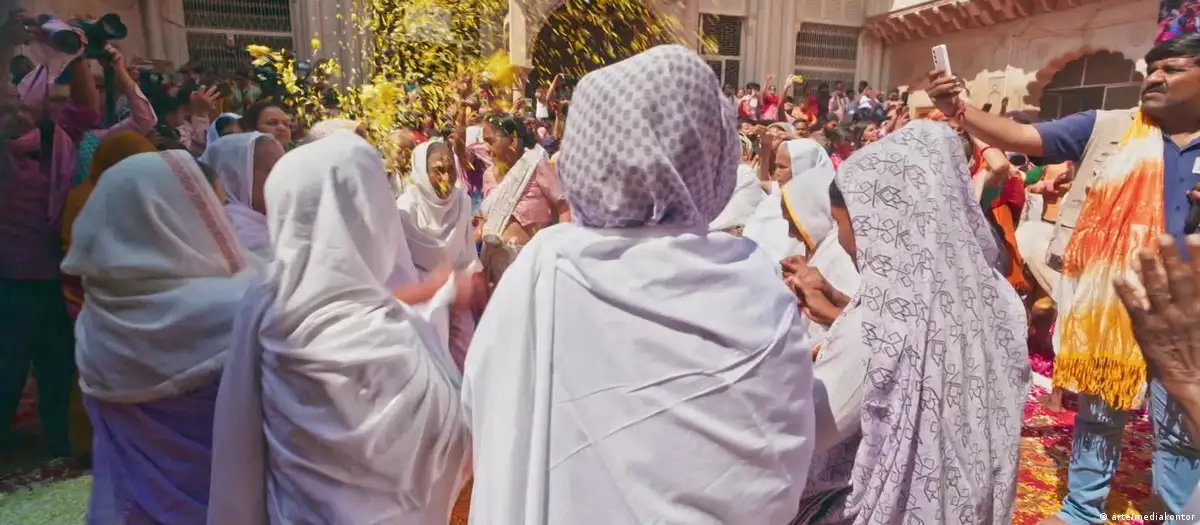
For the first time, widows are allowed to celebrate the festival of colors at the Gopinath Temple — a breakthrough.
India is a country where ancient traditions are still alive. One of them is Holi — the festival of colors. But the country's widows are excluded from it. Most of them live in poverty, stigmatized as outcasts.
In Vrindavan, things are different. Here, widows find refuge in the ashrams. At the Gopinath Temple, they are allowed to celebrate the festival of colors for the first time.
Munni, Heema, and Chavi live in different widows' ashrams in Vrindavan. They all came to this holy city to find refuge from the humiliation and exclusion practiced by their families and their social environments.
In India, widows are not allowed to celebrate or feel joy; they must wear white clothing as a marker of their status; they earn no money and usually live in abject poverty. In the past, widows were expected to be cremated along with their husbands' bodies. Orthodox Hinduism still requires them to follow strict rules: fasting periods, meager food, often shaved hair, no jewelry, no makeup, and no earthly pleasures.
In 1970, Bindeshwar Pathak founded the NGO Sulabh International in Delhi, one of the few Indian NGOs that advocates for widows. In 2014, he presented the government with a draft law for the comprehensive protection of India's widows - but to date, nothing has happened. In large areas of the country, they are still stigmatized.
When the Holi festival comes around in March, people celebrate exuberantly, suspending all rules and throwing colored powder at each other. This is intended to blur the social boundaries between origin, faith, and caste.
In Vrindavan, too, the Holi festival begins with a commemoration of Bindeshwar Pathak, the protector of widows, who died in 2023. And for the first time, widows like Heema, Munni, and Chavi wear color on their clothes and faces.
Broadcasting Hours:
DW English
FRI 17.04.2026 – 01:15 UTC
FRI 17.04.2026 – 04:15 UTC
FRI 17.04.2026 – 10:15 UTC
SAT 18.04.2026 – 13:15 UTC
SUN 19.04.2026 – 19:15 UTC
MON 20.04.2026 – 09:15 UTC
MON 20.04.2026 – 14:15 UTC
MON 20.04.2026 – 21:15 UTC
TUE 21.04.2026 – 07:15 UTC
WED 22.04.2026 – 12:15 UTC
Lagos UTC +1 | Cape Town UTC +2 | Nairobi UTC +3
Delhi UTC +5,5 | Bangkok UTC +7 | Hong Kong UTC +8
London UTC +1 | Berlin UTC +2 | Moscow UTC +3
San Francisco UTC -7 | Edmonton UTC -6 | New York UTC -4