Day of the Dead: Mexico honors deceased loved ones
Mexicans celebrate Dia de los Muertos, or Day of the Dead, in late October and early November to honor deceased family members. It's a colorful, life-affirming period of parades and parties.
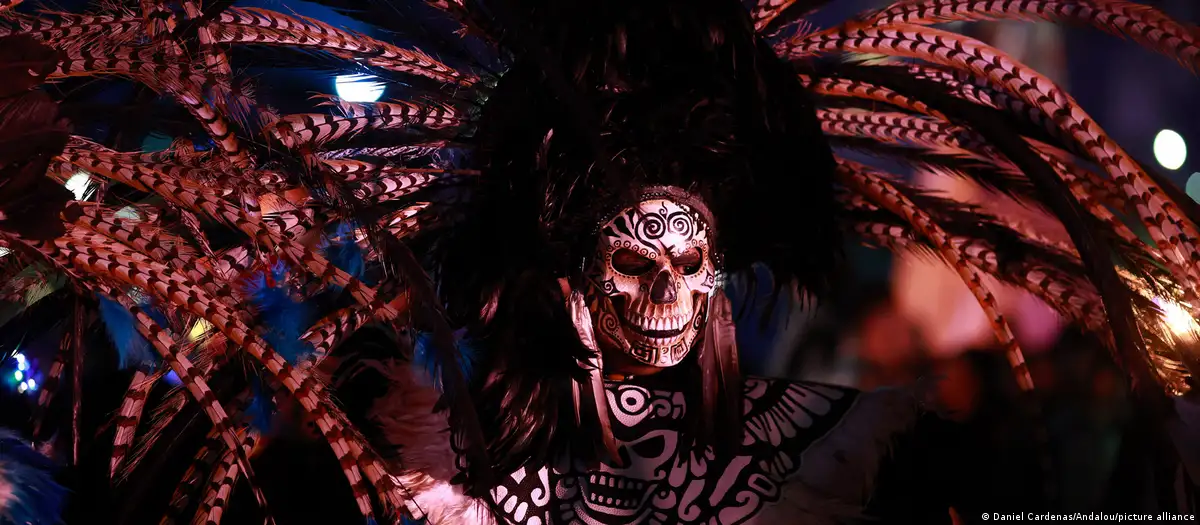
Happy holiday
Laughter instead of tears: It may seem macabre, but even though death is the focus, Dia de los Muertos is a joyful holiday in Mexico. Colorful parades, such as this one in Mexico City, commemorate the deceased, who, according to popular belief, awaken from their eternal sleep on this day to visit their loved ones.
Horror without Halloween
During the celebrations, giant skeletons parade through the cities ― but even though the symbolism is similar, Dia de los Muertos has nothing to do with Halloween. The Aztecs and Mayans believed that death was only the beginning of a new life; with the arrival of the Spanish conquistadors, the festivities in honor of the dead became intertwined with Catholic customs.
E.T. cycling home
The main celebrations begin on the eve of All Saints' Day on October 31 and continue until November 2. But even before the actual Day of the Dead, numerous parades take place, including a nighttime bicycle parade through Mexico City. The participants are dressed up, and their bikes and other vehicles are decorated — here, E.T. is being transported on a luggage rack.
Guide for the dead
Marigolds, also known as tagetes, are the quintessential floral decoration for Dia de los Muertos. Their bright orange color and scent are said to guide the souls of the deceased back to the world of the living. Cemeteries are also decorated with marigolds; on the last day of the celebrations, families gather there to picnic and dance together by the graves of their ancestors.
Perhaps the most beautiful skulls in the world
For around ten years, the Catrina Parade has been an integral part of the preparations for Dia de los Muertos. It was launched in 2014 by a make-up artist. What began as a small circle of creative people has now become one of the biggest events in the run-up to the Day of the Dead: every year, the parade with its elaborately made-up participants attracts tens of thousands of spectators.
'We are all skulls'
At the beginning of the 20th century, artist Jose Guadalupe Posada created the Catrina figure — a skeleton in elegant clothing — as a caricature to mock the Mexican upper class's obsession with European elegance. Posada also coined the phrase "todos somos calaveras," which translates to "we are all skulls," emphasizing the equality of all human beings.
Celebration of Diversity
Together with around 200 other LGBTQ+ activists, drag artist Santiago Mercado is marching in this year's Catrina Parade in Mexico City. The parade is a rare safe space in a country where queer people are often subjected to violence. Numerous other groups with social or political causes are also taking part in the parade.
Colorful commemoration
Even the youngest take part: the Day of the Dead is a celebration for everyone, celebrated by Mexicans regardless of their religion or ethnic origin. And even though it originated in Mexico, Dia de los Muertos is now celebrated throughout Latin America. In 2008, UNESCO declared the celebrations an intangible cultural heritage.